Skip to content
II · The Wider Circuit

Buddhist Circuit of Nepal: The 9 Sites of Greater Lumbini

A 5,260 square kilometre landscape holding nine sites from the Buddha’s early life, administered, as one circuit, by the Lumbini Development Trust.

Rupandehi · Kapilavastu · Nawalparasi9 sites under LDT

The Promised GroupNine ventures. One platform.

Explore the group
Area
5,260 km²
Districts
Rupandehi · Kapilavastu · Nawalparasi
Sites
9 under LDT
Singular honour
Birthplace of three Buddhas

Lumbini does not stand alone. The Government of Nepal's own National Document on Buddhist Circuits of Nepal describes a landscape stretching across the districts of Rupandehi, Kapilavastu and Nawalparasi in which Lumbini, Kudan, Gotihawa, Tilaurakot, Niglihawa, Araurakot, Sagarhawa, Devadaha and Ramagrama all fall under the jurisdiction of the Lumbini Development Trust, a single circuit tracing Siddhartha Gautama's life from birth to renunciation, and the deeper Buddhist cosmology of the Buddhas who, tradition holds, came before him. It is, the same document notes, the only region on earth that gave birth to three Buddhas, Krakuchhanda, Kanakamuni and Shakyamuni himself. What follows is a full directory of the eight sites beyond Lumbini itself, the ninth, Ramagrama, is significant enough to carry its own chapter, next in this account. Touch any site below for its full history.
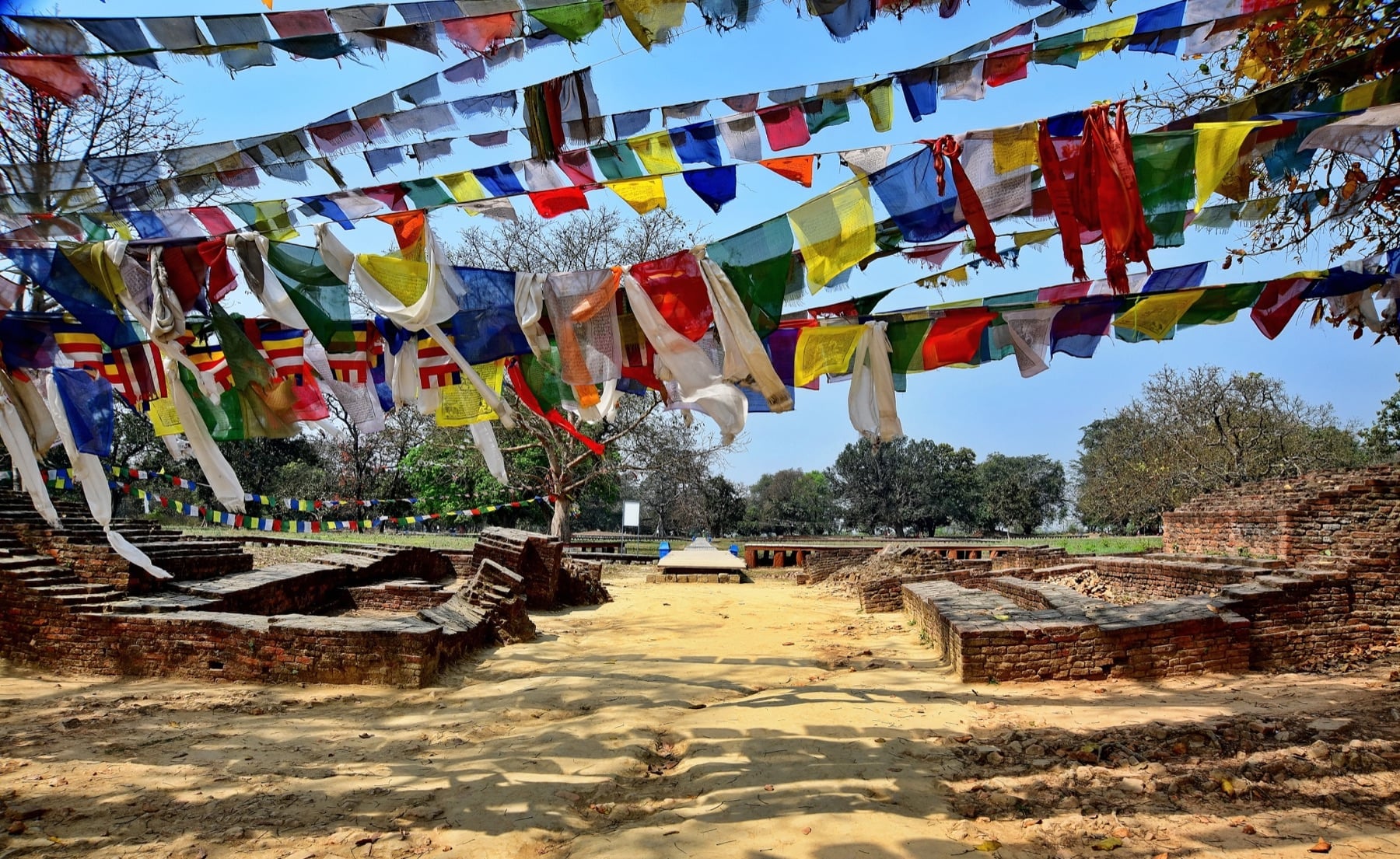
The fortified citadel of Tilaurakot, ancient Kapilavastu. Photo: Rajesh Dhungana, CC BY-SA 4.0.
01

Tilaurakot

Ancient KapilavastuIdentified 1899Excavated 8th c. BCE layer

The capital where the infant Siddhartha was raised, and where he made the Great Renunciation at twenty-nine, riding out through the eastern gate by night. First noted as a site of interest in 1896 and identified as Kapilavastu in 1899 by P. C. Mukherji of the Archaeological Survey of India, it survives today as a fortified citadel some 500 by 400 metres on the eastern bank of the River Banganga, among the most complete early historic city plans yet recovered in South Asia. A Durham University programme, running in partnership with Nepal’s Department of Archaeology and the Lumbini Development Trust across seasons in 2014–16, 2019 and 2021, has dated occupation near the modern Samai Mai Temple to the eighth century BCE, with the settlement fortified and laid out on an urban plan by the sixth century BCE, evidence, the excavators concluded, of real centralised control. A palatial precinct 100 by 100 metres, walled in brick 1.5 metres thick, and a hoard of 497 silver punch-marked coins at the eastern stupa are among the finds; the core of the city was largely abandoned in the early first millennium CE, save for a Gupta-period brick temple later buried beneath the site’s modern shrine.

Read the full story →
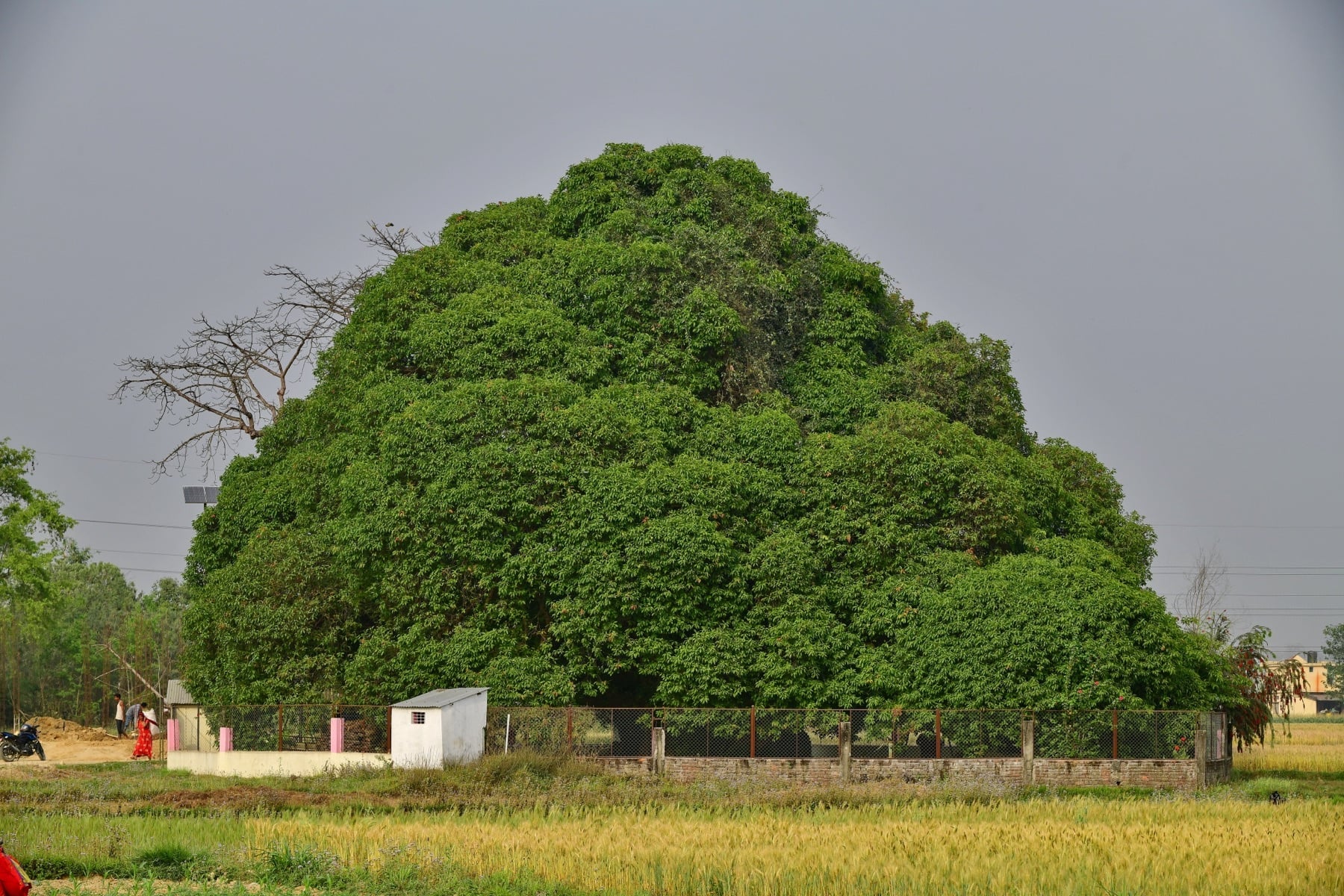
The Pakari Tree at Devadaha, traditionally linked to the Buddha. Photo: Rajesh Dhungana, CC BY-SA 4.0.
02

Devadaha

Koliya capitalExcavated since 2012

Capital of the ancient Koliya kingdom, thirty-eight kilometres east of Lumbini, and the maternal hometown of Queen Mayadevi, Prajapati Gautami and Yasodhara, three generations of the women who raised the Buddha. Khairdanda is the leading candidate for the ancient capital itself; nearby Bhawanipur has been under excavation by the Department of Archaeology since 2012, where decorated bricks matching those found at Kudan have come to light at the Bairimai Temple site, alongside two wells, at Petwaniya and Bangala, believed to date to the Koliya era, the kind of unglamorous domestic infrastructure that rarely survives from the period at all. A living link stands nearby at Pakari: a Ficus benjamina some ninety-six feet tall and eighty-two feet in circumference, its canopy spreading over roughly five hundred square feet and held sacred behind a protective wall, which local tradition holds is the very tree beneath which the Buddha once sat in penance.

Read the full story →
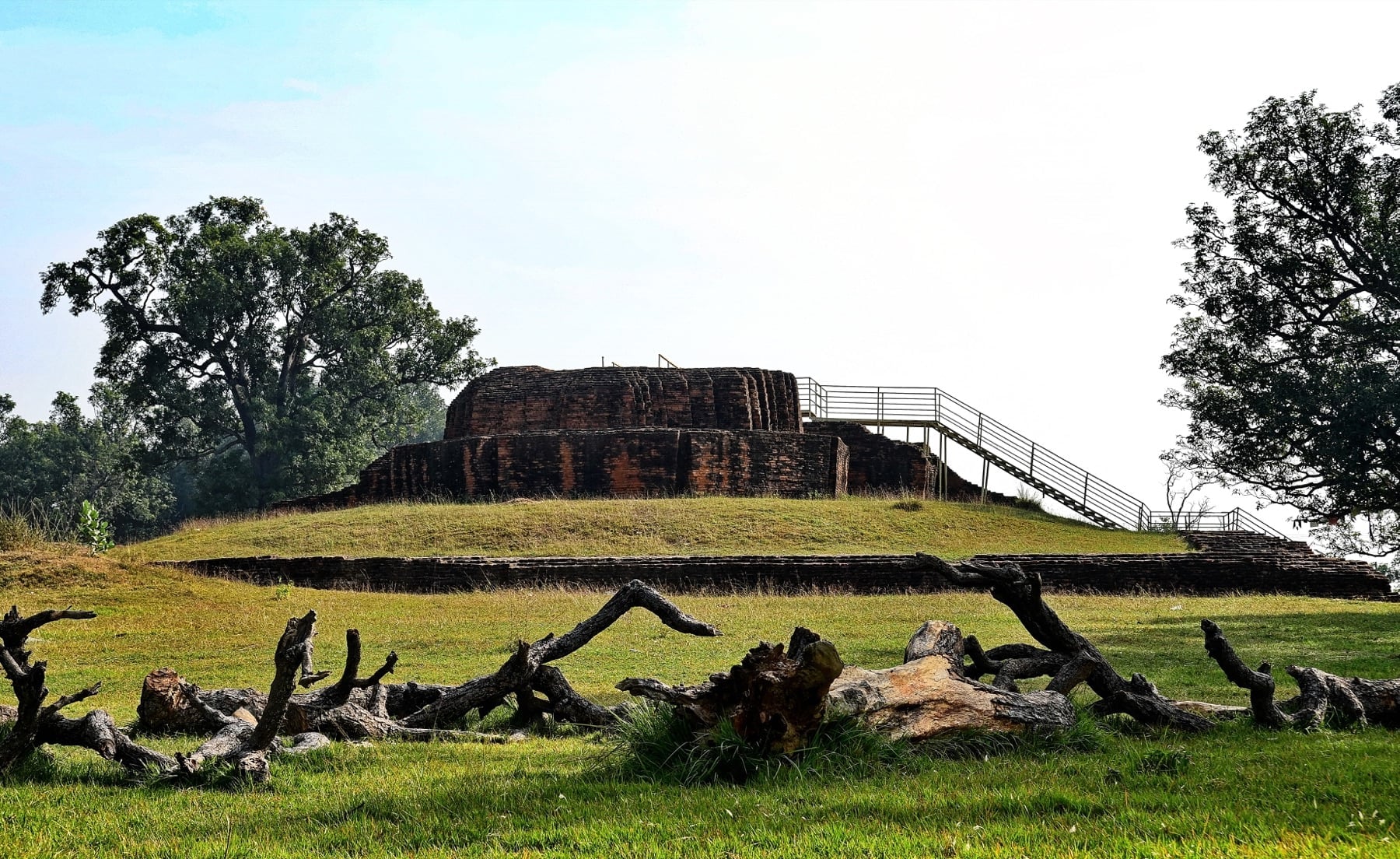
The excavated mounds at Kudan, the ancient Nyigrodharama. Photo: Rajesh Dhungana, CC BY-SA 4.0.
03

Kudan

The ancient NyigrodharamaPost-hole dated to 8th c. BCE

The ancient Nyigrodharama, literally the Banyan Grove monastery, two kilometres from Taulihawa Bazaar, where the newly enlightened Buddha reunited with his father a year after his awakening, and where Prajapati Gautami, Yasodhara and five hundred Shakya women are recorded as the tradition’s first Buddhist nuns, the same visit on which his son Rahula was ordained a monk. The Archaeological Survey of India’s Debala Mitra excavated the site in 1962, exposing two mounds with cruciform brick temples flanking an ancient well; a further round of excavation beginning in 2007 revealed still more stonework and brick construction beneath them. A 2014–16 Durham University excavation dated a wooden post-hole here to the eighth century BCE, among the oldest physical traces on the whole circuit, and a rare instance of organic material surviving from a period usually known only through fired brick and stone.

Read the full story →
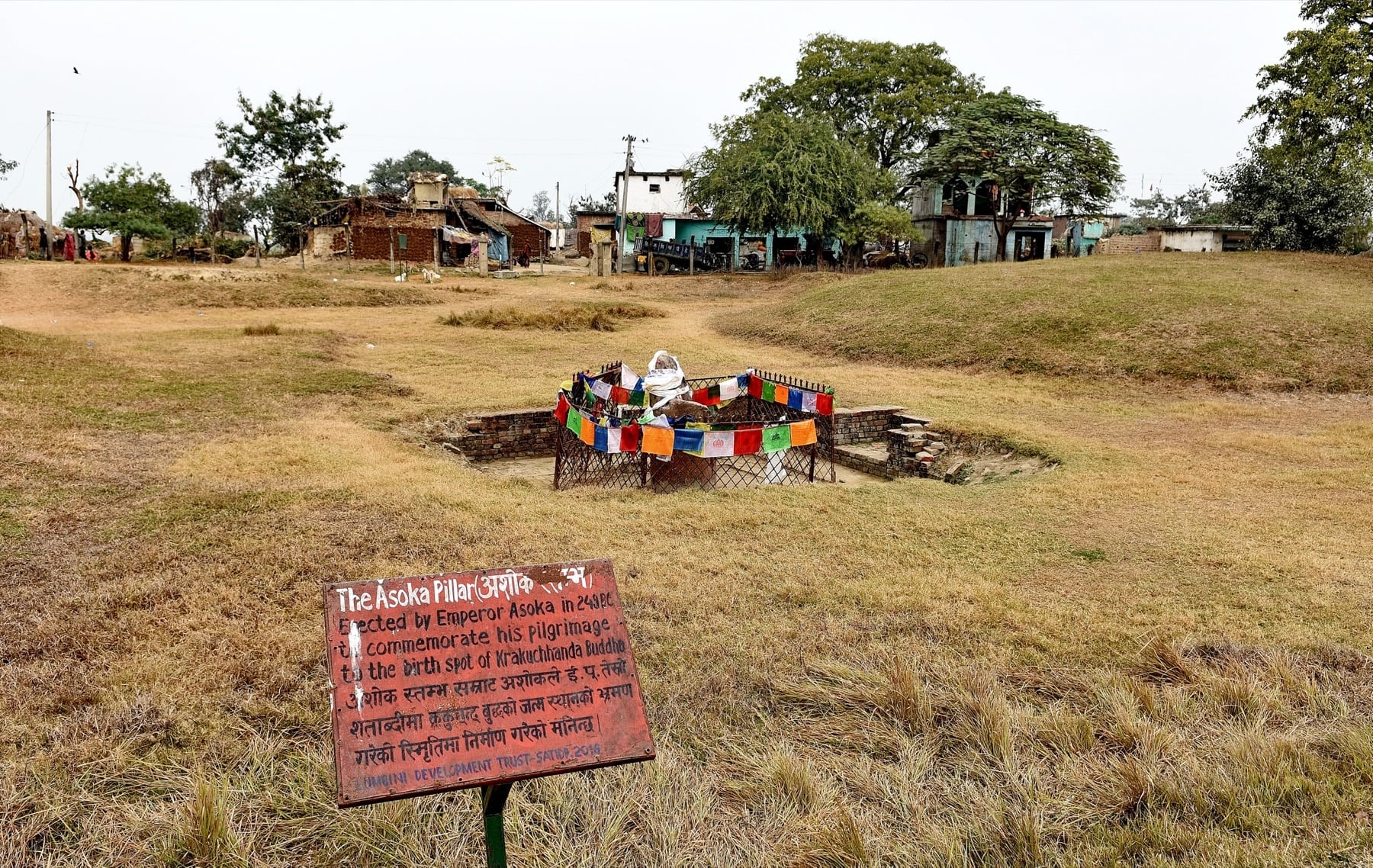
The broken Ashoka pillar at Gotihawa, its capital never recovered. Photo: Rajesh Dhungana, CC BY-SA 4.0.
04

Gotihawa

Birthplace of Krakuchhanda BuddhaAshoka pillar, 249 BCE

Identified in Buddhist tradition as the birthplace of Krakuchhanda Buddha, one of the Buddhas held to have preceded Shakyamuni. Ashoka raised a stone pillar here in 249 BCE to mark the spot; what survives stands 3.25 metres tall on its original masonry base, 83 by 79 centimetres across, its inscribed, lion-topped capital broken off and never recovered, though the Chinese pilgrims Fa-Hien (399–413 CE) and Xuanzang (636 CE) both recorded seeing it whole. A joint Nepali–Italian excavation in 1993 found evidence of human activity spanning the tenth or ninth century BCE through the third or fourth century CE, nearly a millennium and a half of continuous presence at a single spot. The pillar and its surrounding ground remain in fragile, weathered condition today, among the least visited of the circuit’s nine sites despite carrying one of its oldest confirmed dates.

Read the full story →
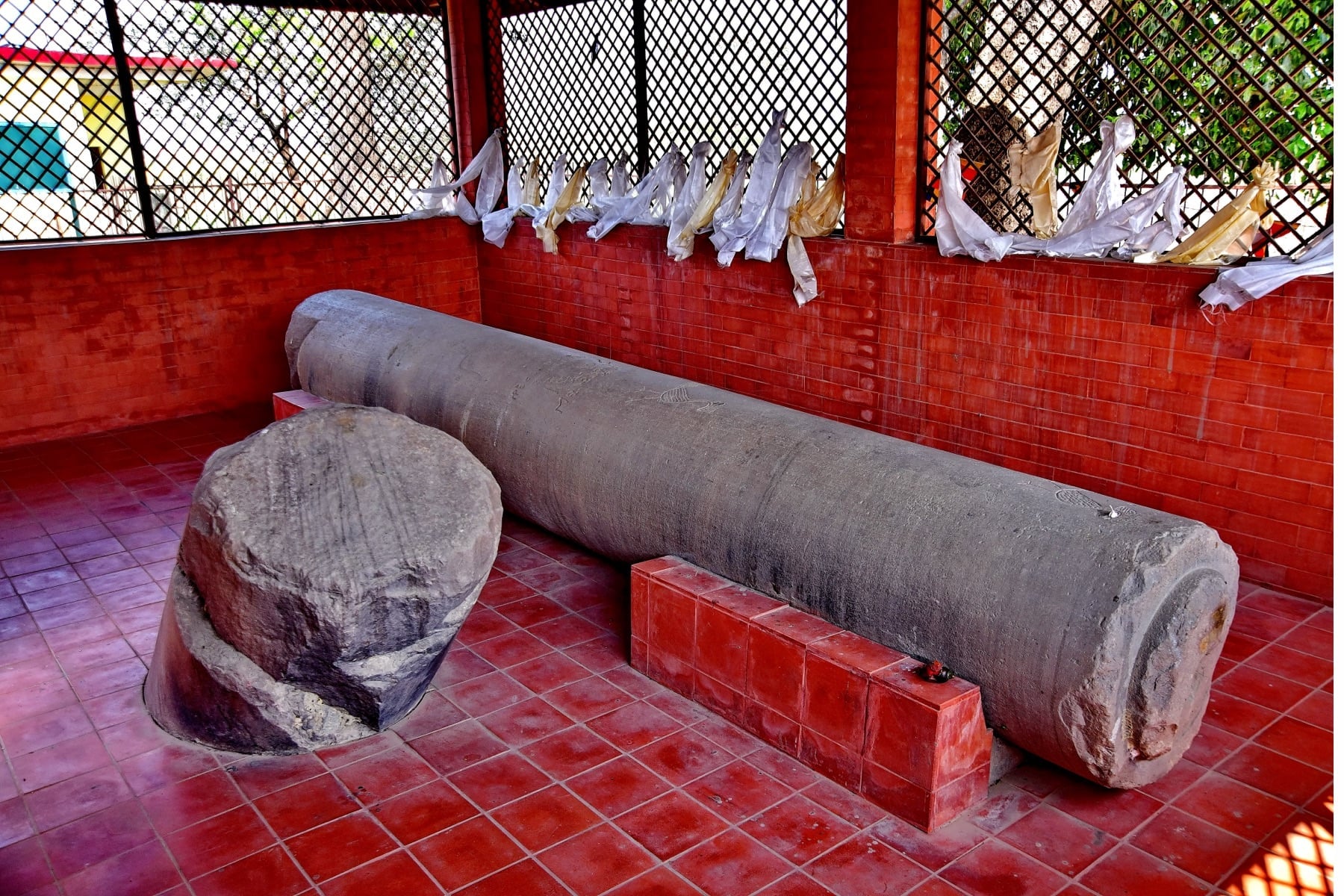
The Ashoka pillar at Niglihawa, broken into two pieces. Photo: Rajesh Dhungana, CC BY-SA 4.0.
05

Niglihawa

Birthplace of Kanakamuni BuddhaRediscovered 1895

Identified as the birthplace of Kanakamuni Buddha, some seven kilometres northeast of Taulihawa. Ashoka’s own pillar here, rediscovered by Dr. A. A. Führer in 1895, records in Brahmi and Pali that he personally enlarged Kanakamuni’s stupa and worshipped it in the twentieth year of his reign, the same formula, on the same imperial tour, that produced the Lumbini pillar’s inscription. In 1312 CE the same king who inscribed that Lumbini pillar, Ripu Malla, carved his own line of homage onto this one too: “Om Mani Padme Hum, Sri Ripu Malla, may he live long.” Niglihawa and Lumbini are, on present evidence, the only two Ashokan pillars in Nepal to carry both a third-century-BCE imperial inscription and a fourteenth-century royal one, two rulers, sixteen centuries apart, choosing the same stone. The pillar survives today broken into two pieces.

Read the full story →
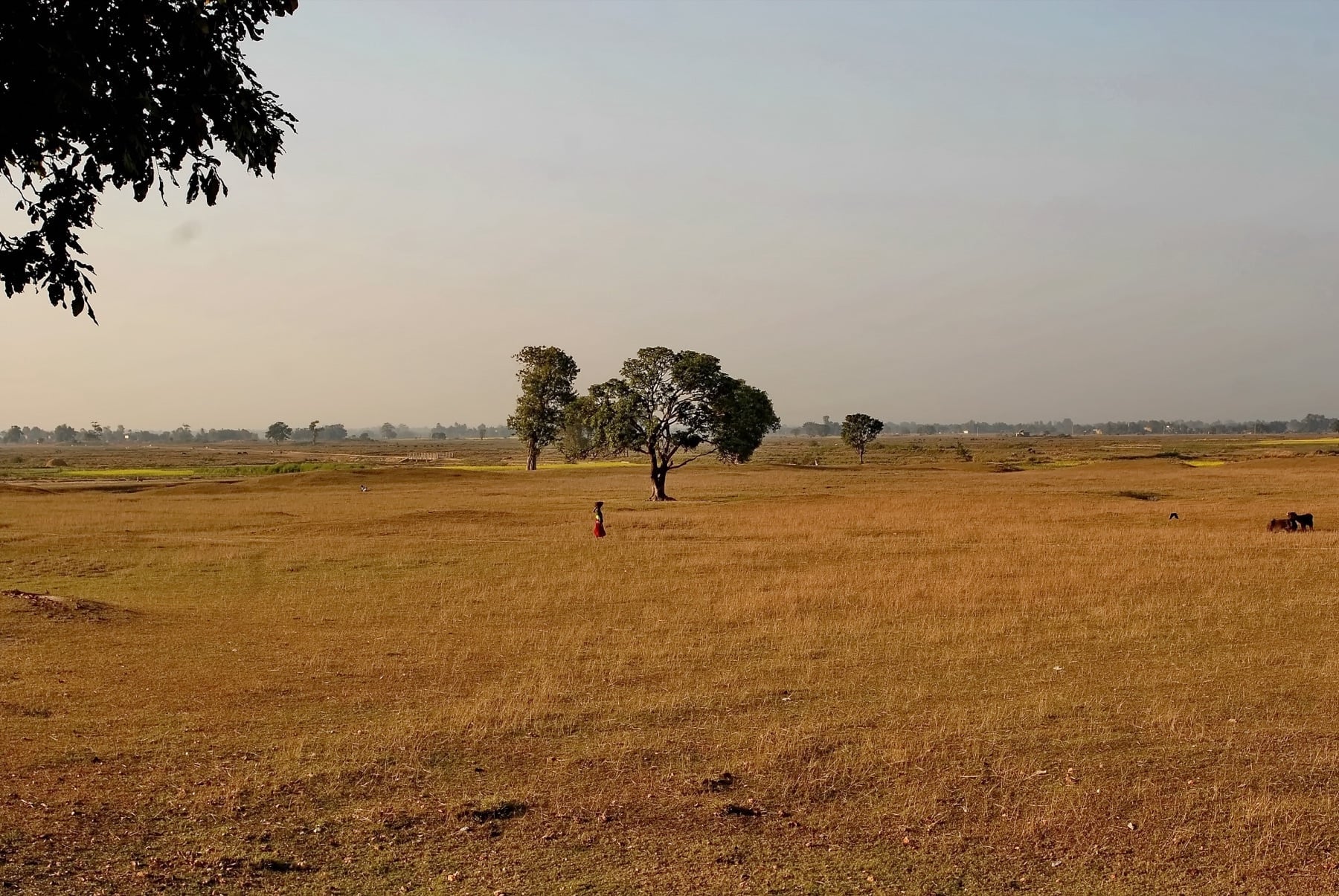
The moated citadel grounds at Araurakot. Photo: Rajesh Dhungana, CC BY-SA 4.0.
06

Araurakot

Where Kanakamuni grew up9 associated sites mapped

The fortified, moated town where Kanakamuni Buddha is said to have lived, grown up and married, a large rectangular citadel roughly nine kilometres northeast of Tilaurakot, its ramparts and moat still readable in the field despite centuries with no formal excavation. A joint Nepali–Italian archaeological team identified nine associated sites in the surrounding area in 1996–97, and a later UNESCO-led survey, carried out with the Department of Archaeology and Durham University, has since mapped extensive structural ruins buried beneath the citadel itself using geophysical survey rather than the spade, a site, on the current record, still more mapped than excavated, and one of the circuit’s clearer candidates for future fieldwork. What a visitor finds on the ground today is largely the moat and rampart itself, a rectangular earthwork enclosing heaps of unexcavated ruin, quiet fields standing over a town whose interior has not yet been opened to the trowel.

Read the full story →
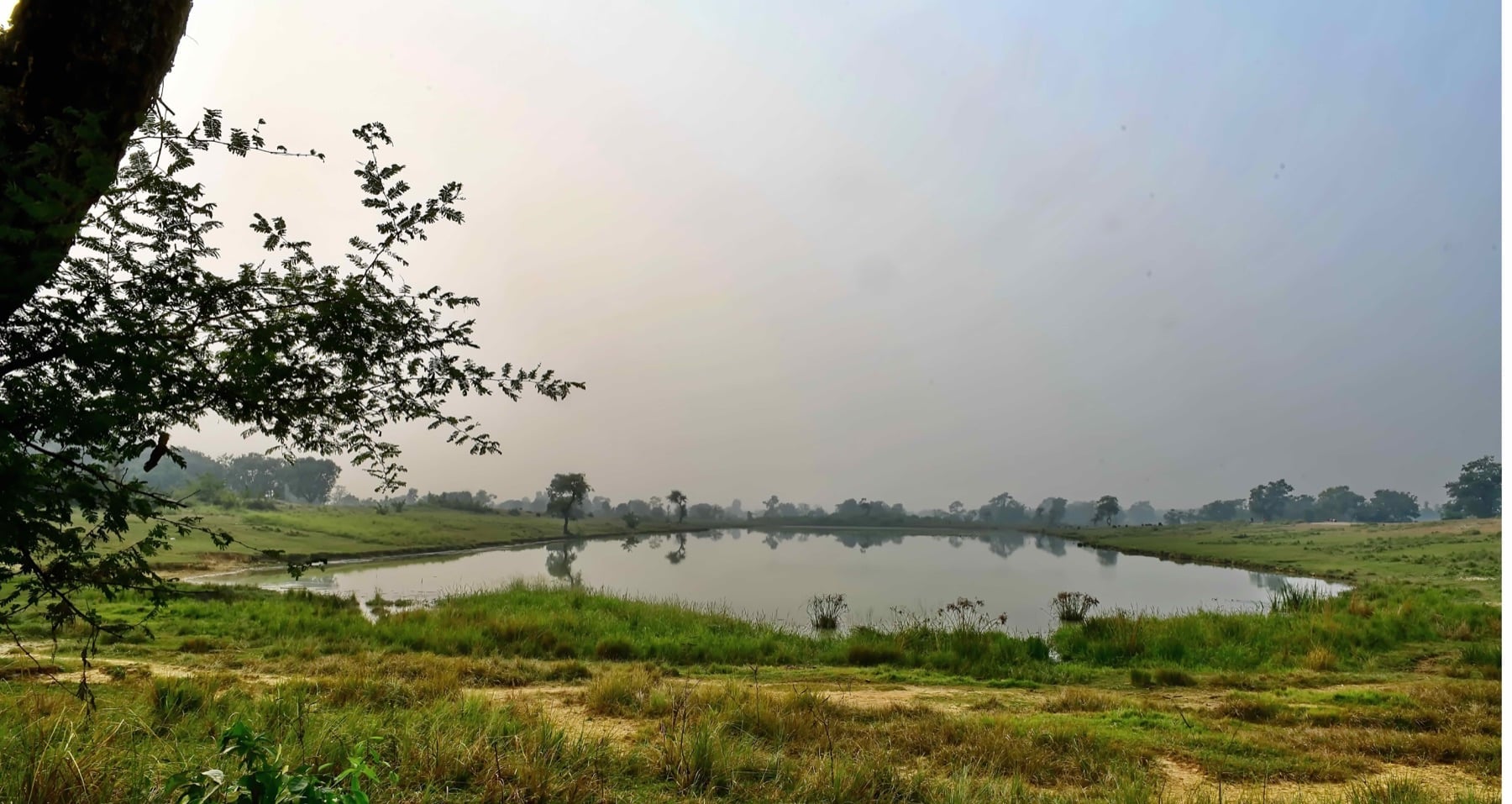
The wetland at Sagarhawa, near Jagdishpur Lake. Photo: Rajesh Dhungana, CC BY-SA 4.0.
07

Sagarhawa

Site of the Shakya massacreExcavated 1897 by Führer

Tradition holds that the Shakya clan was massacred here by King Virudhaka of Kosala, out of revenge, a lake and wetland, known locally as Lumbusagar, roughly twelve kilometres north of Taulihawa near today’s Jagdishpur Lake. It is a sober site to include beside so much talk of birth and awakening, but the circuit does not soften it, and neither should this account. Alois Anton Führer carried out the first excavation here in 1897 on behalf of the Government of Nepal, uncovering the remains of seventeen stupas, eight on the pond’s south side, nine on its west, arranged in long rows around the site’s largest stupa, together with the structures of a well and a vihara: a field of grief rendered, stone by stone, into something like liturgy. Conservation work at the site, long neglected, has since been taken up again by Nepal’s Department of Archaeology.

Read the full story →
Ramagrama

The ninth site, and the subject of the rest of this account

Forty miles east of Lumbini stands the ninth site of the circuit: Ramagrama, capital of the ancient Koliya kingdom, and, uniquely among every stupa raised to hold the Buddha’s relics after his death, the one that has never been opened.
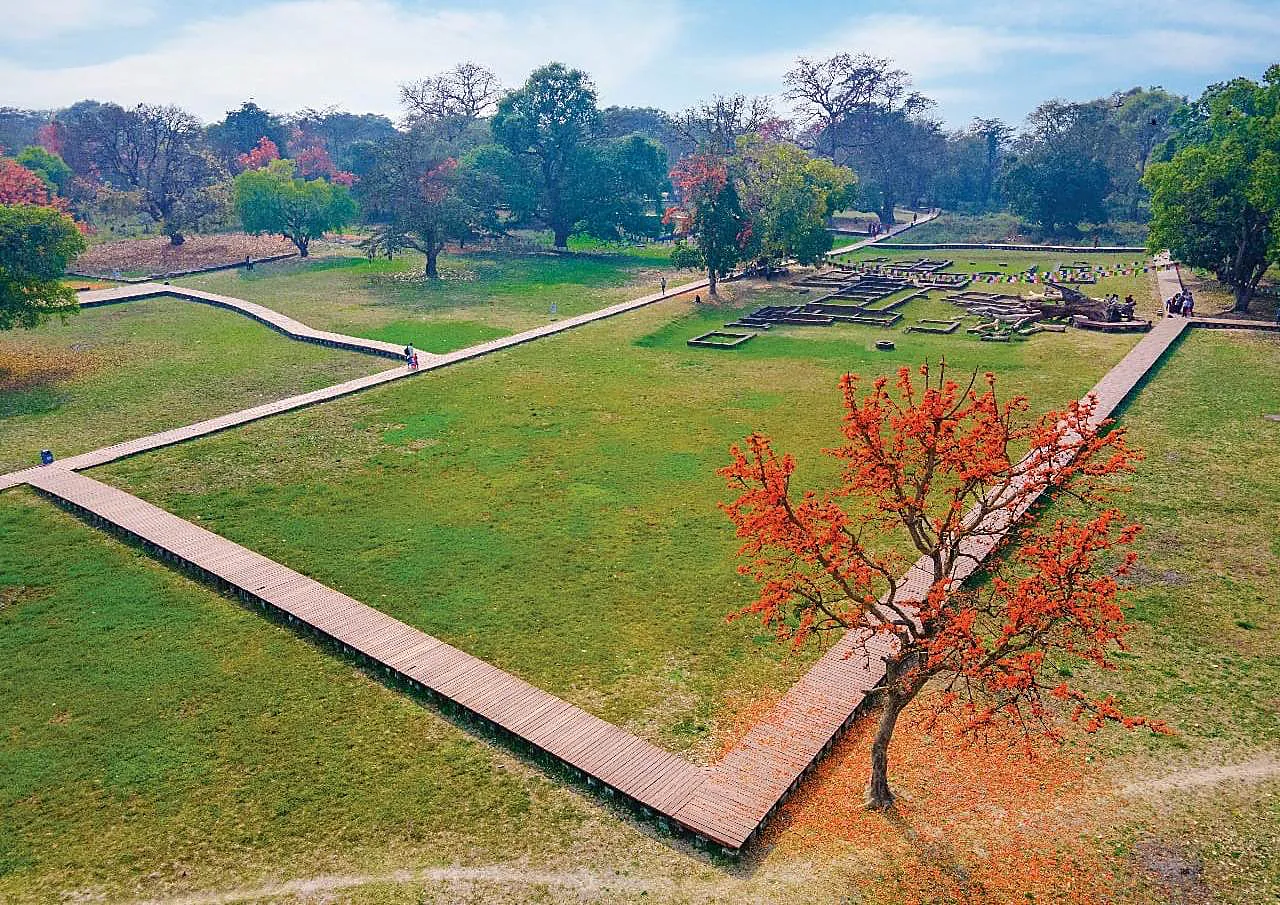
Tilaurakot, ancient Kapilavastu, a present-day render of the site.
01Tilaurakot, ancient Kapilavastu, a present-day render of the site.
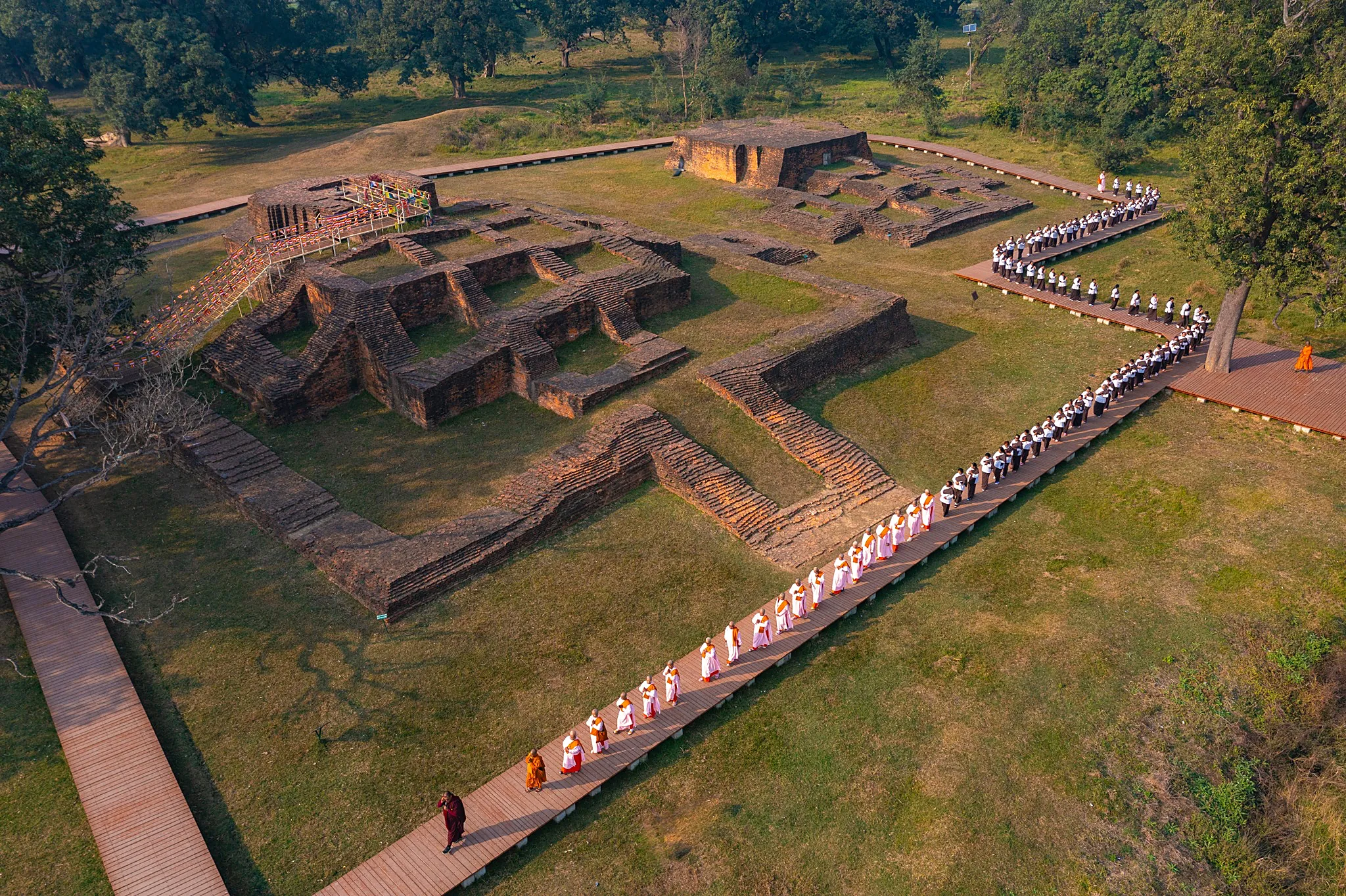
Kudan, the ancient Nyigrodharama, a present-day render of the site.
02Kudan, the ancient Nyigrodharama, a present-day render of the site.
The circuit today

Pilgrimage, ceremony and daily life across the landscape
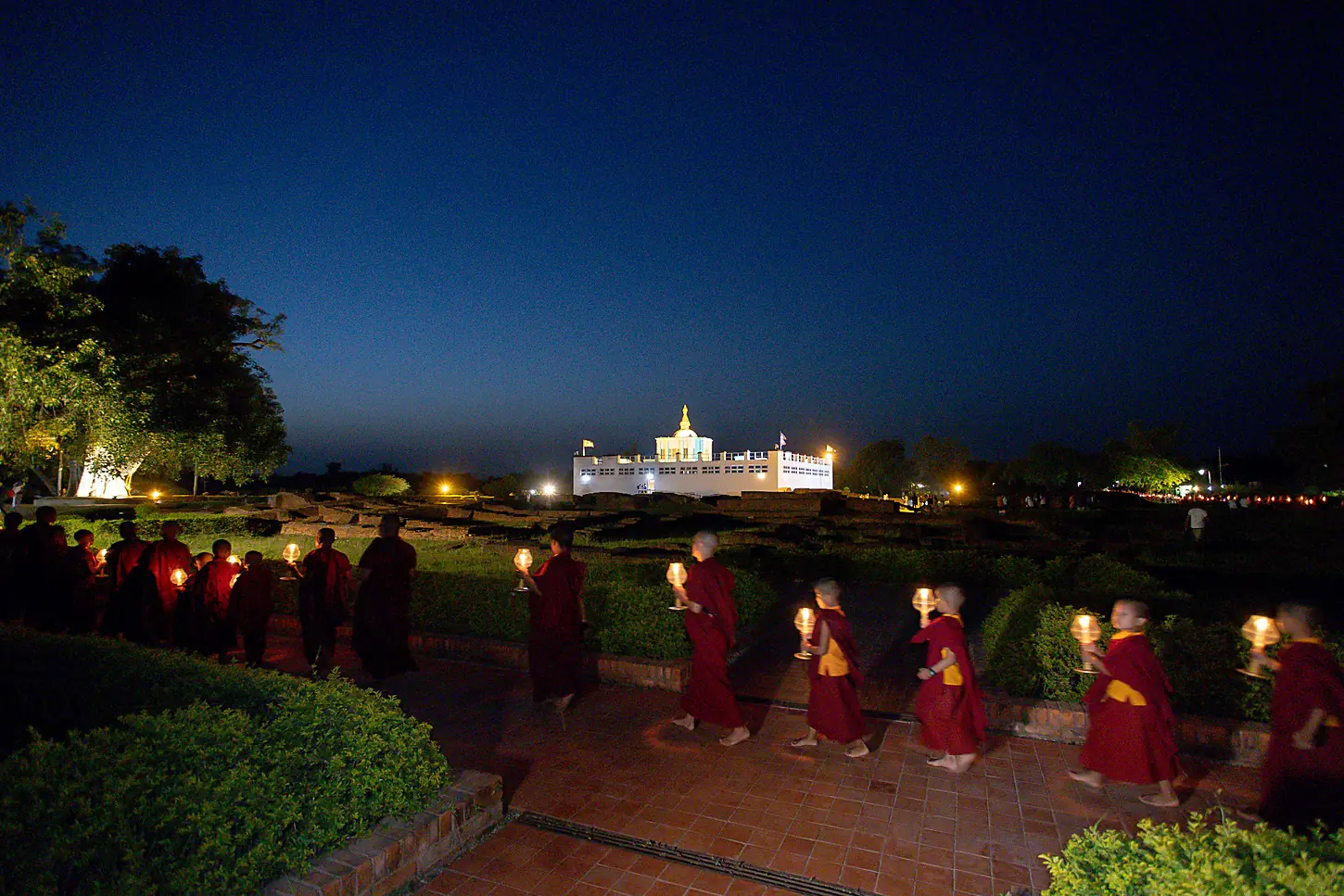
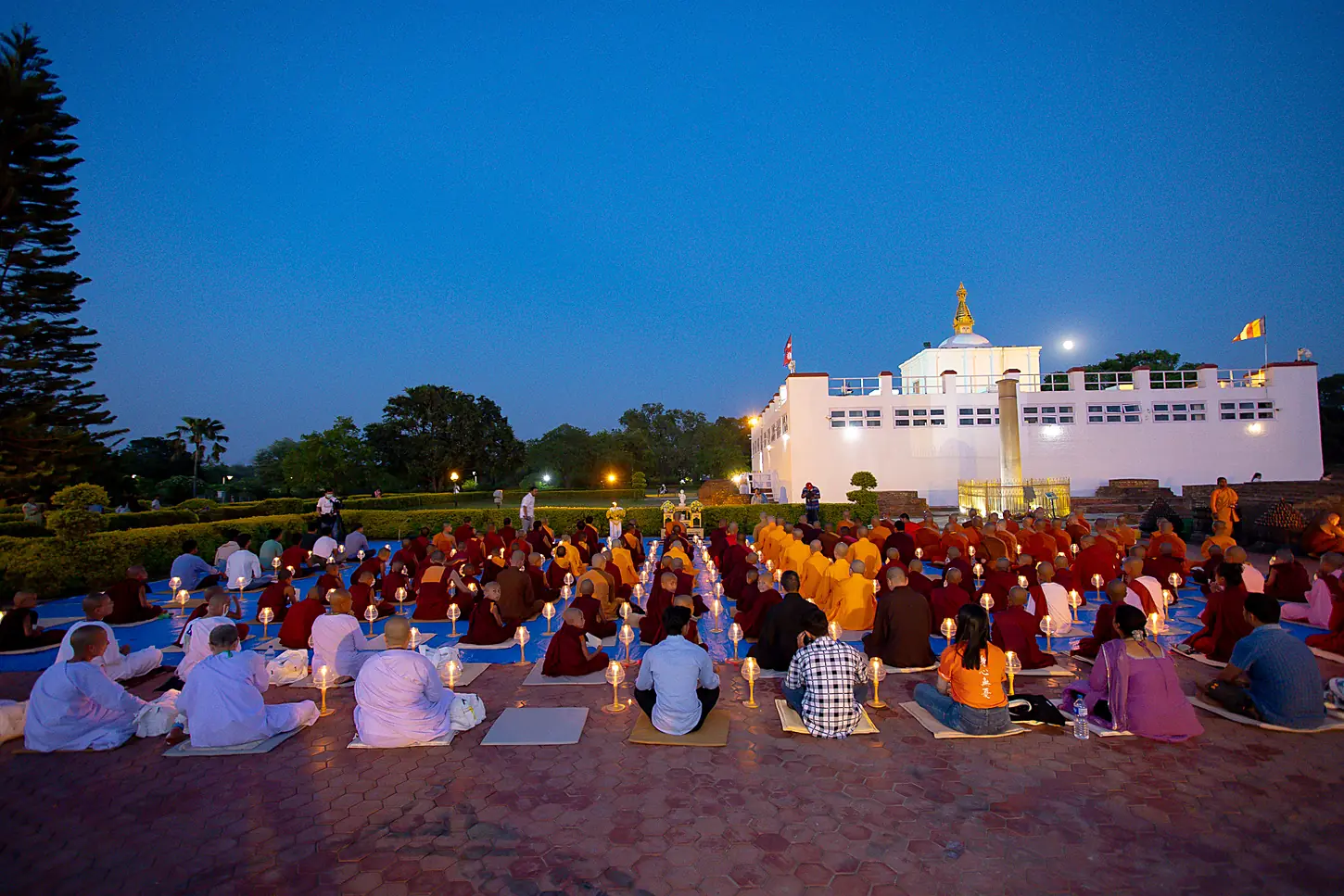
Evening candlelight procession at the Maya Devi Temple, Lumbini.
01Evening candlelight procession at the Maya Devi Temple, Lumbini.
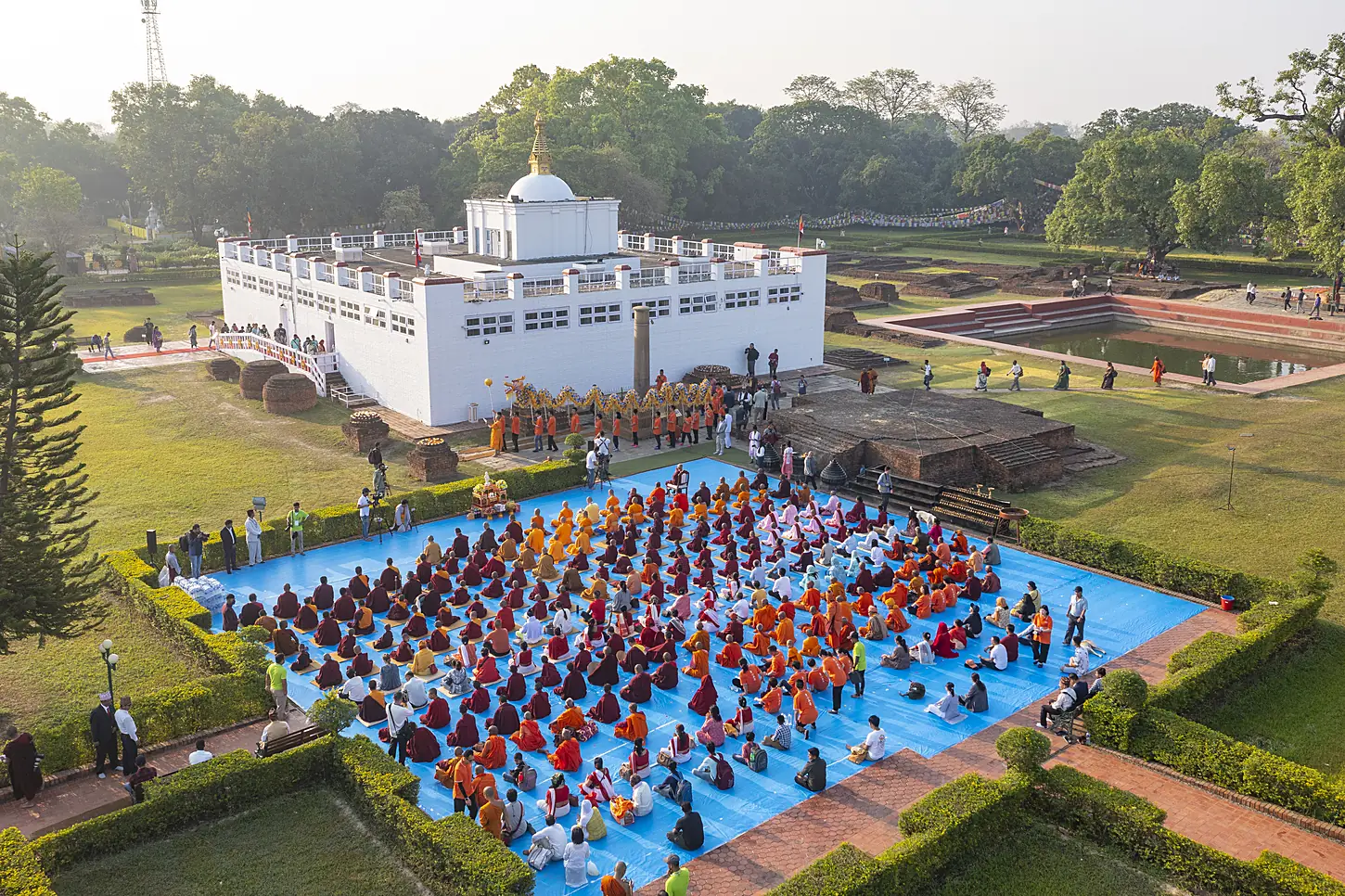
A dusk meditation gathering in front of the Maya Devi Temple.
02A dusk meditation gathering in front of the Maya Devi Temple.
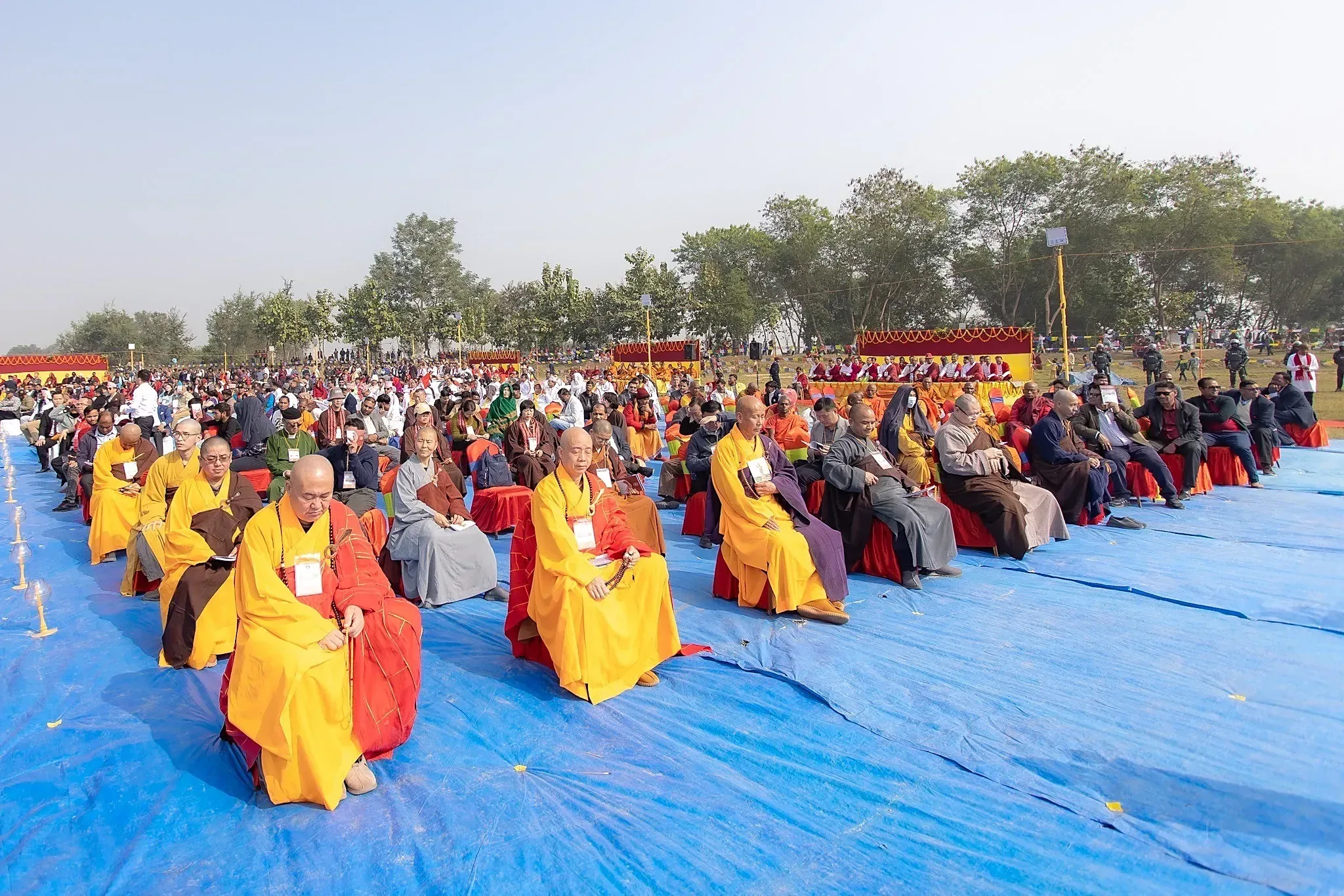
Monks and visitors assembled for a ceremony on the Lumbini grounds.
03Monks and visitors assembled for a ceremony on the Lumbini grounds.
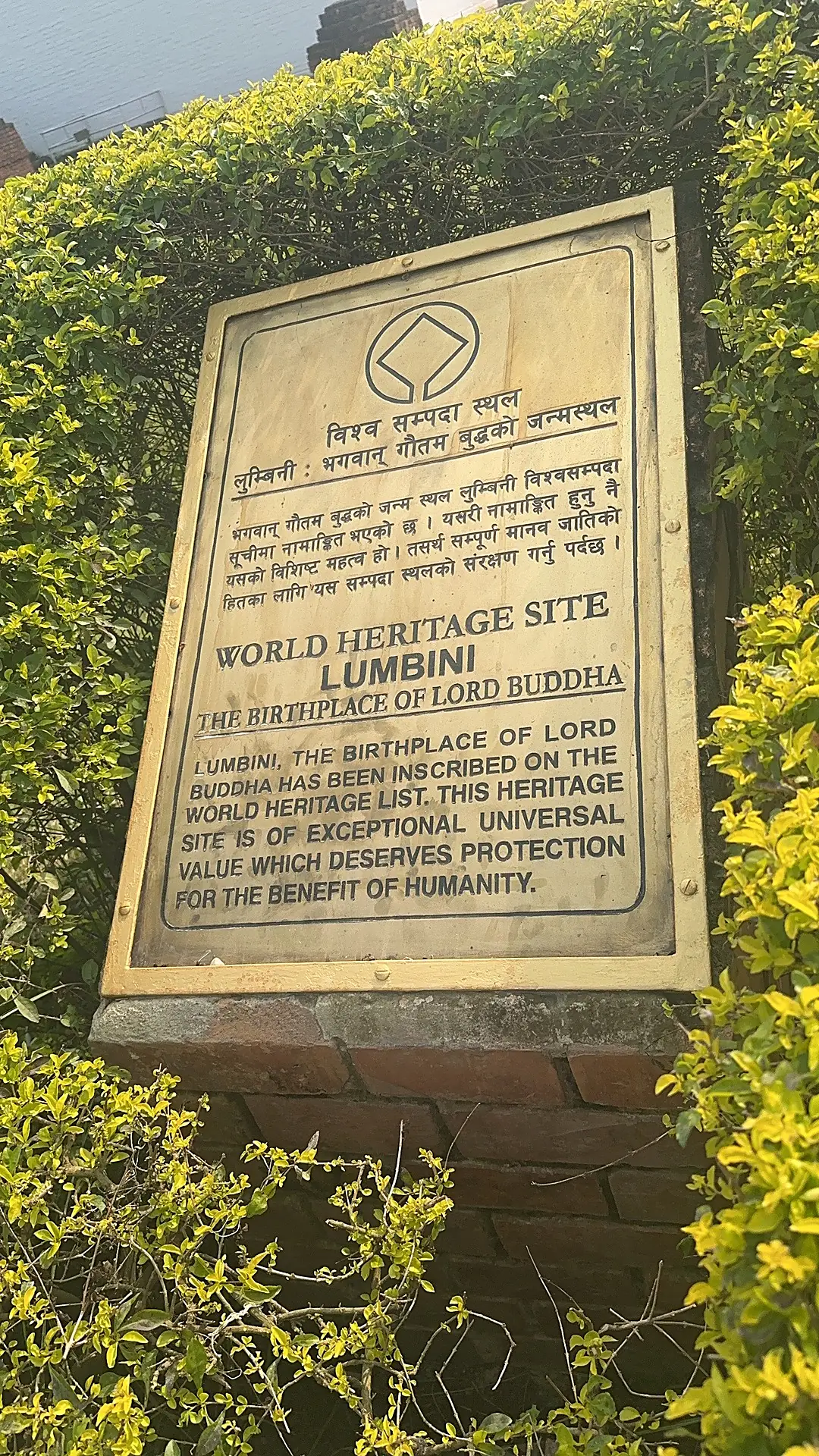
World Heritage Site marker at the birthplace of the Buddha.
04World Heritage Site marker at the birthplace of the Buddha.
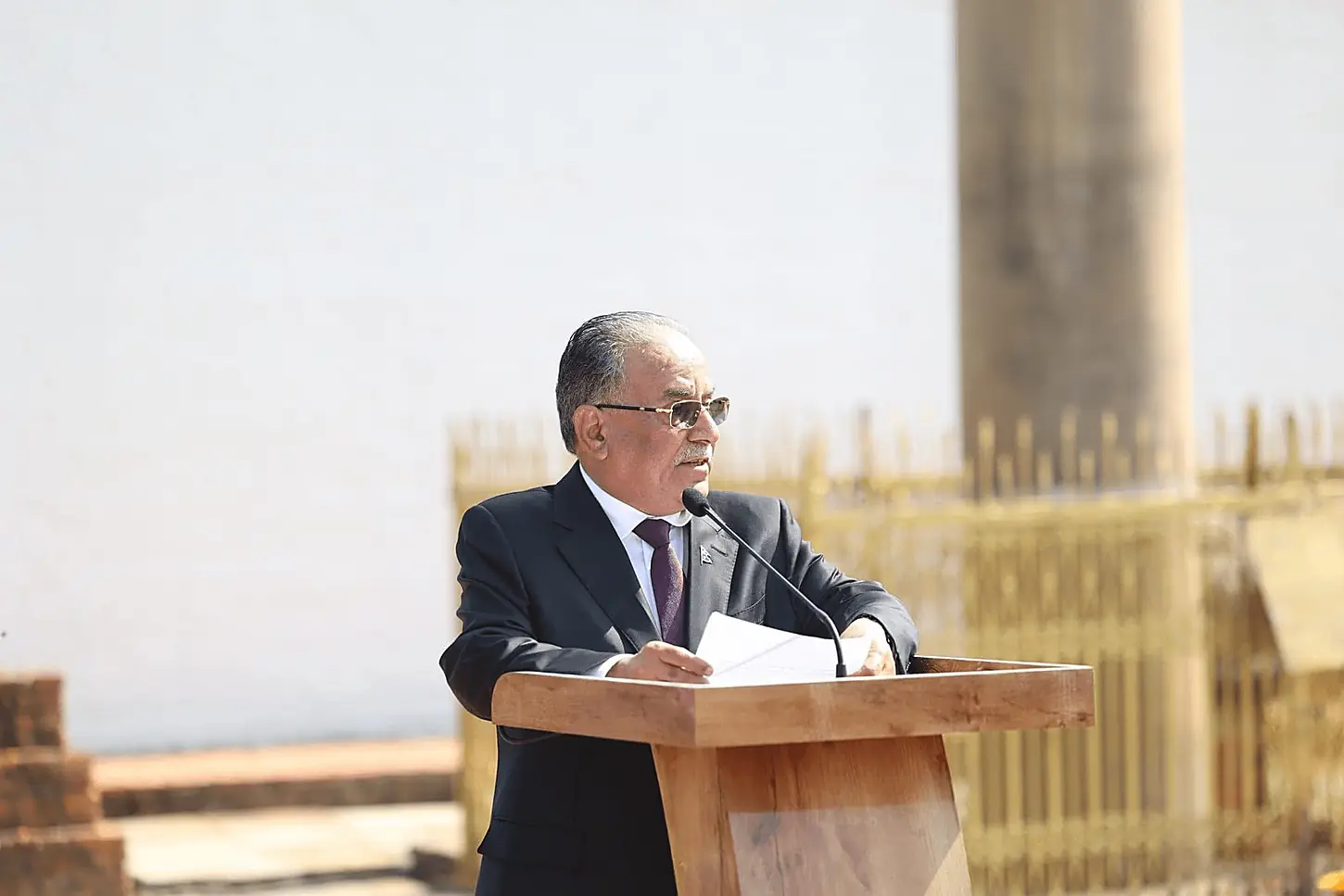
Official address with the Ashoka Pillar visible behind the speaker.
05Official address with the Ashoka Pillar visible behind the speaker.
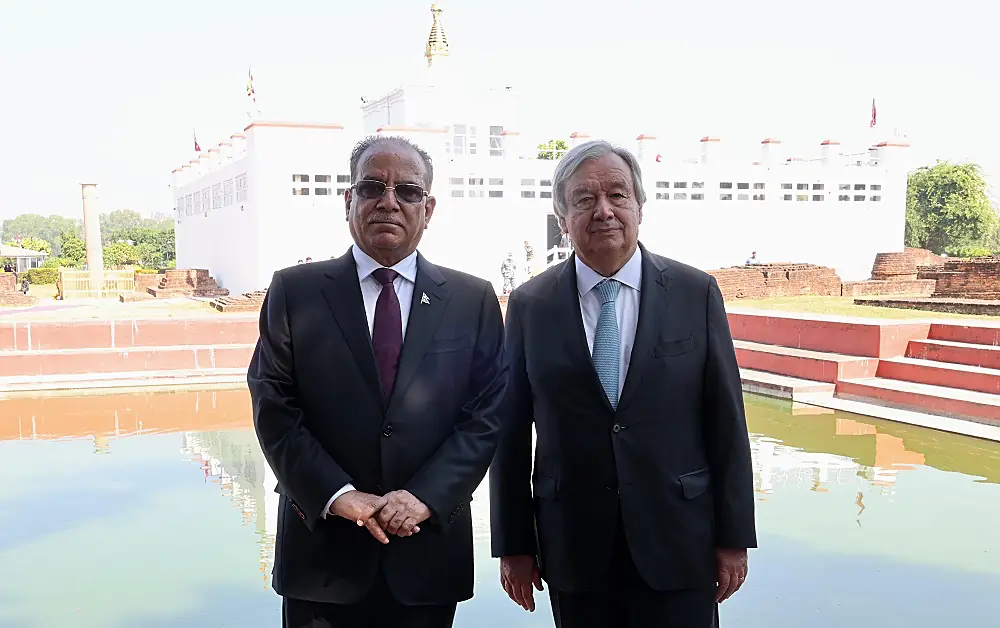
Dignitaries posed before the Maya Devi Temple and its reflecting pond.
06Dignitaries posed before the Maya Devi Temple and its reflecting pond.
Next

The stupa that was never opened

The legend of the Naga guardian, and the archaeology that confirmed it.