
Sagarhawa
Site of the Shakya massacre · Excavated 1897 by Führer
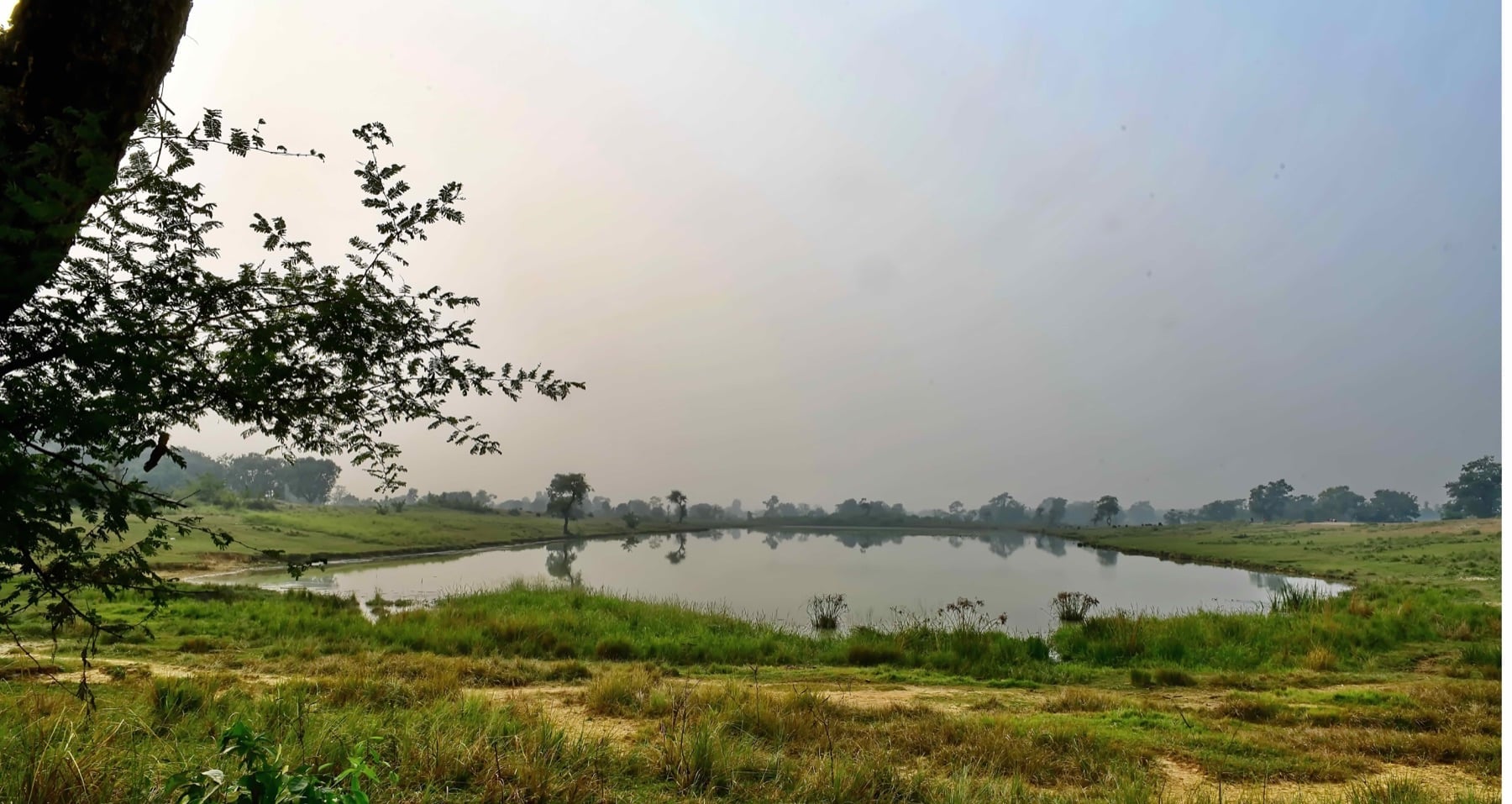
Tradition holds that the Shakya clan was massacred here by King Virudhaka of Kosala, out of revenge, a lake and wetland, known locally as Lumbusagar, roughly twelve kilometres north of Taulihawa near today’s Jagdishpur Lake. It is a sober site to include beside so much talk of birth and awakening, but the circuit does not soften it, and neither should this account. Alois Anton Führer carried out the first excavation here in 1897 on behalf of the Government of Nepal, uncovering the remains of seventeen stupas, eight on the pond’s south side, nine on its west, arranged in long rows around the site’s largest stupa, together with the structures of a well and a vihara: a field of grief rendered, stone by stone, into something like liturgy. Conservation work at the site, long neglected, has since been taken up again by Nepal’s Department of Archaeology.
From tradition and the ground
Virudhaka’s march
The Kosalan prince Vidudabha, later King Virudhaka, had been humiliated by the Shakyas over a marriage dispute. When he came to the throne he led an army westward to punish the clan that had slighted him, determined to erase Kapilavastu.
The Buddha’s intervention
The Buddha is said to have sat alone beneath a bare tree in Virudhaka’s path. Twice the king’s chariot could not pass, and he turned back; the third time the Buddha let him proceed, saying the karma of the Shakyas had ripened and could not be averted.
Seventeen stupas of grief
Führer’s excavation revealed seventeen small stupas lined beside the water, memorials, tradition says, raised by the few survivors over the dead of the massacre. Their neat rows are among the most haunting archaeological remains on the circuit.
View of the site
The story behind the stones
The scriptural account holds that King Virudhaka of Kosala, once slighted by the Shakyas over a marriage arrangement, marched on Kapilavastu in revenge once he took the throne. Tradition says the Buddha himself, then still living, sat beneath a bare tree in Virudhaka’s path three times to dissuade him, and succeeded twice before concluding on the third occasion that the karma of his clan could not be turned aside. The stupas Führer uncovered at Sagarhawa are traditionally understood as memorials raised by surviving Shakyas to their dead.
Sagarhawa, Kapilavastu
The stupa that was never opened
Ramagrama, the ninth site, and the one none of Ashoka’s successors ever disturbed.