
Ramagrama
The one relic-stupa, among the eight raised after the Buddha’s death, that has never been opened.
The Promised GroupNine ventures. One platform.
Explore the group- Era
- 5th–6th c. BCE
- Location
- Nawalparasi, Nepal
- UNESCO
- Tentative List · Ref. 843
- Status
- Never opened
- Masterplan
- Boeri · 12 Dec 2023
When the Buddha died at Kusinara, his cremated remains very nearly caused the conflict his teaching had spent forty-five years trying to prevent. Several ruling clans sent envoys, each claiming a right to the relics; the Pali chronicles say war was averted only when a Brahmin named Drona proposed the ashes be divided in eight parts, one to each claimant. Each took its portion home and raised a stupa to enshrine it.
Three centuries later, according to the Sri Lankan chronicle the Mahavamsa, the emperor Ashoka, by then a devoted patron of the faith, set out to redistribute those relics into 84,000 new stupas across his empire. He opened seven of the original eight. At Ramagrama, the chronicle says, he was met by a Naga, a serpent-guardian, and turned back before he could disturb it. Whatever one makes of the guardian, the archaeological record agrees with the chronicle on the one fact that matters: this is the sole stupa of the eight never known to have been opened. Nepal’s own National Document on Buddhist Circuits of Nepal states the case as plainly as the legend does: Ramagrama’s relic remains, to this day, “still unexposed.”
At a glance
- 5th–6th c. BCE
- Era
- Nawalparasi
- Location, Nepal
- Ref. 843
- UNESCO Tentative List
The division of the relics
Eight claimants.Seven opened.One silence.
The relics travelled outward to eight kingdoms. Only at Ramagrama did the centre remain undisturbed.
- 01Allakappaa settlement of the Buli people
- 02Kapilavastucapital of the Shakya kingdom, where the Buddha grew up
- 03Kusinaracapital of the Malla republic, where he died
- 04Pavacapital of the neighbouring Malla republic
- 05Rajagahathe great city of the Magadha kingdom
- 06Ramagramacapital of the Koliya kingdom, the stupa never openedThe undisturbed stupa
- 07Vesalicapital of the Vajjika League
- 08Vethadipaa settlement of Brahmins
Not a monument to a man. A monument to a mind it awakens in you.
In his final months, the Buddha was asked directly by his attendant Ānanda how his body should be treated after death. His answer, recorded in the Mahāparinibbāna Sutta, is the founding instruction behind every stupa ever built, including the eight raised over his own relics: treat it as a wheel-turning monarch’s remains would be treated, and raise a monument over it at a crossroads, where people pass.
The same sutta names four kinds of person worthy of a stupa: a Buddha, a Paccekabuddha, an arahant, and a righteous wheel-turning monarch. It is also the origin of the founding event behind Ramagrama’s own stupa, the eight-way division of the Buddha’s relics among rival clans after his cremation, told above.
“Seeing the stupa, thinking “this is the stupa of that Blessed One,” the heart of the passerby grows calm and glad, and that gladness of heart leads to a favorable rebirth.”
Mahāparinibbāna SuttaDīgha Nikāya 16
Fa-Hien, fifth century · Xuanzang, seventh century
Two independent witnesses, two centuries apart, both Chinese Buddhist monks travelling to India in search of scripture, both recorded standing before this stupa, which they knew by its old name, Lanmo.
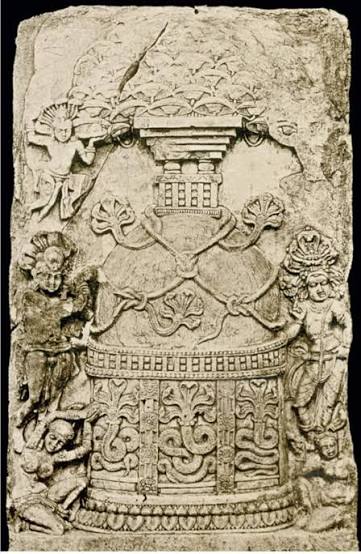
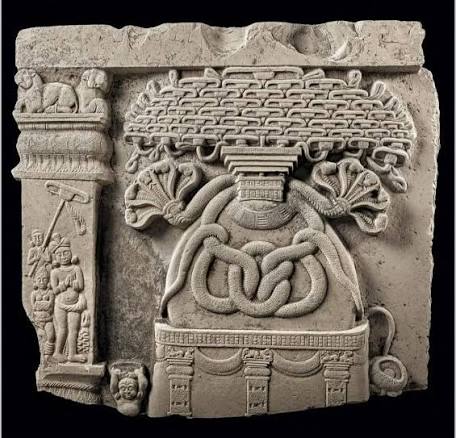
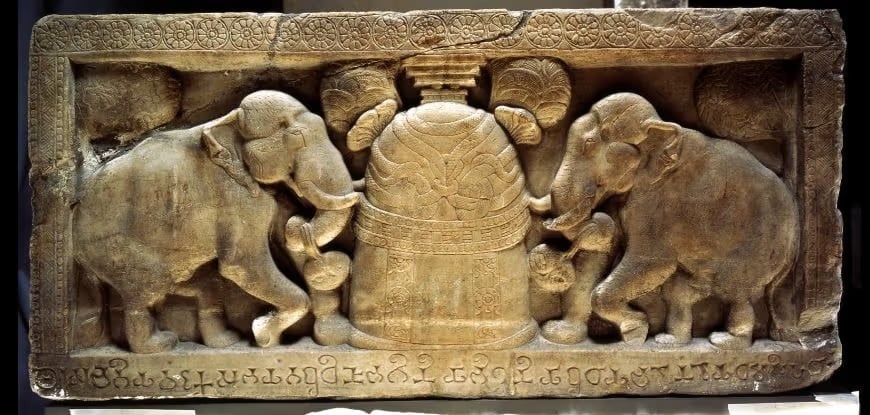
The earliest surviving image
The legend, carved in stone
“By the side of it there was a pool, and in the pool a dragon, which constantly kept watch over the tope, and presented offerings to it day and night… When King Ashoka, breaking up the eight original topes to build 84,000 others, came to break up this one, the dragon showed itself, and took him into its palace; and when the king saw all the things provided for offerings, he was filled, and knew that they exceeded what mortals could prepare, and thereupon returned without carrying out his purpose.”
Faxian (Fa-Hien)A Record of Buddhist Kingdoms, c. 416 CE · trans. James Legge, 1886
Fa-Hien adds a detail the later, grander accounts leave out: by his own time, a monk moved by the site’s neglect had persuaded the local king to clear the ground and establish a residence for monks there. “At the present day,” he writes, “there are monks residing in it.” The pattern this account describes, a stupa’s long silence, broken by one person’s insistence that it be cared for again, is not new to the twenty-first century. It happened once before, at least sixteen centuries ago.
Two hundred years after Fa-Hien, the monk and scholar Xuanzang passed through on his own nineteen-year journey, later dictated as the Great Tang Records on the Western Regions, and recorded the stupa’s height in the units of his own era: a brick tope some “100 chi” tall.
“Beside the stupa is a clear lake, in which a dragon dwells and keeps watch over it. Wild elephants gather flowers in herds and scatter them as offerings before it, and never fail to do so.”
XuanzangDa Tang Xiyu Ji, compiled 646 CE · trans. after Thomas Watters, 1904
Two independent scriptures, centuries before Fa-Hien ever arrived
Fa-Hien and Xuanzang were late corroboration. The guardian story was already old and already fixed in scripture centuries before either monk set out, and two independent textual traditions converge on the same core account, which is stronger evidence than either alone.
The Aśokāvadāna
Roughly 2nd century CE. Ashoka, redistributing the Buddha’s relics into 84,000 new stupas, opens seven of the eight original ones. At Ramagrama he fails: the guardian nāga king’s devotion outmatches the emperor’s power, and he leaves the stupa undisturbed. Standard translation: John S. Strong, The Legend of King Aśoka, Princeton University Press, 1983.
The Mahāvaṃsa
The Sri Lankan Pali chronicle references the same episode independently, and adds a coda: a later flood swept the reliquary into a river, and the nāgas recovered it into their own realm.
How the mound was found again
- 1899
William Hoey surveys the region but does not connect it to Ramagrama.
- 1964
S. B. Deo of Deccan College records an unexplained mound at Parasi, without identifying it further.
- 1974
Babu Krishna Rijal of Nepal's Department of Archaeology visits the mound and, triangulating the distances given by Fa-Hien and Xuanzang, becomes the first in the modern era to identify it as Ramagrama.
- 1996
The Government of Nepal submits the site to UNESCO; on 23 May it is entered on the World Heritage Tentative List as reference 843.
- 1997 & 1999
Two geophysical survey missions, led by Robin Coningham of the University of Bradford, locate the original stupa beneath the site’s Bodhi tree, together with a monastic complex and a brick-edged water tank buried below the surface.
- 1998–2002
Excavation and clearance. Carbon-14 dating places the earliest structure in the fifth to sixth century BCE, with decorated brickwork added in phases through the fourth century CE.
- 2018–19
A further UNESCO-funded survey, again involving Durham University, confirms the stupa is the centre of a substantial buried monastic complex.
Nepal’s Department of Archaeology carried out its own sustained excavation of the mound through these same years, led by archaeologist Sukra Sagar Shrestha and running to 2004, deliberately stopping short of the stupa’s sealed core out of respect for what it holds. What that team did expose was a structure of six construction phases within a square base, standing on the bank of the Jharahi River and rising some seven metres, brick soling laid eight courses deep in its earliest phase, closely matching Xuanzang’s own account of a “brick stupa of one hundred chi”, with clear evidence of restoration and enlargement carried out across the Mauryan, Sunga, Kushana and Gupta periods: four separate dynasties, each adding its own layer to a monument its builders never opened.
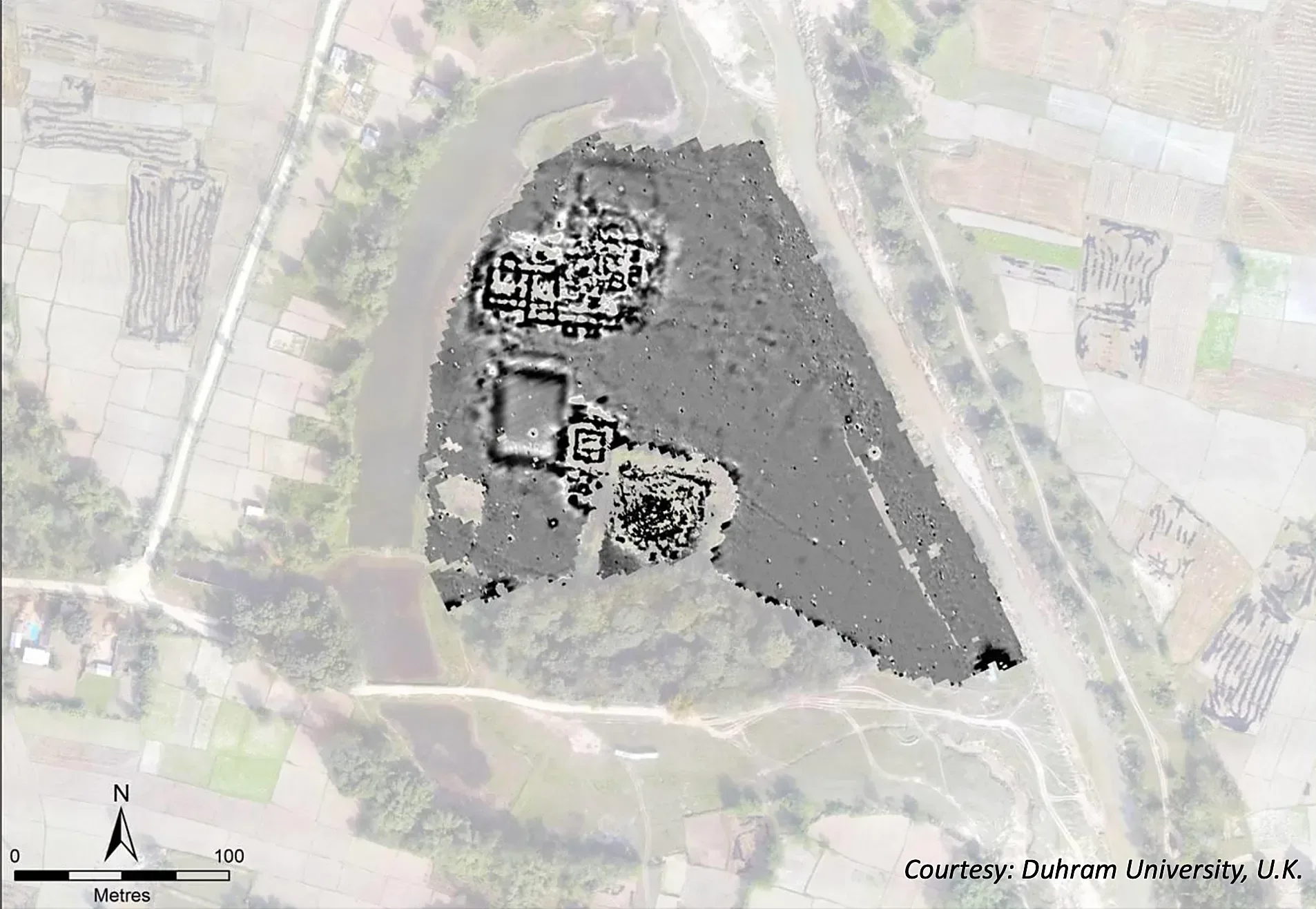
UNESCO’s own listing for the site uses a phrase that appears nowhere else on its Tentative List for Nepal: Ramagrama as “the sole undisturbed stupa containing relics of Lord Buddha.” Every other original relic-stupa has, across twenty-five centuries, been opened, moved, rebuilt or lost. This is the reason the present undertaking exists.
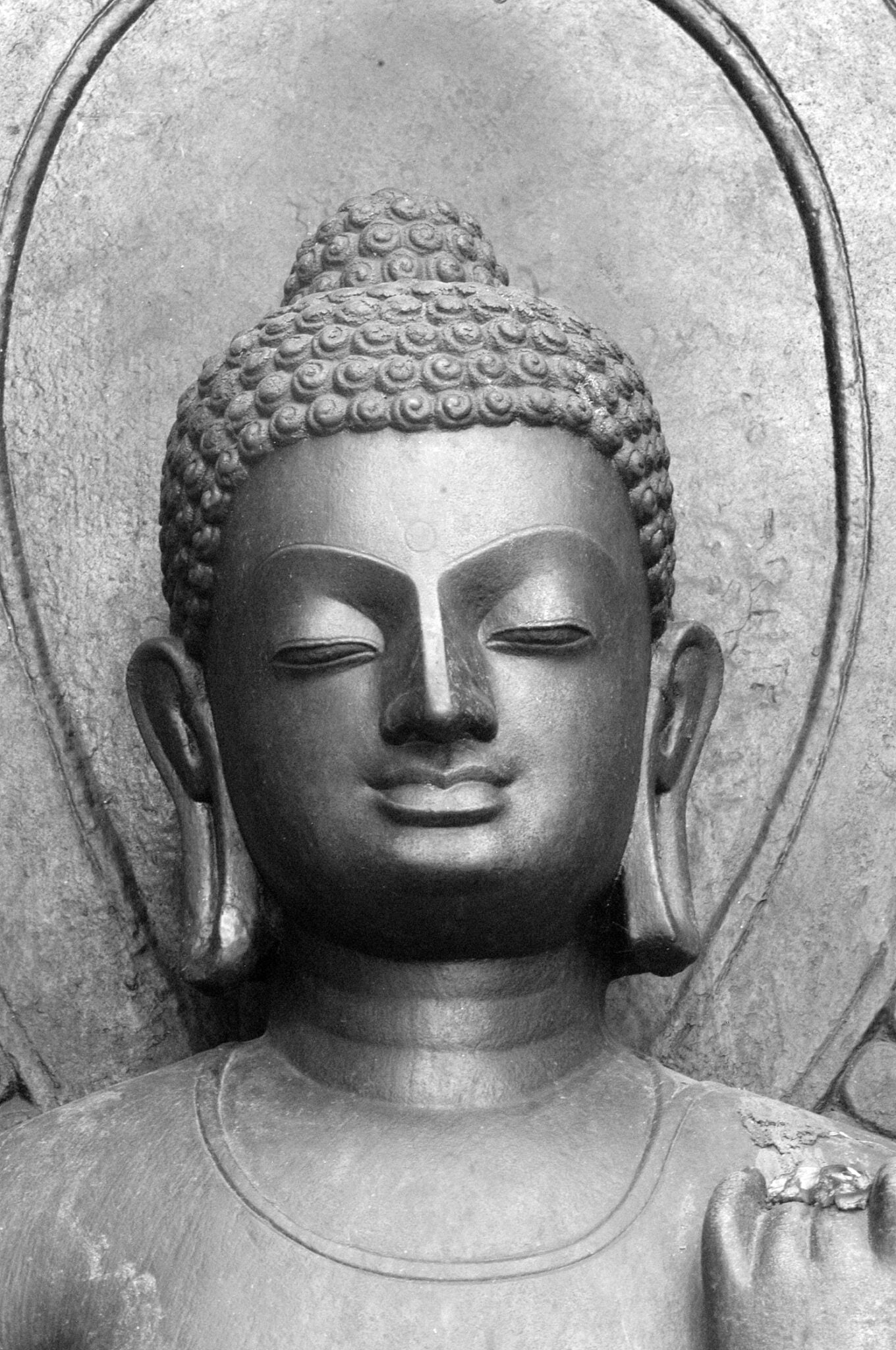
A short distance from the mound, on the banks of the same Jharahi River, a Japanese Buddhist organisation, Bishinokai, has raised a standing image of the Buddha in a small park, a modern act of reverence added, in its own modest way, to a site whose devotional life has never entirely stopped. Nearby, at Panditpur, roughly 13.5 kilometres from Ramagrama, Nepal’s Department of Archaeology has since 2012 been excavating a second mound that some archaeologists, among them Shrestha himself and the senior archaeologist Tara Nanda Mishra, believe may prove to be the actual capital city of the ancient Koliya kingdom, contemporary, on this reading, with ancient Kapilavastu itself. Grey-ware pottery, beads, terracotta and animal figurines, a Kushana-period terracotta mask and a Sunga-period ring well have already been recovered from the 600-by-600-metre mound, work still under way, and a reminder that the ground around Ramagrama has not yet finished telling its story.
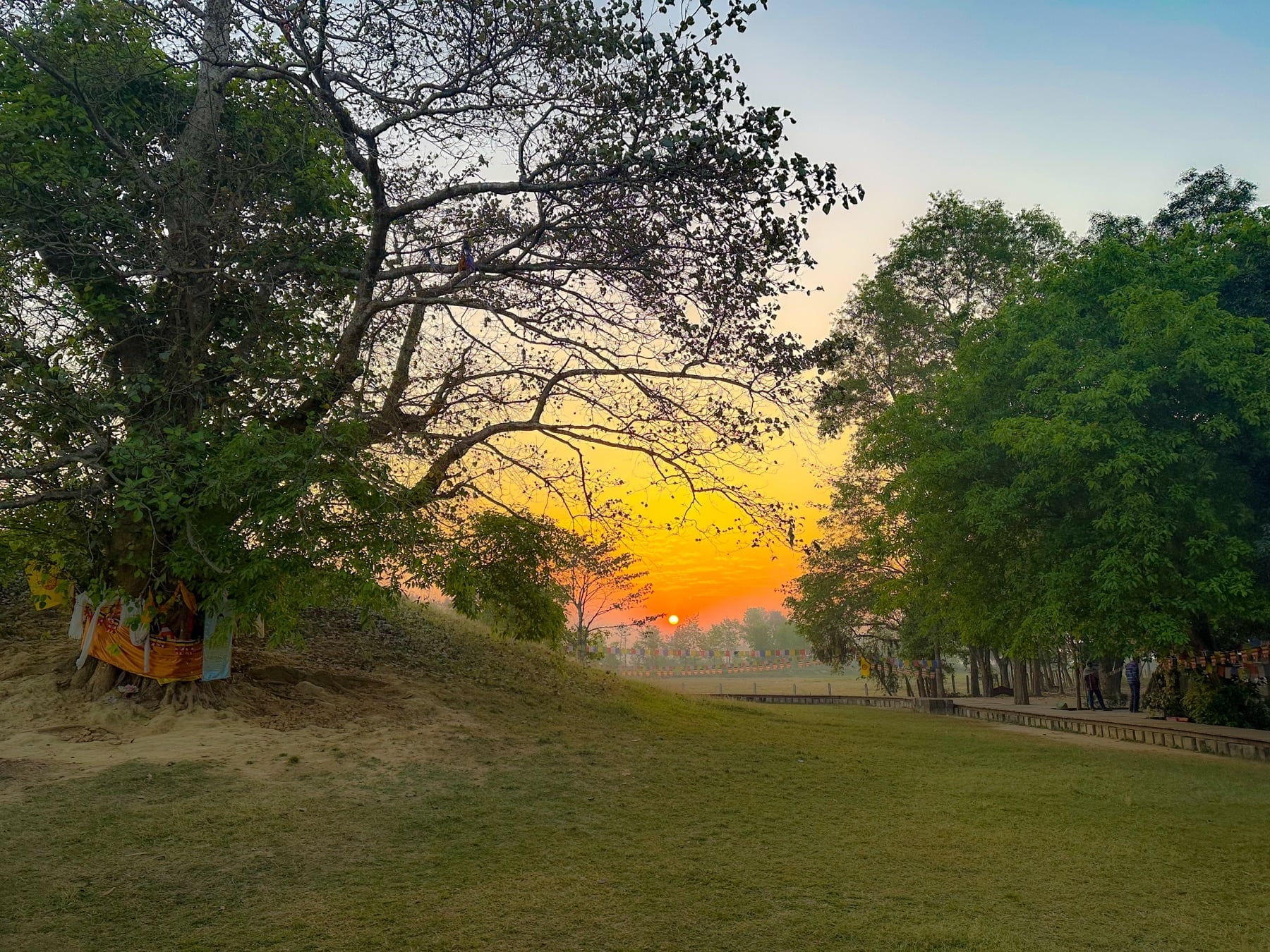
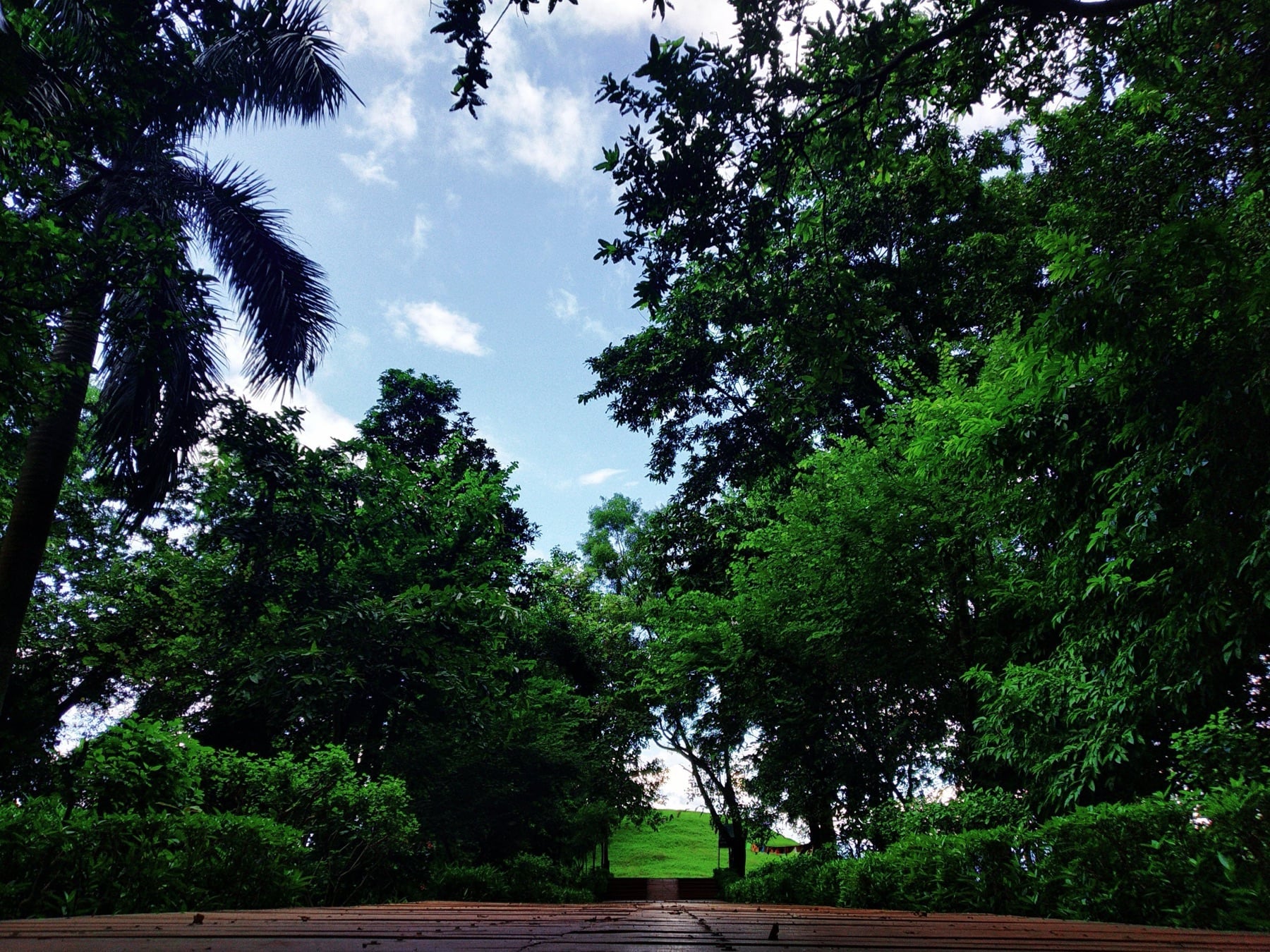
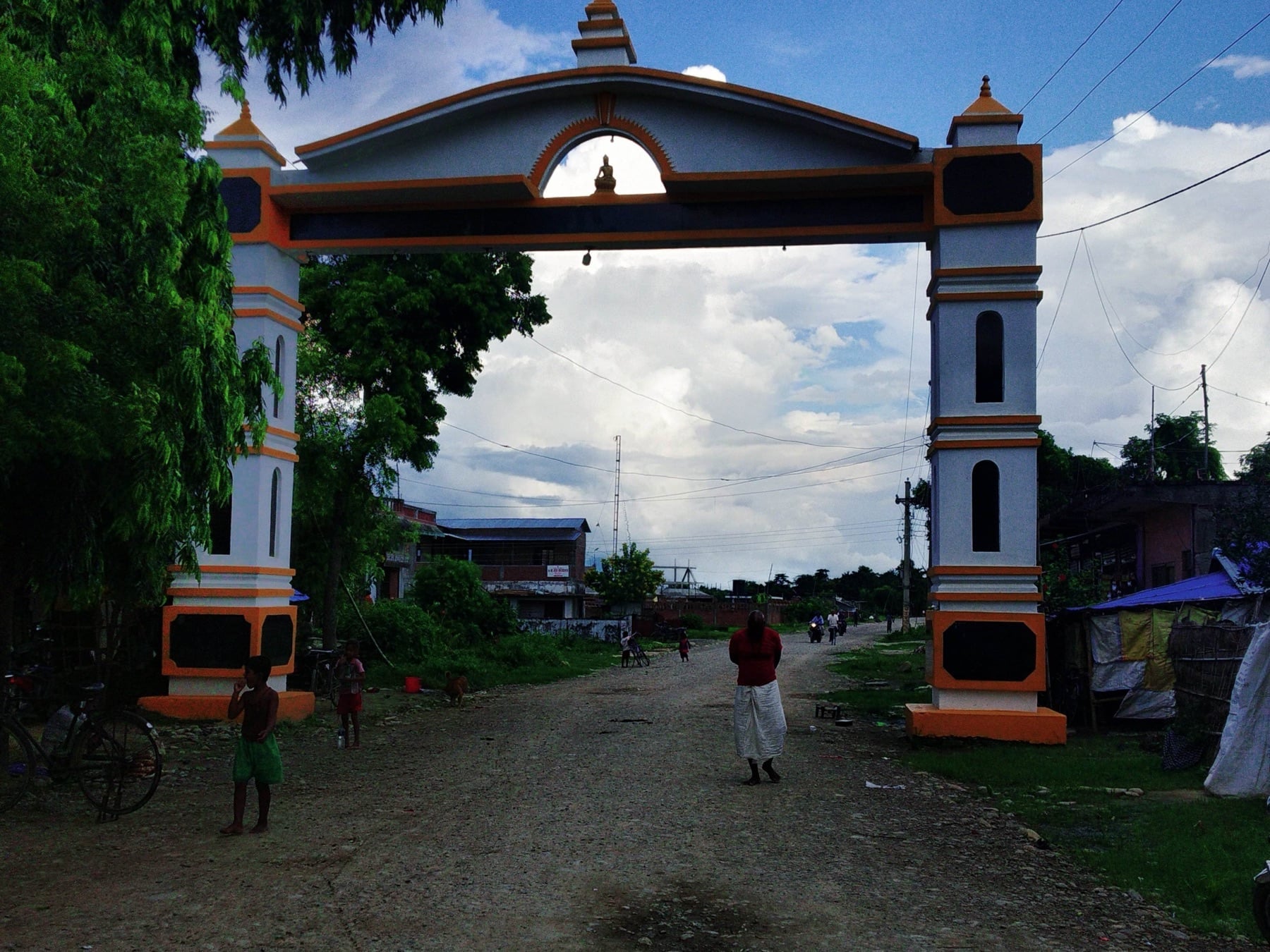
What a visitor finds on the ground now
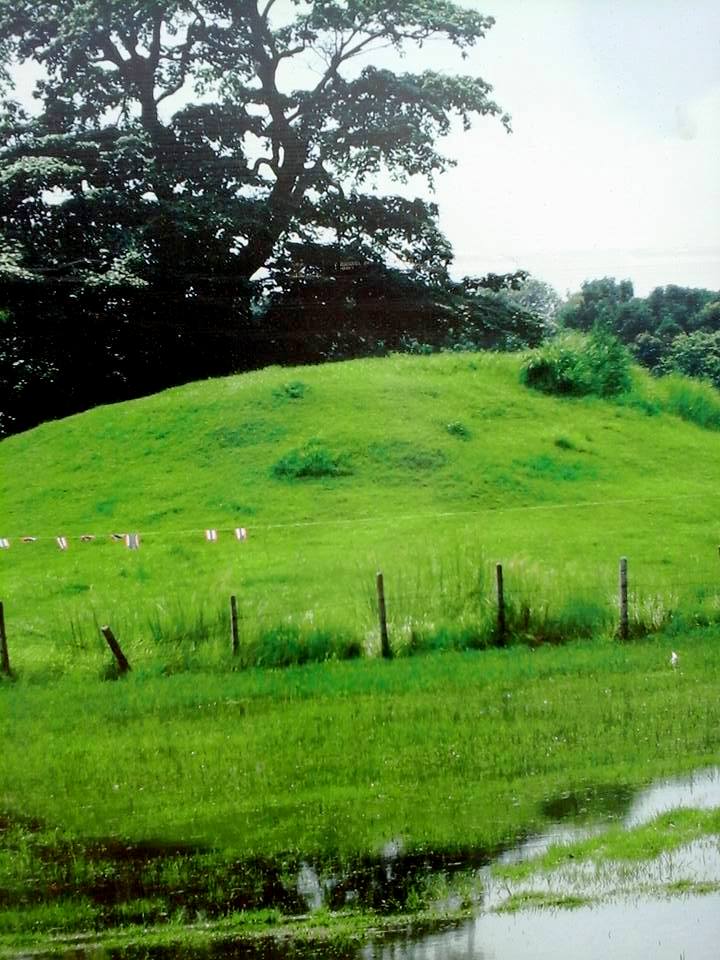
Stefano Boeri Architetti: a landscape the stupa can rest inside
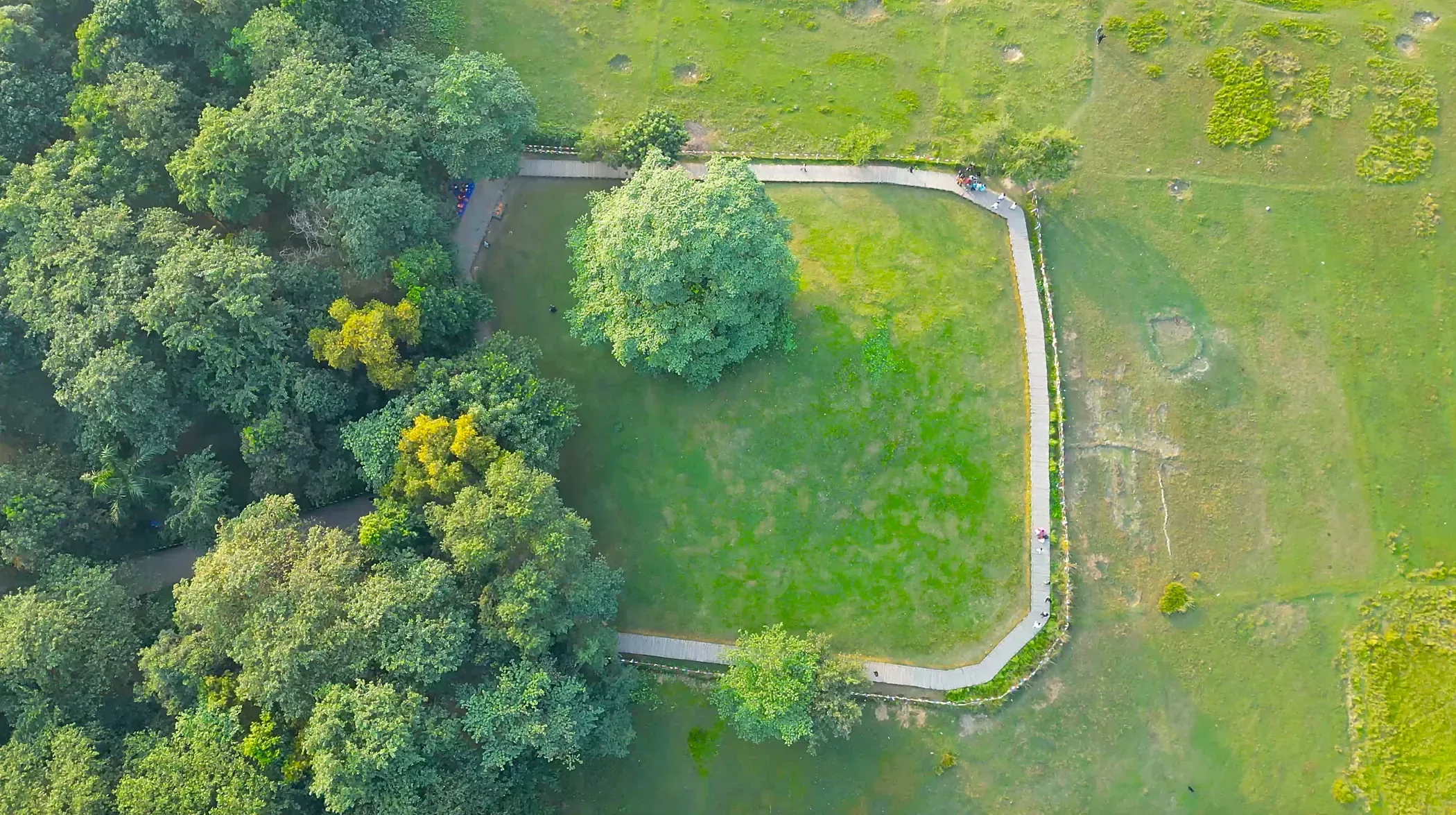
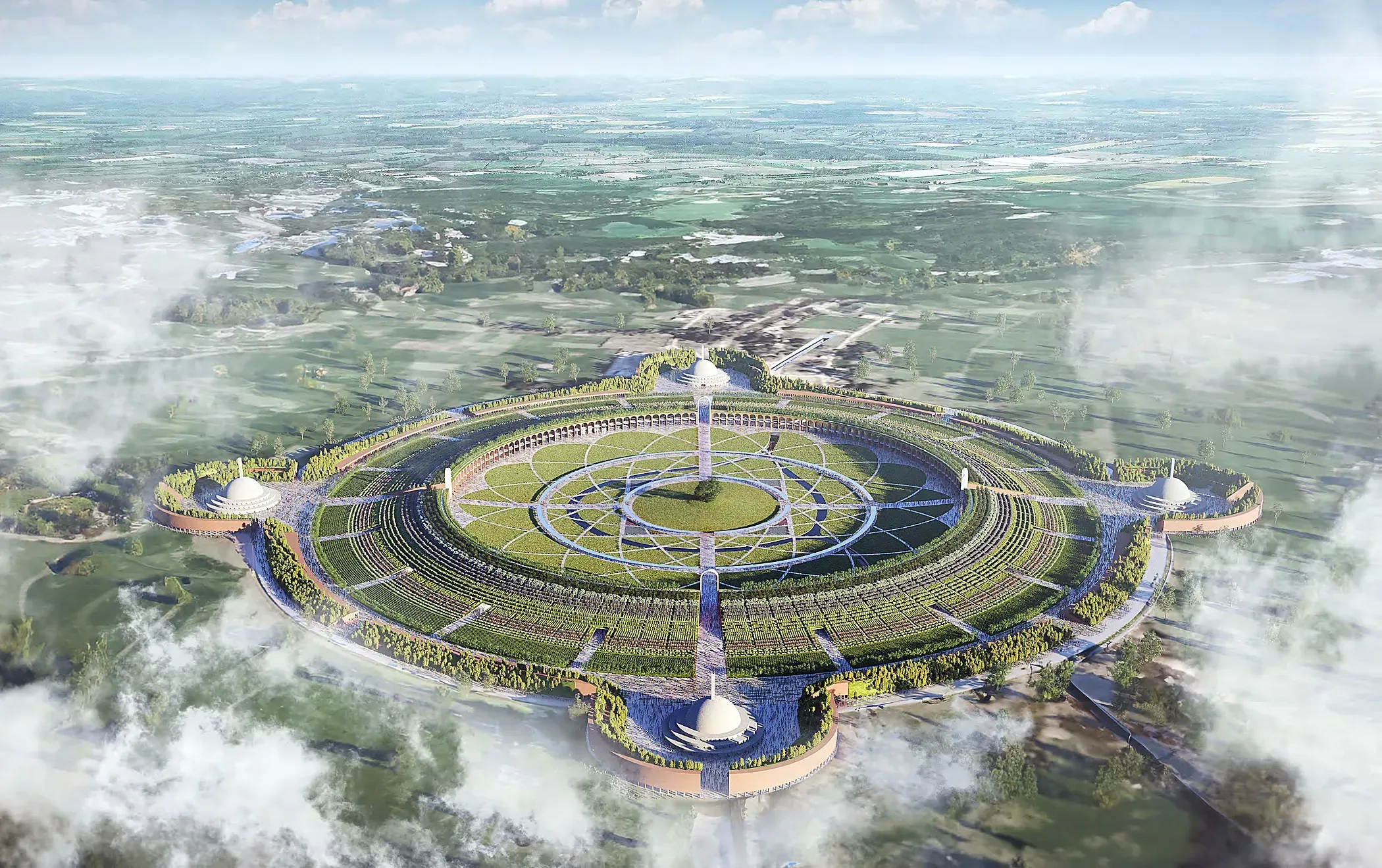
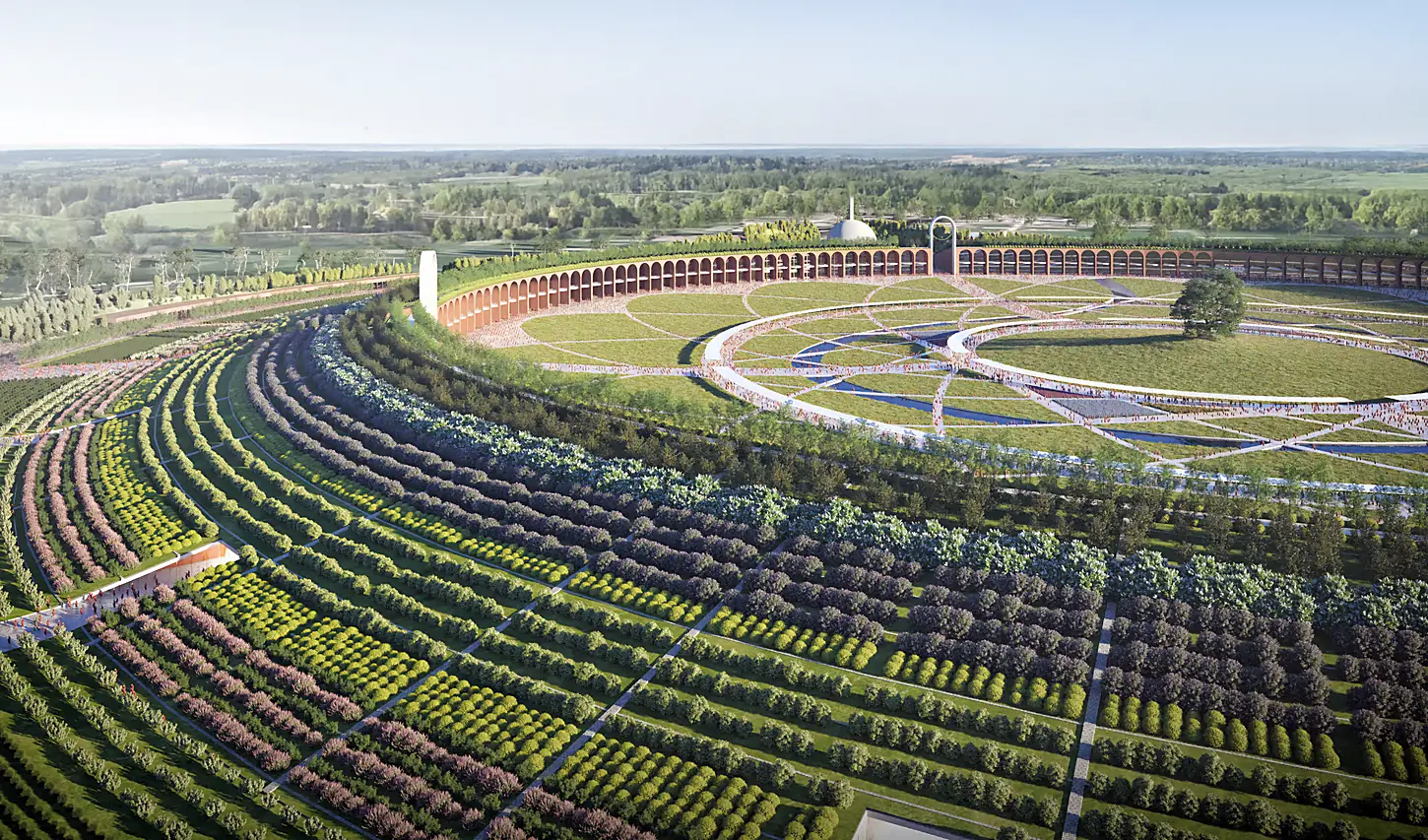
The masterplan carries the name of an architect known, more than for any single building, for making architecture grow things. Stefano Boeri, the designer behind Bosco Verticale, Milan’s “Vertical Forest”, unveiled his design for Ramagrama in person on 12 December 2023. At its centre lies the Peace Meadow, a 600-metre-diameter open lawn shaped, seen from above, almost as a mandala grown from the ground rather than drawn onto it. The stupa itself, together with the site’s Bodhi tree, sits untouched on the central hill; every other element of the plan defers to it.
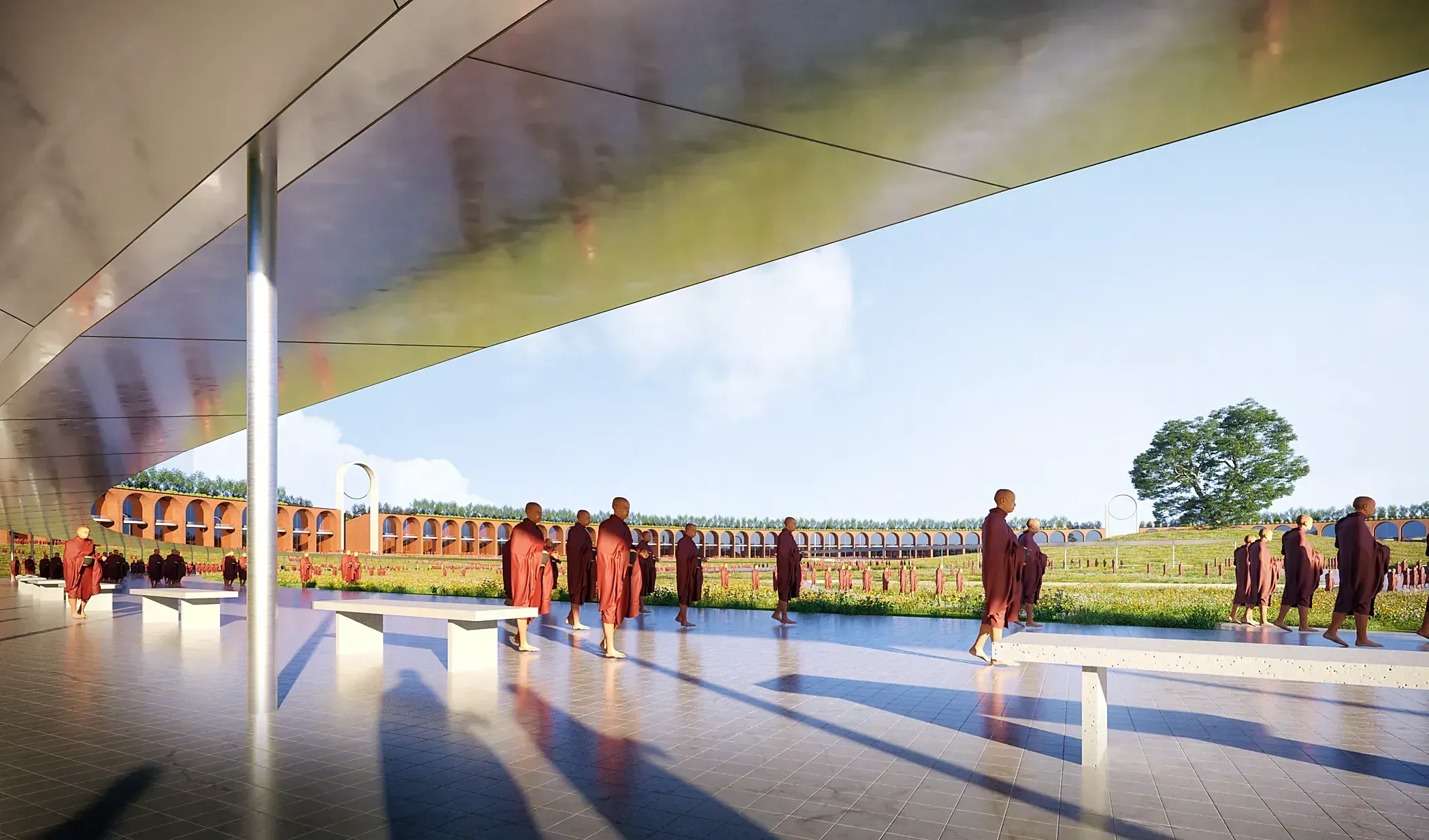
Around the Meadow, meditation and prayer spaces sit beneath a Biodiversity Ring Garden of 80,000 native plants across some seventy species. A raised, tree-shaded path gives pilgrims an unbroken view of the stupa. Four monumental portals slow the approach into a deliberate sequence, portal, garden, meadow, mound, while locally produced brick ties the new structures to a material worked here for twenty-five centuries.
The masterplan
A landscape that protects the silence at its centre
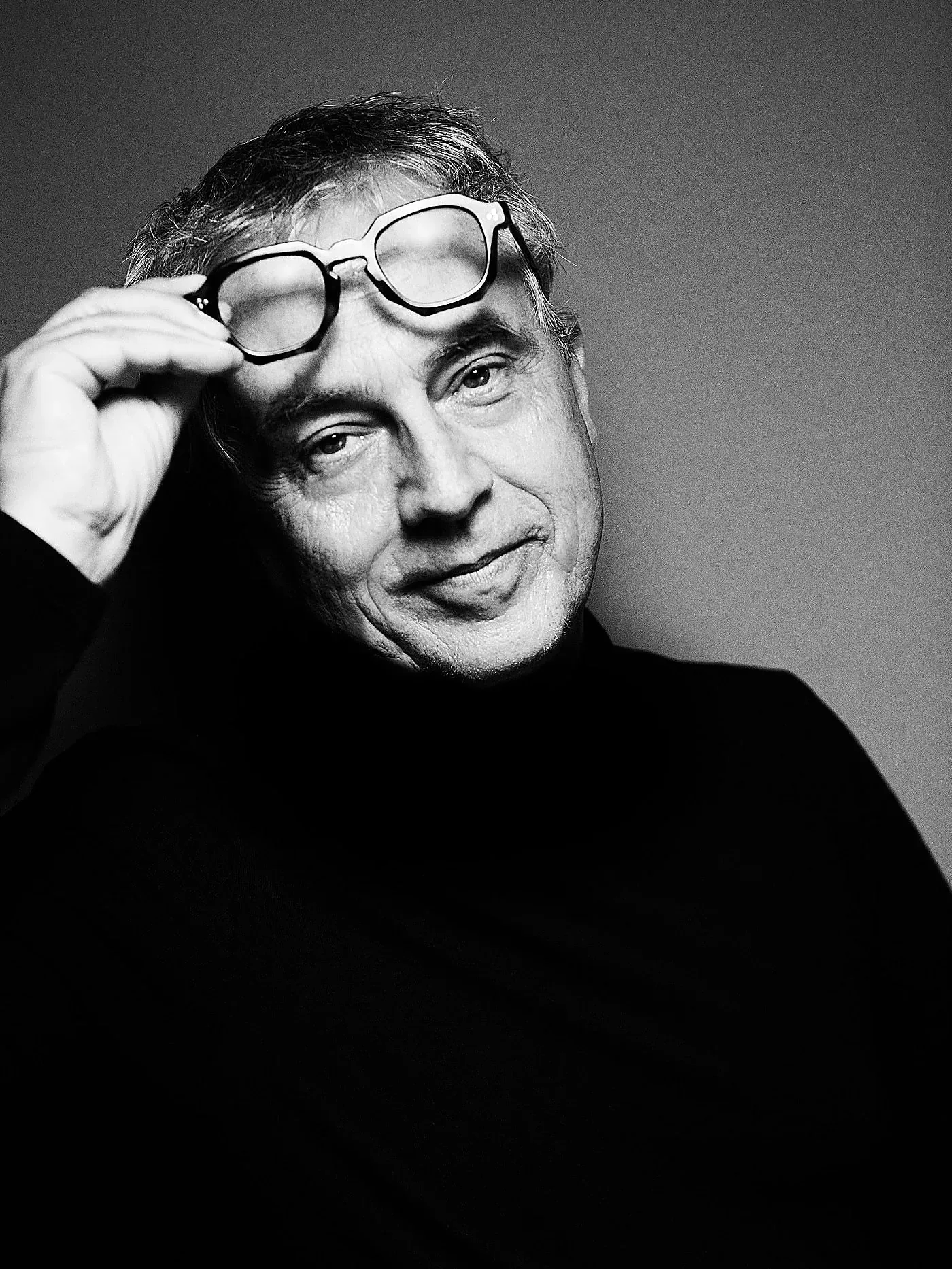
Stefano Boeri and the making of the meadow
Stefano Boeri is the Milan-based architect behind Bosco Verticale. At Ramagrama he was asked to design not a new monument, but a landscape capable of receiving thousands of pilgrims while leaving the sealed stupa untouched. Unveiled on 12 December 2023, the plan forms a mandala of four portals, native planting, a 600-metre Peace Meadow and the original mound at its centre.
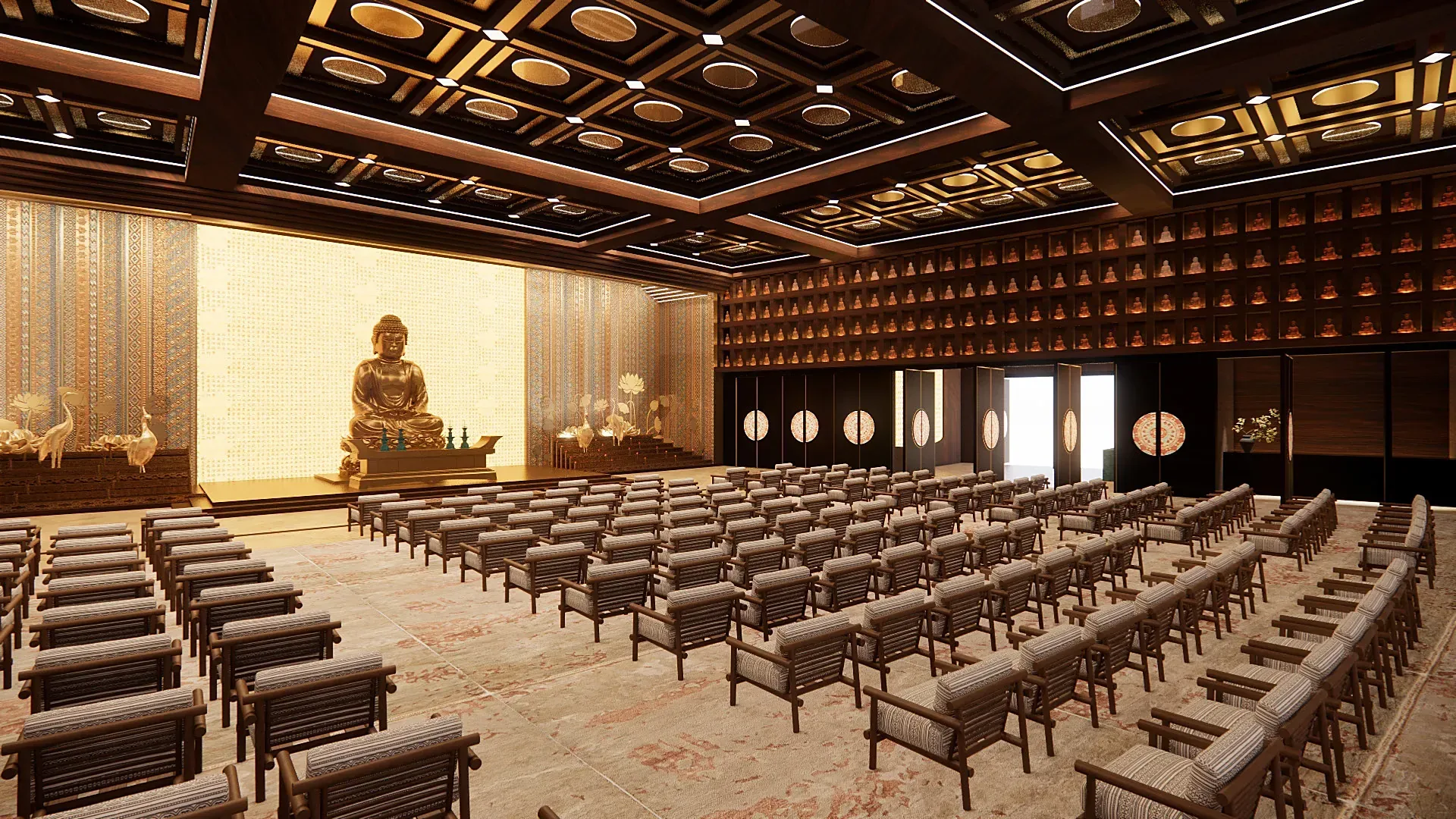
Locally produced brick shapes arcades for walking meditation, a hall for communal prayer, and smaller gardens and cells for private practice. Every element supports stillness; every view returns to the mound.
“Architecture should never compete with a sacred place. It should make the approach slower, the silence deeper, and the centre more visible.”
Stefano BoeriOn the Ramagrama masterplan, 2023
A World Bank priority site
In March 2026 the World Bank’s Board approved financing for the Greater Lumbini Area Development Project (P512377), a programme the Bank’s own appraisal describes as moving Nepal’s approach to the region “from fragmented, site-specific interventions to a holistic, integrated destination model.” Nepali press reported the loan at roughly $85 million; the Bank’s appraisal records the total project cost at $70 million. Either figure marks the first time Nepal’s Buddhist heritage circuit has drawn financing at this scale, and Ramagrama is named explicitly, alongside the Lumbini Master Plan Area, Tilaurakot and Devdaha, as one of only four priority sites.
Who is carrying the work
The Promised Land, and the World Peace Program that began on 12 December 2023.