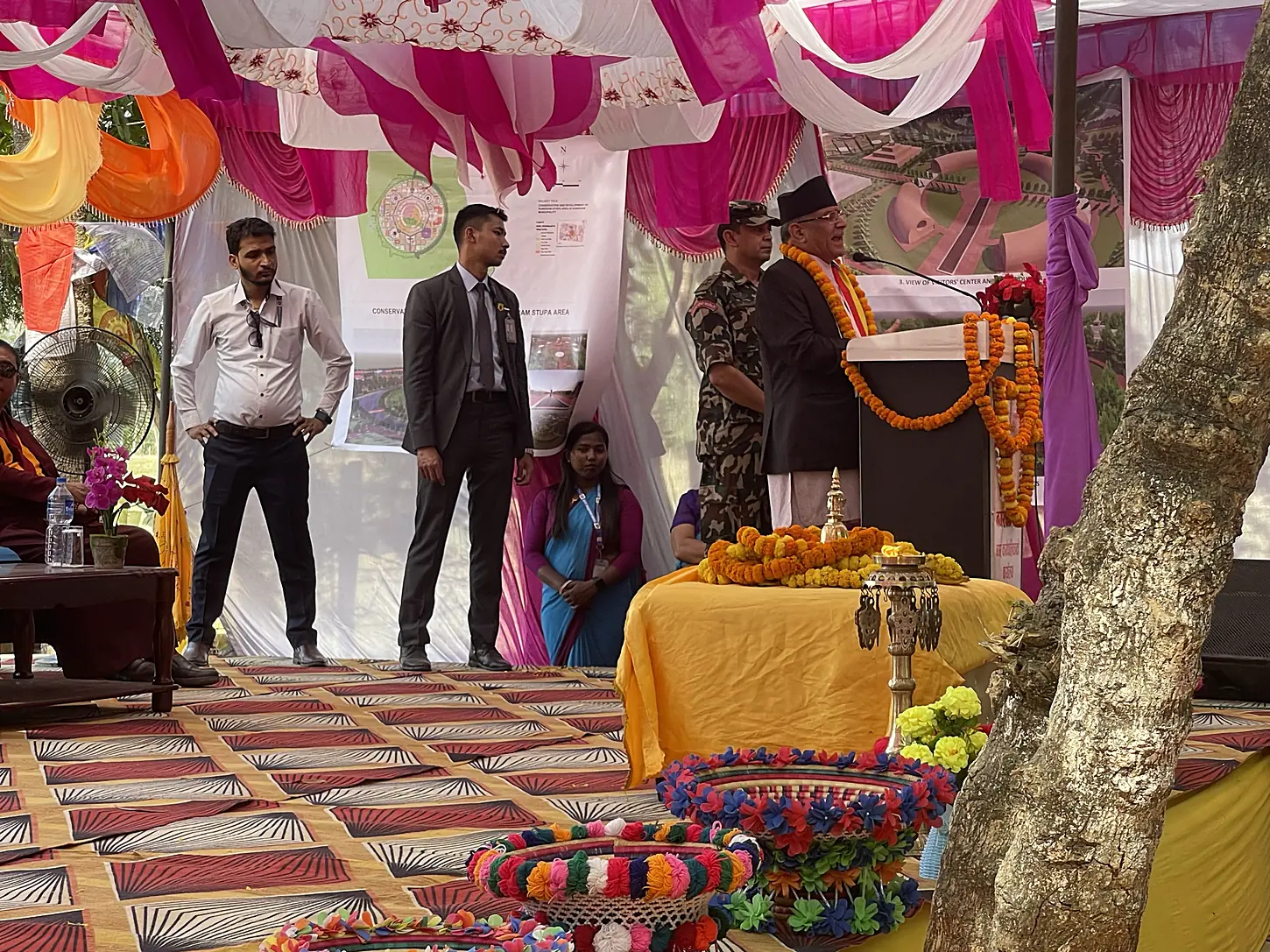
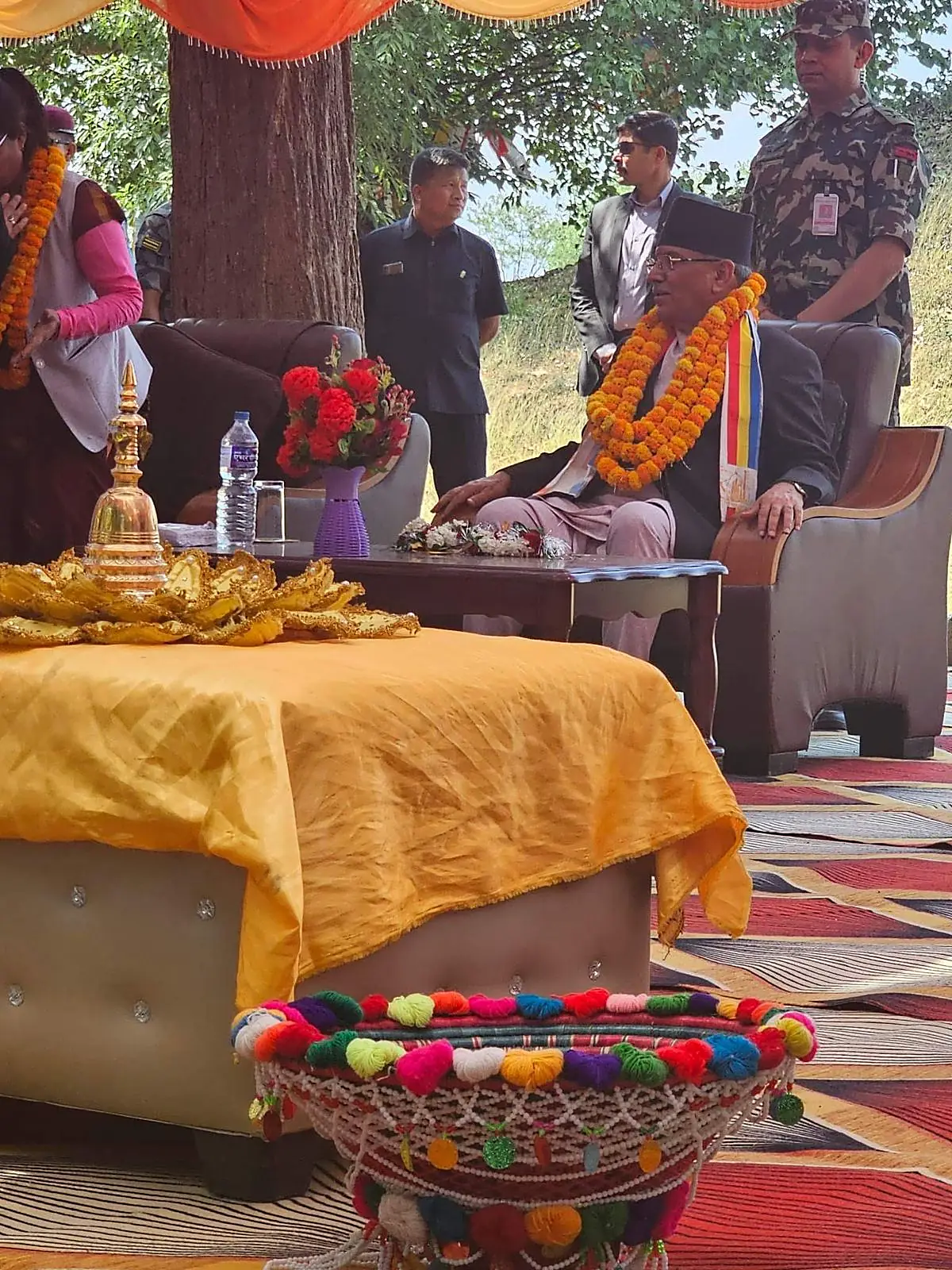
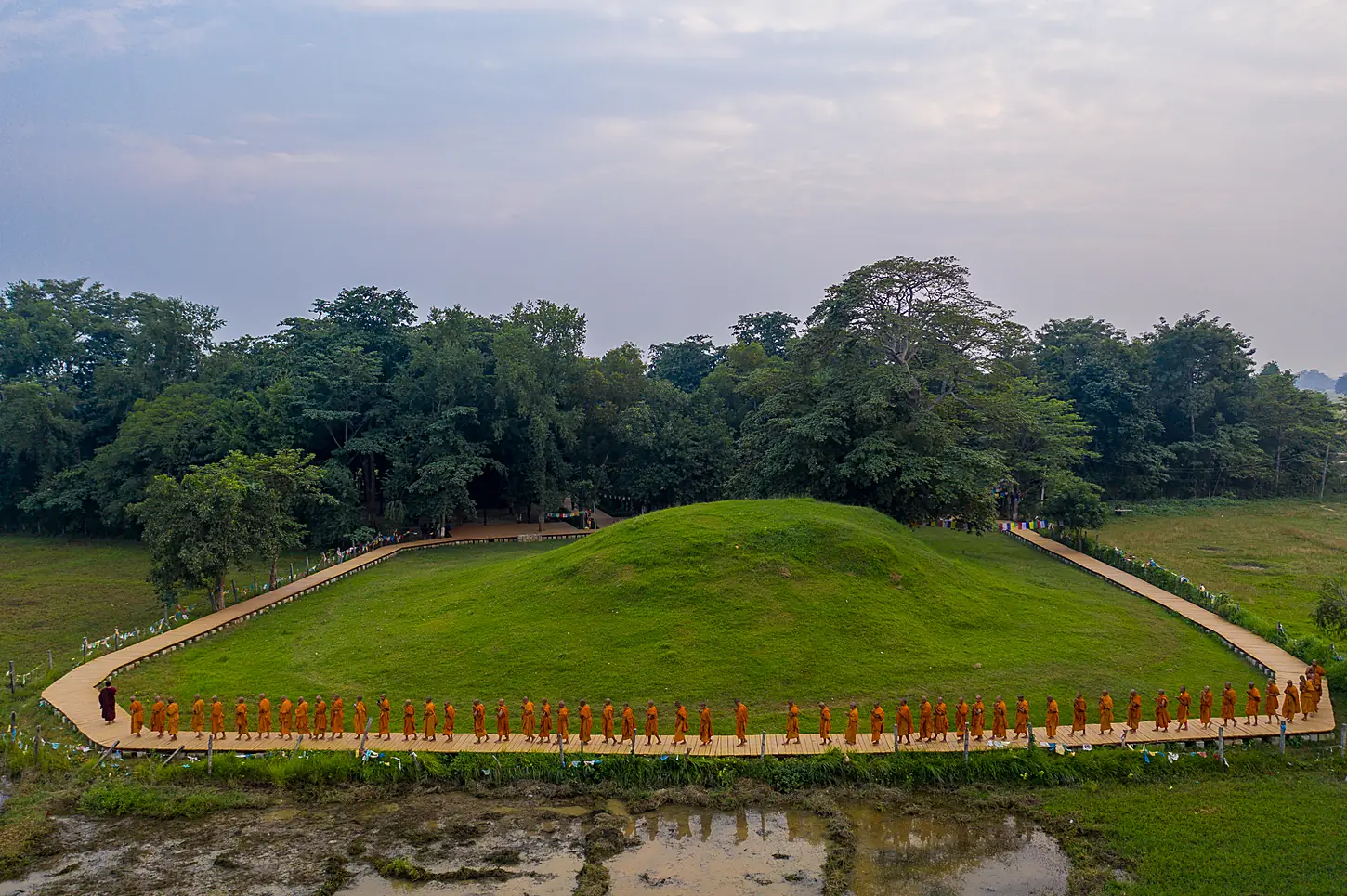
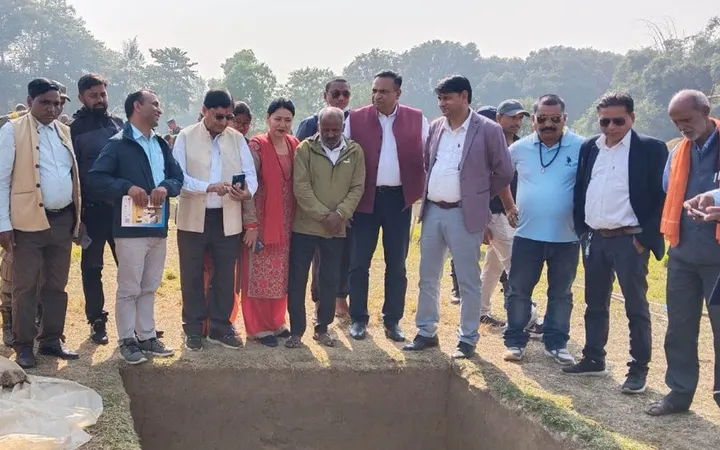
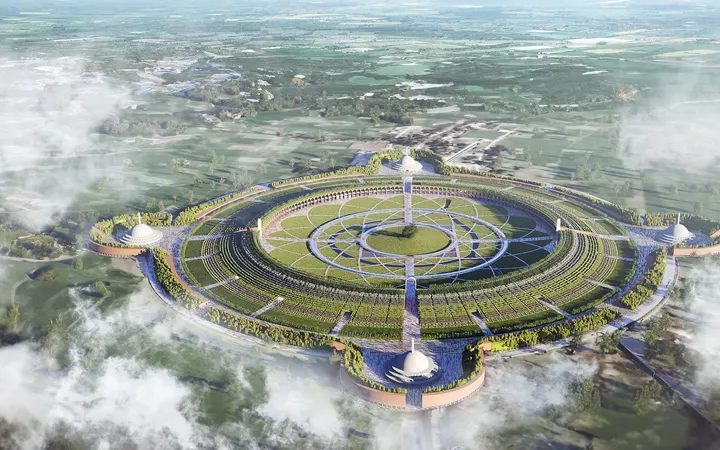
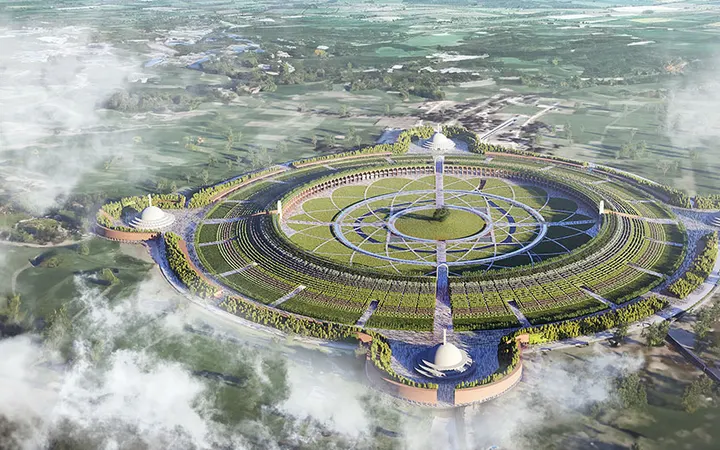
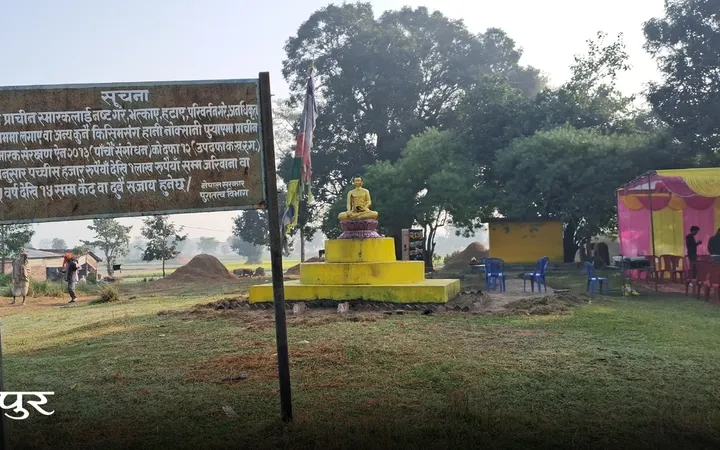
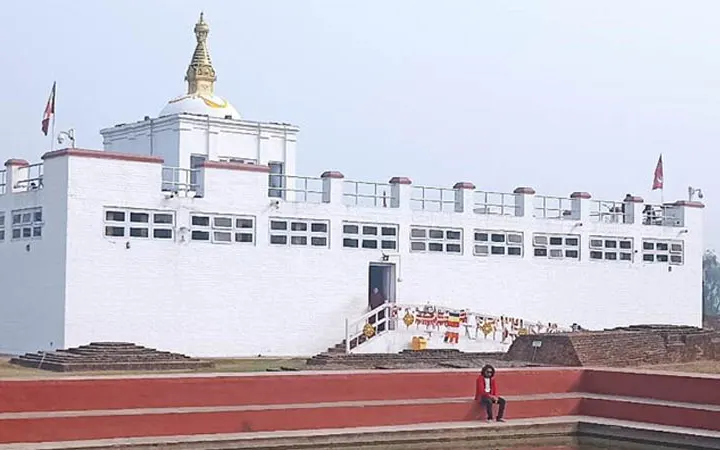
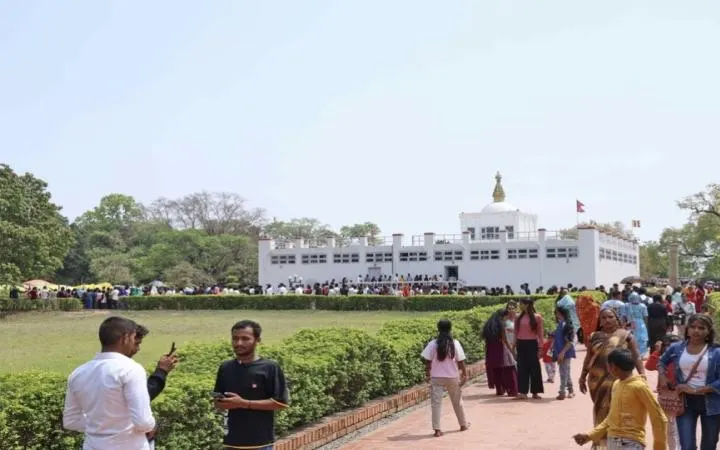
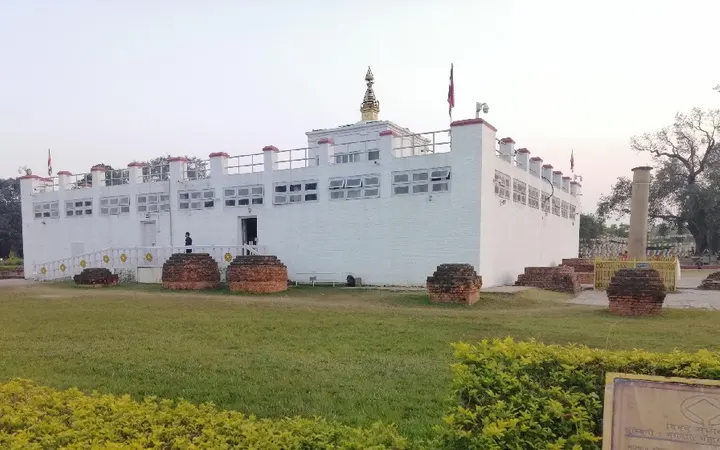
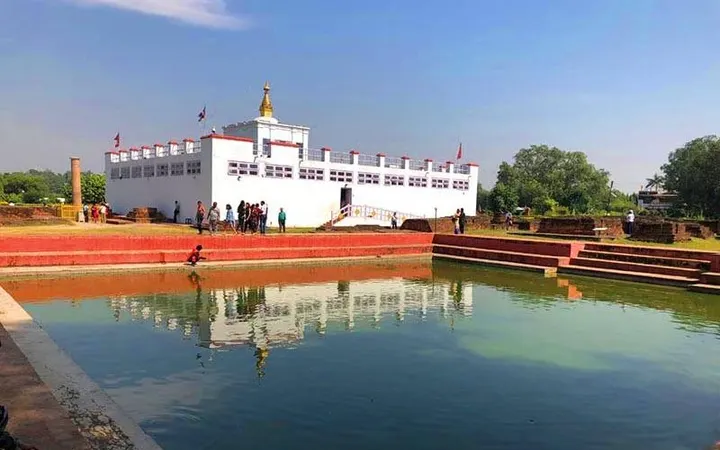
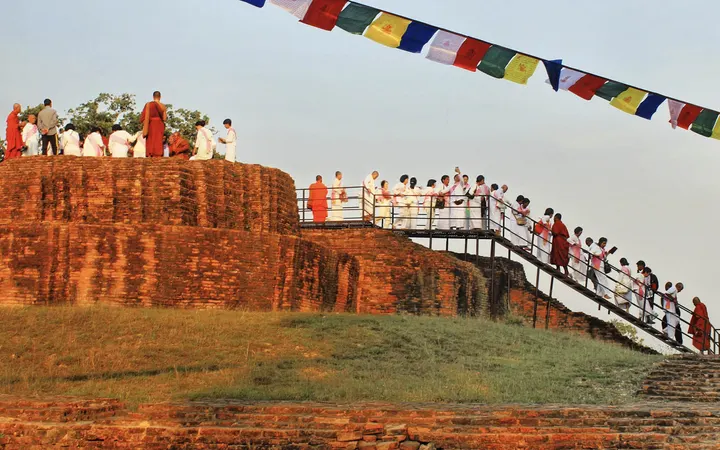
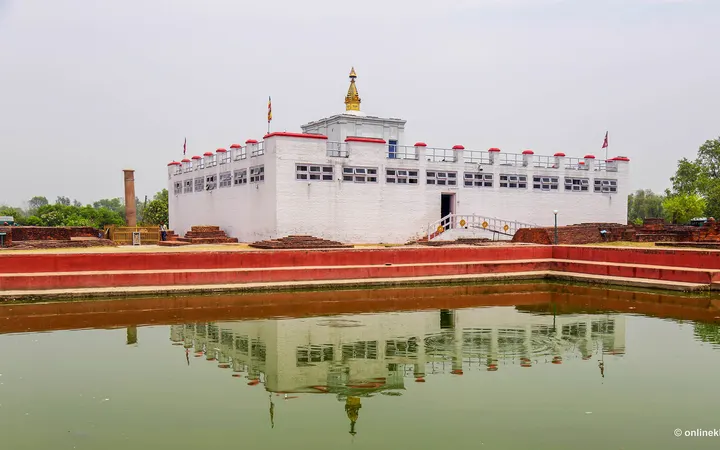
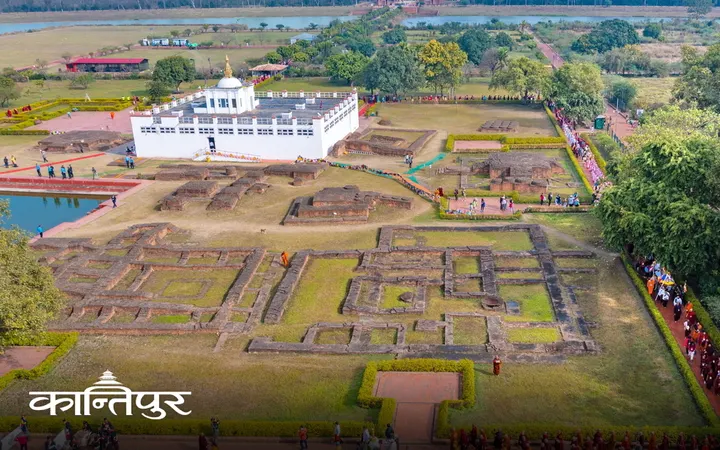
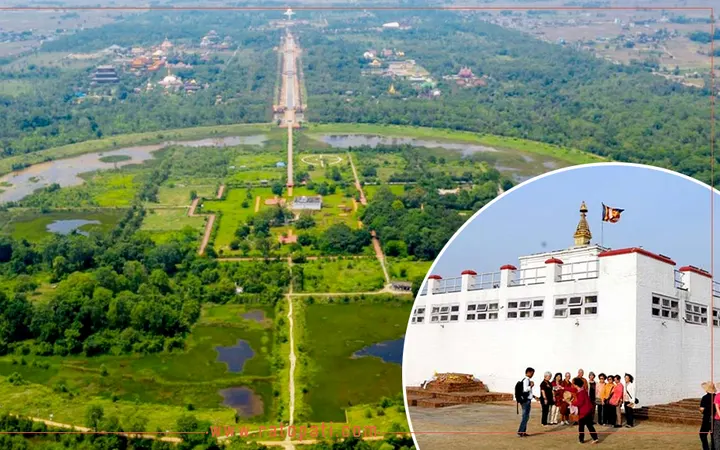
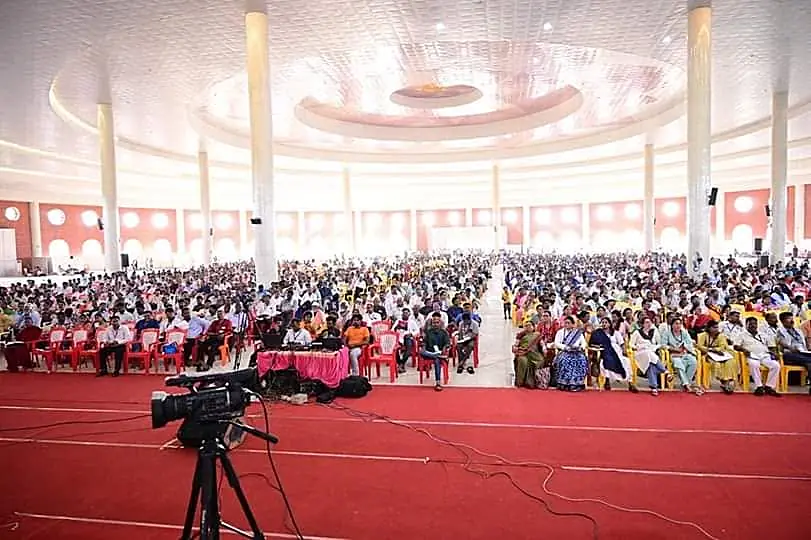
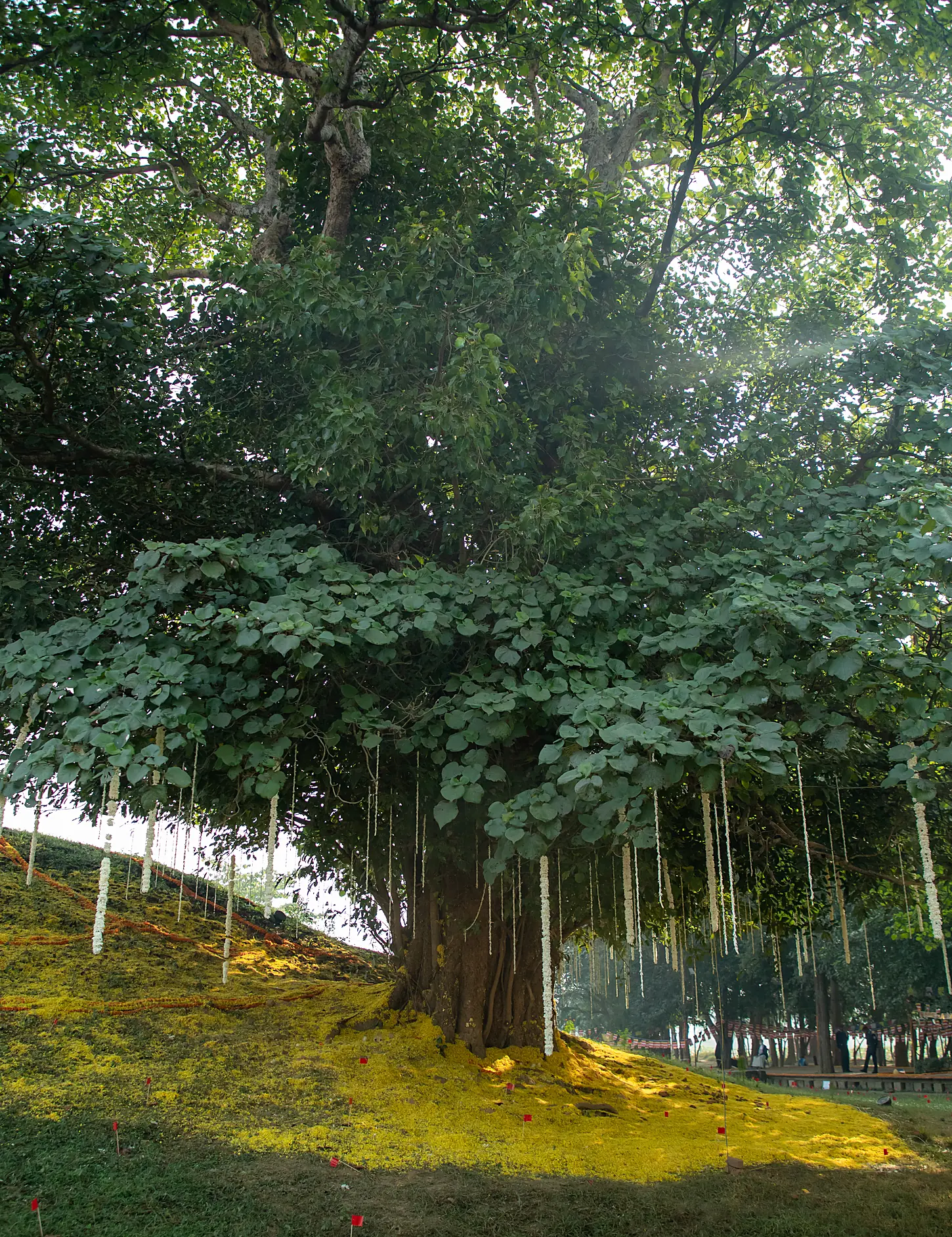
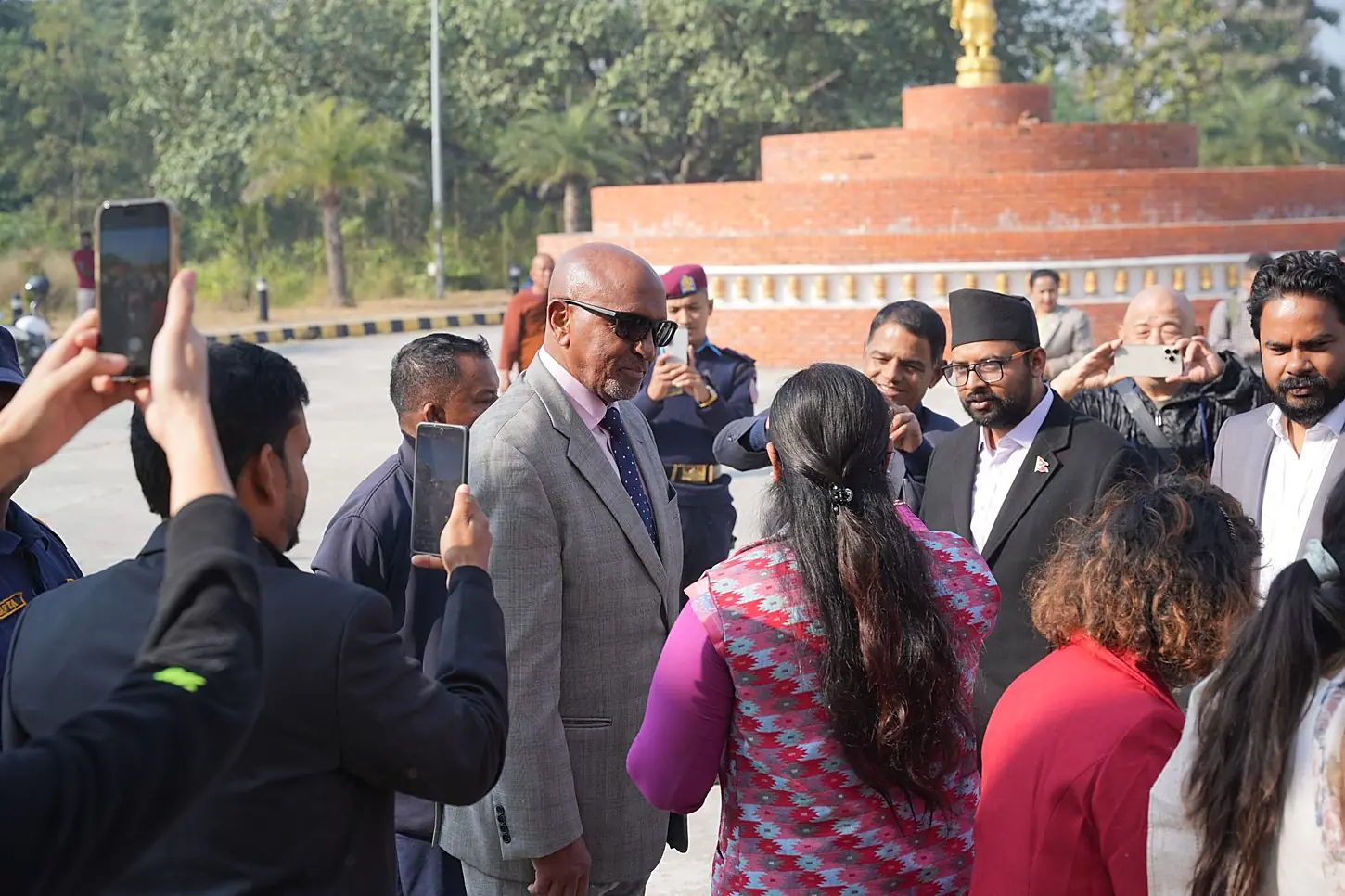
Ramagrama went unopened for twenty-five centuries and largely unvisited for most of the twentieth, identified in 1974, listed by UNESCO in 1996, and still, for decades afterward, a grass mound most of Nepal had never heard of. The World Peace Program exists to make that kind of neglect harder to repeat. Held every 12 December since 2023, the same date Prime Minister Dahal chose to announce the site’s revival that year, it is the one fixed point in the calendar where the government, the monastic community and the wider public are required to show up in the same place, in front of the same ground, rather than letting restoration proceed as paperwork nobody visits.
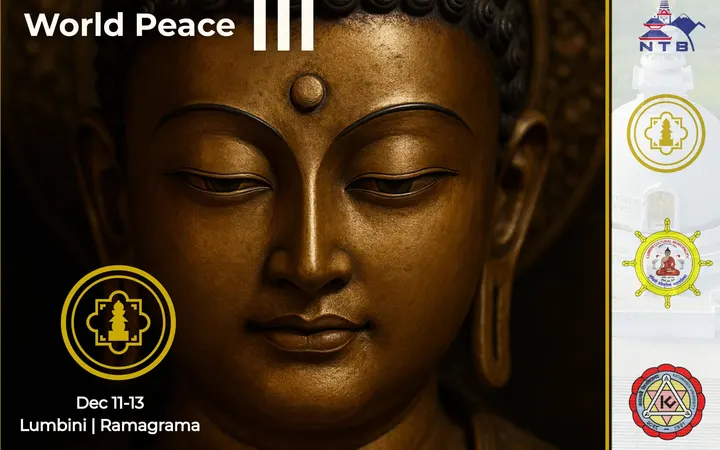
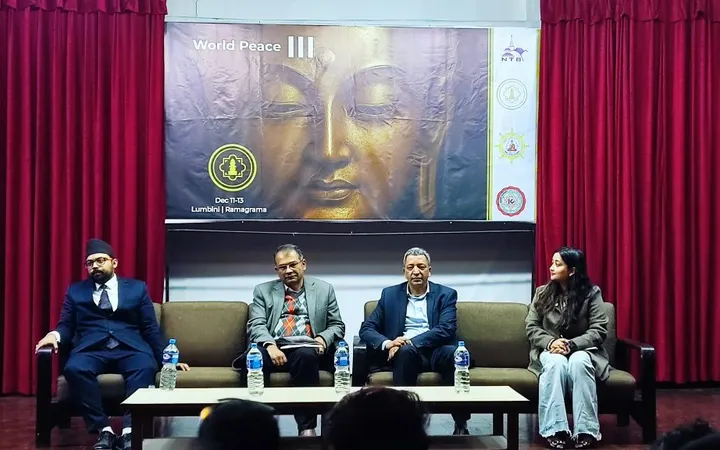
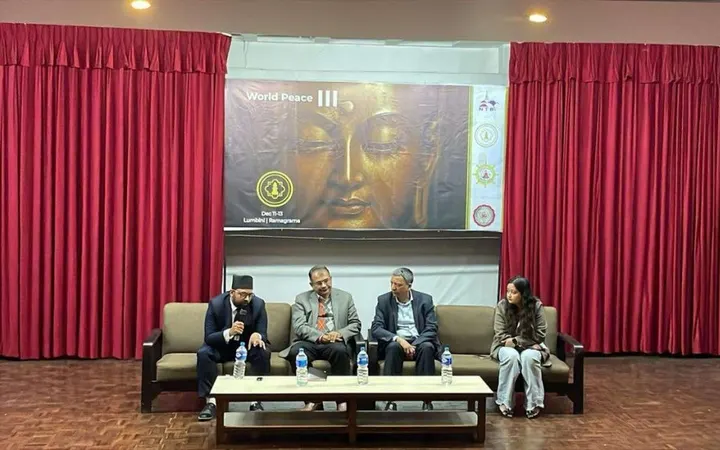
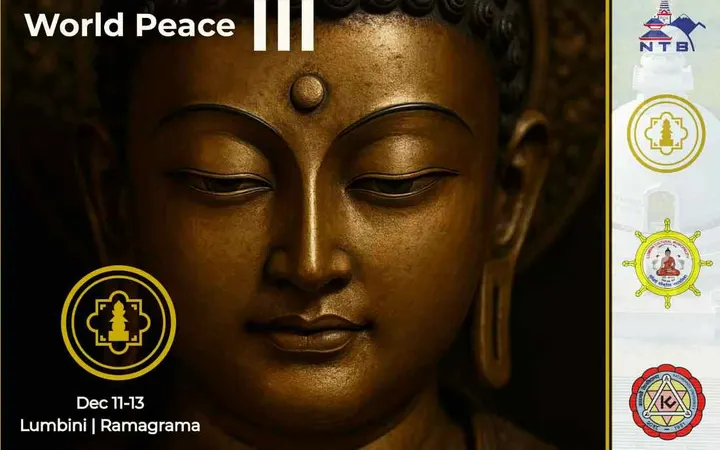
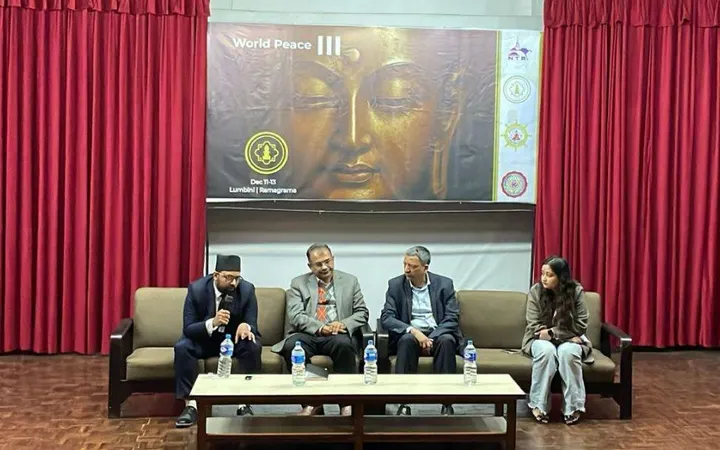
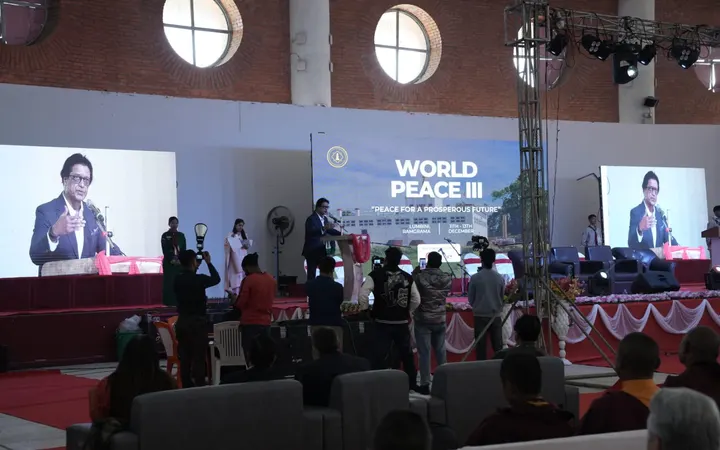
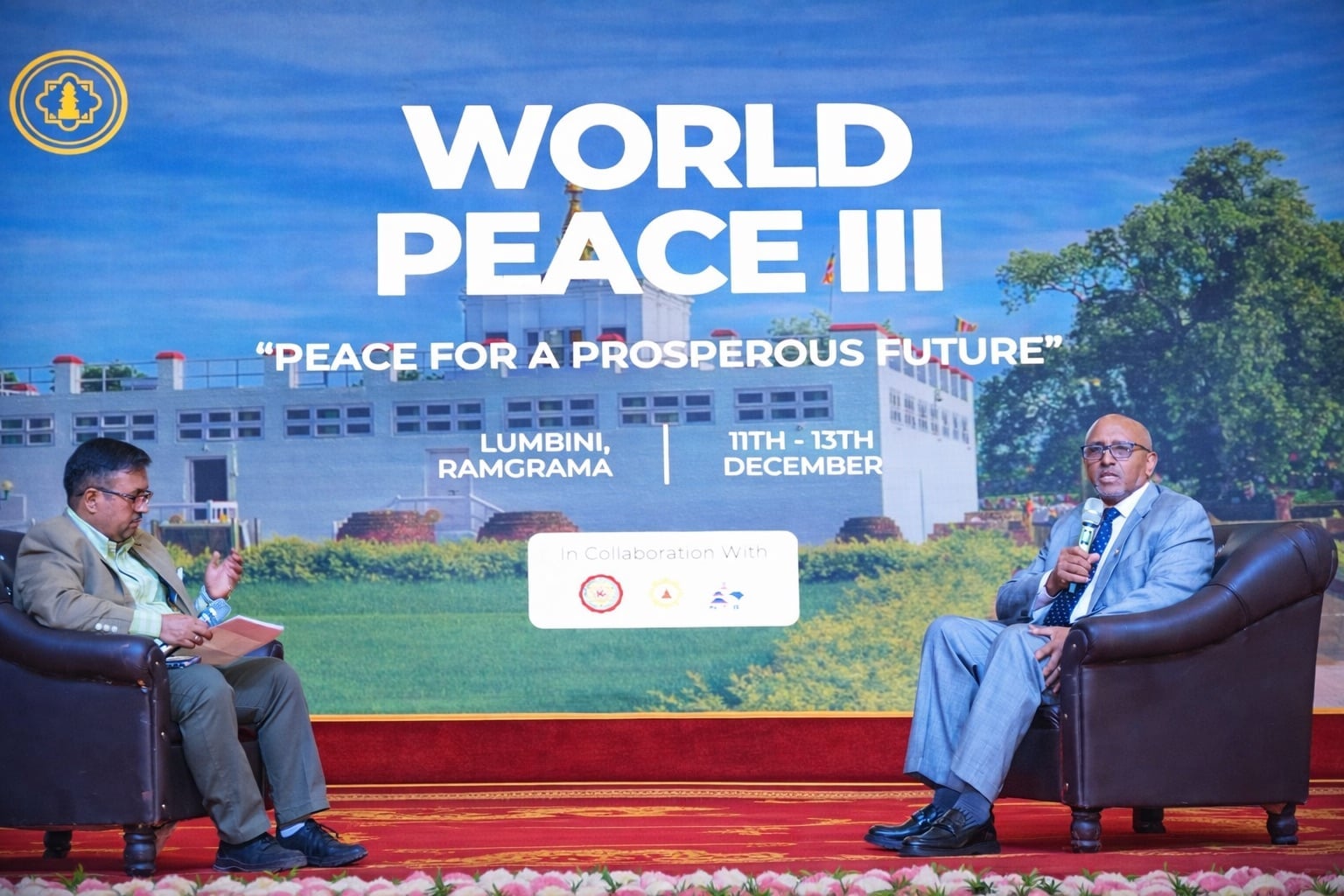
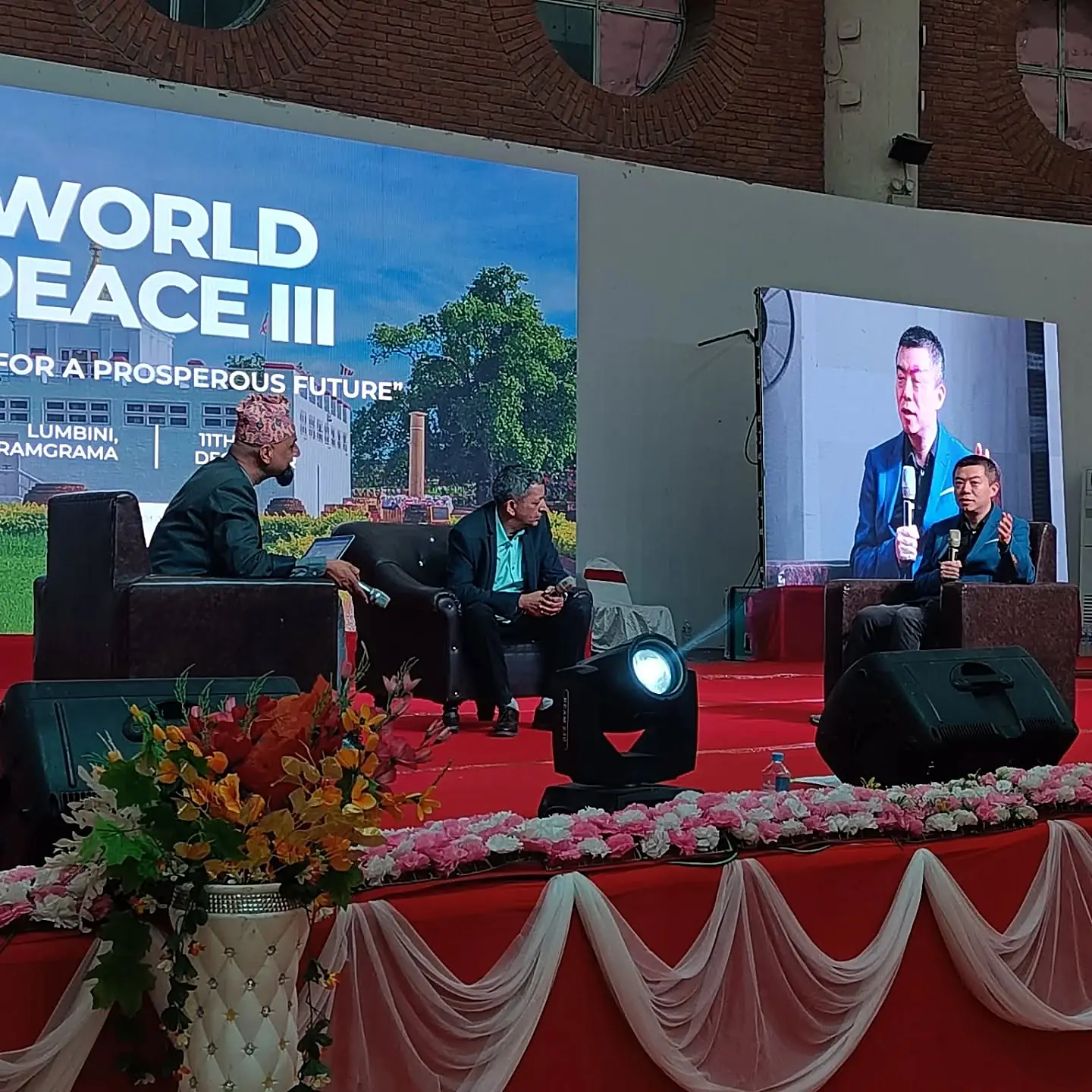
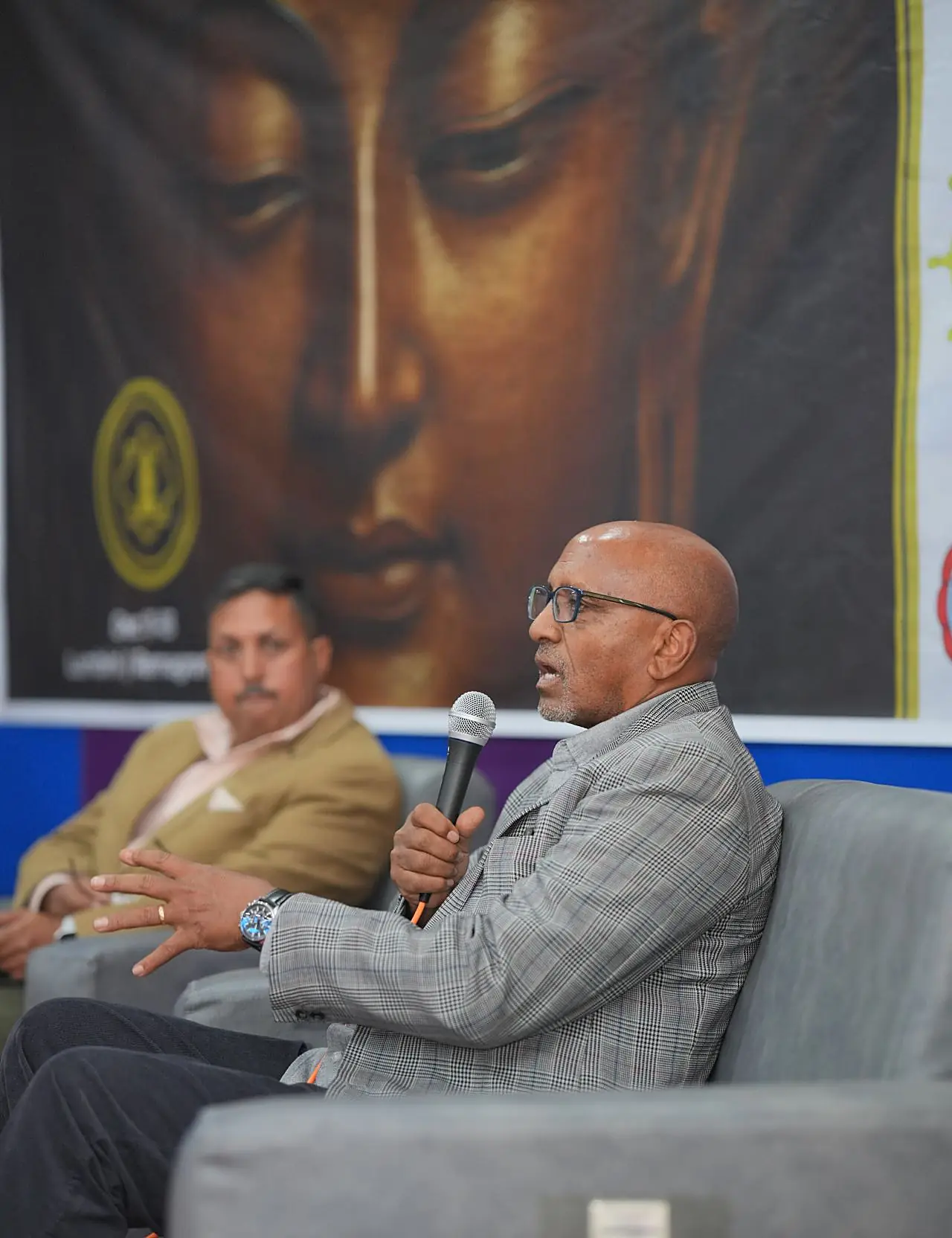
The Program has grown in scope each year without losing its original register. The first edition, in 2023, was a single day built around one act: the lighting of the Flame of Eternal Peace at 12:12, witnessed by some 22,000 people. The second added an international guest list and a full monastic assembly. The third, in 2025, ran three days across both Lumbini and Ramgram and added substance to the ceremony, named sessions on artificial intelligence, tourism and the carbon economy sat alongside the ritual, and organisers said plainly, for the first time, that earlier editions had not worked closely enough with the communities who host them.
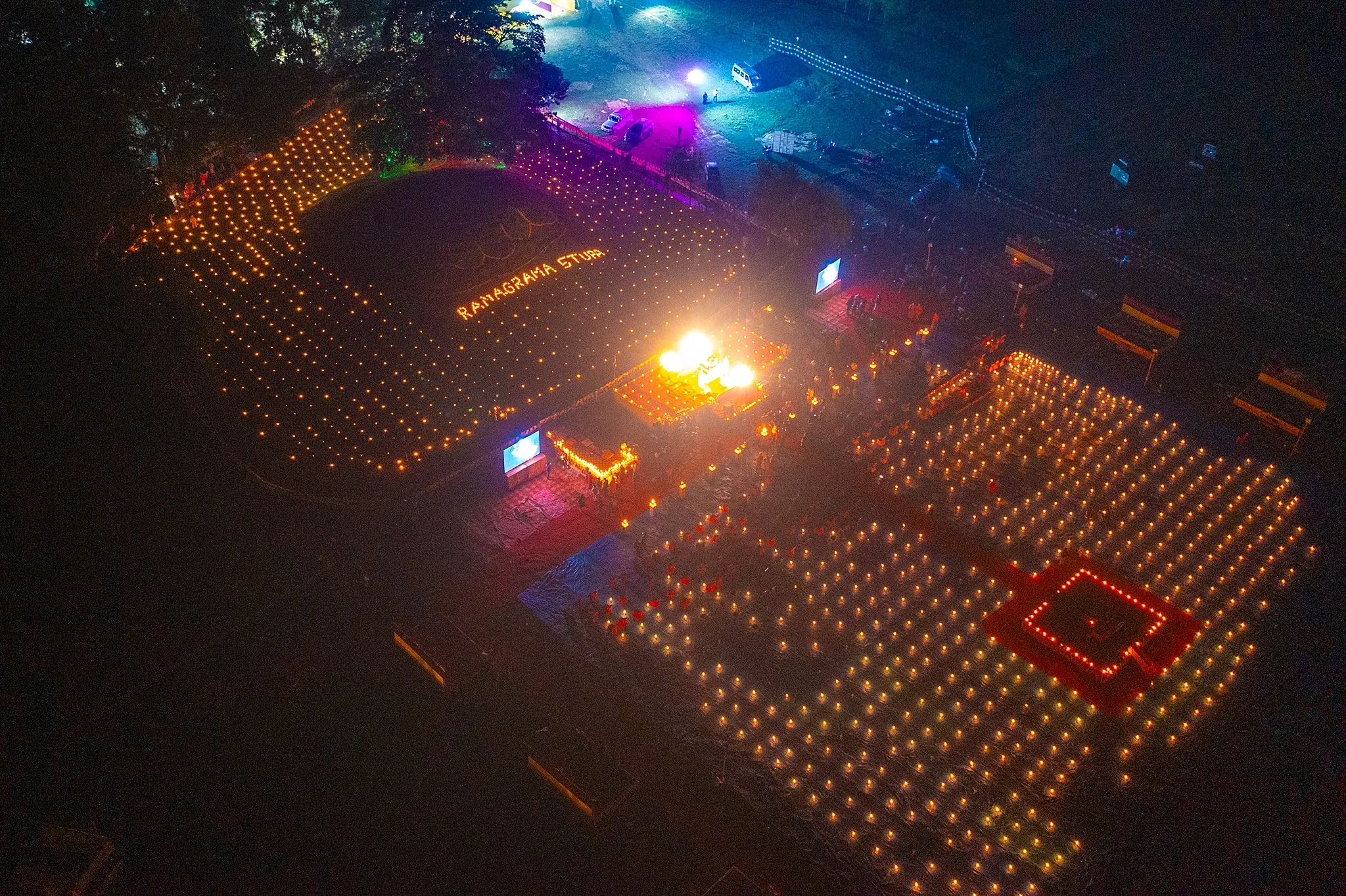
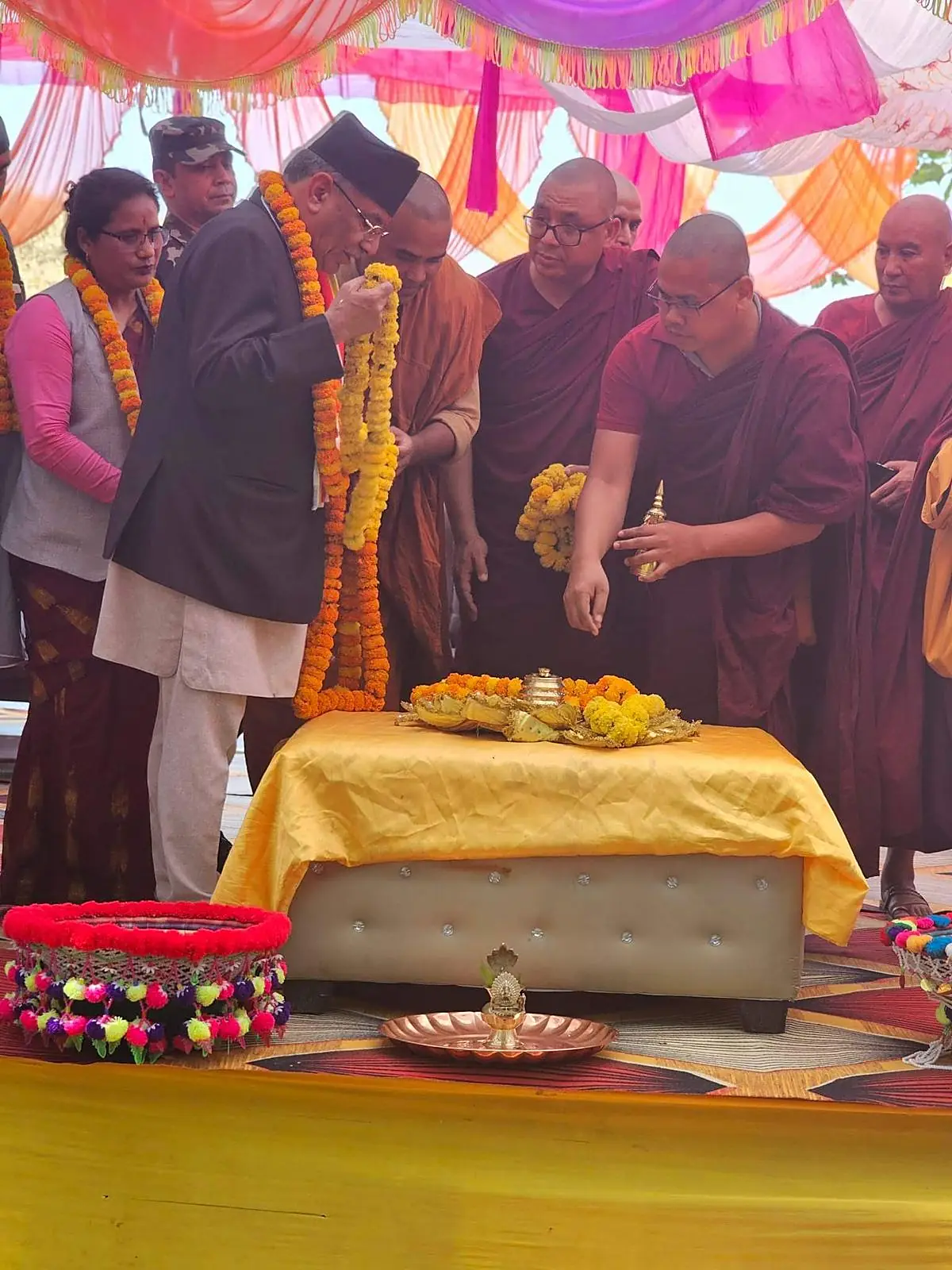
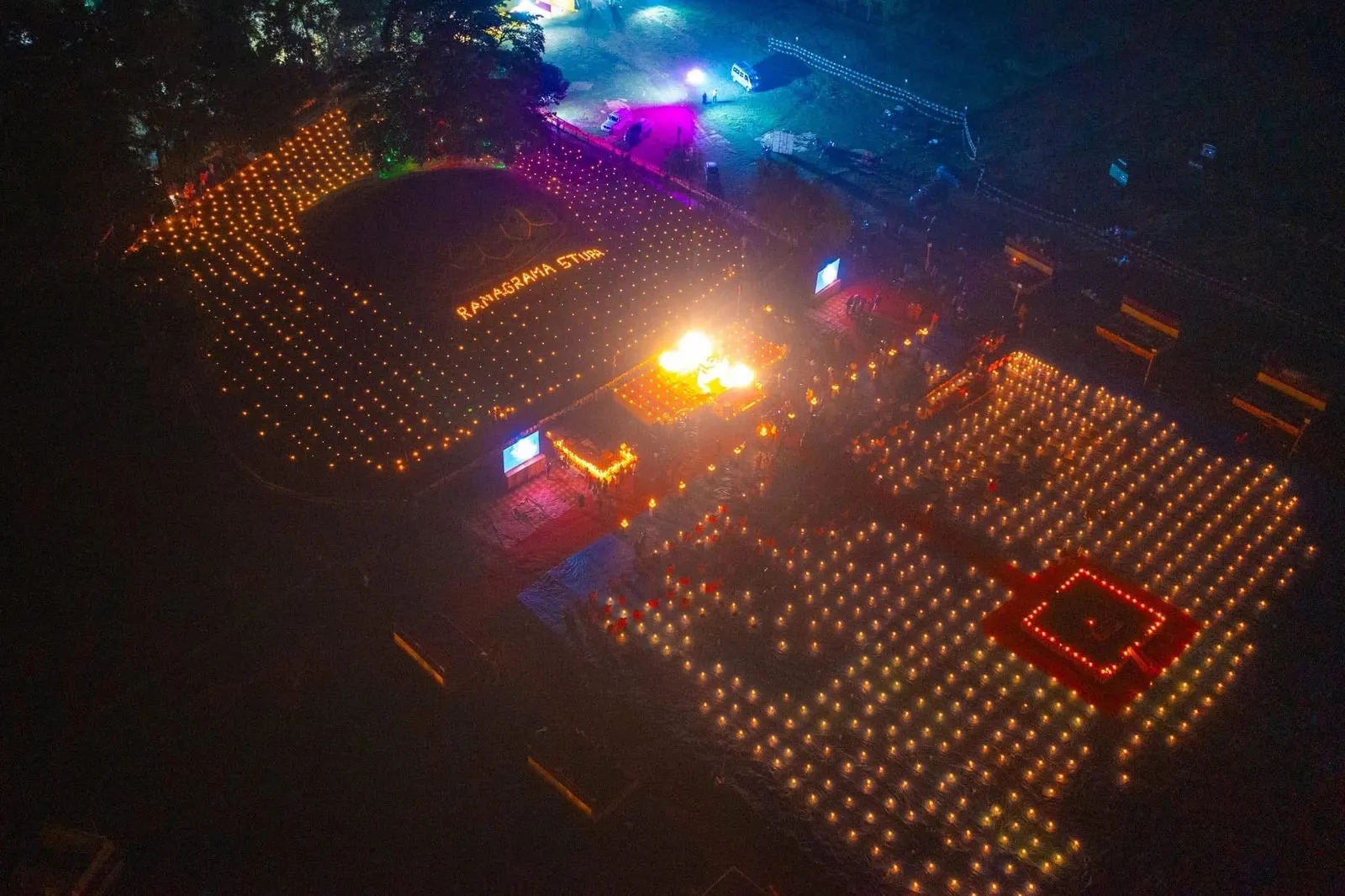
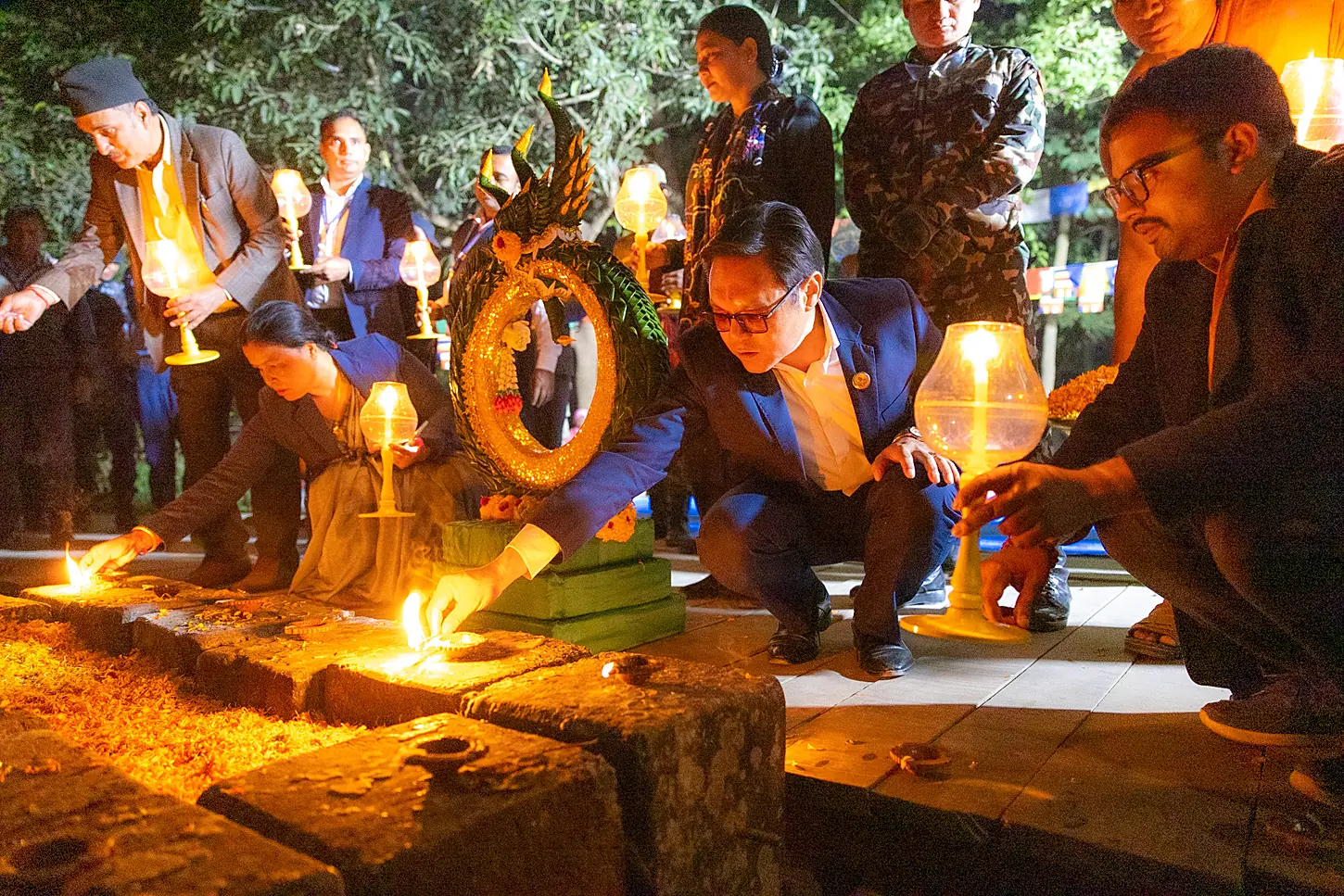
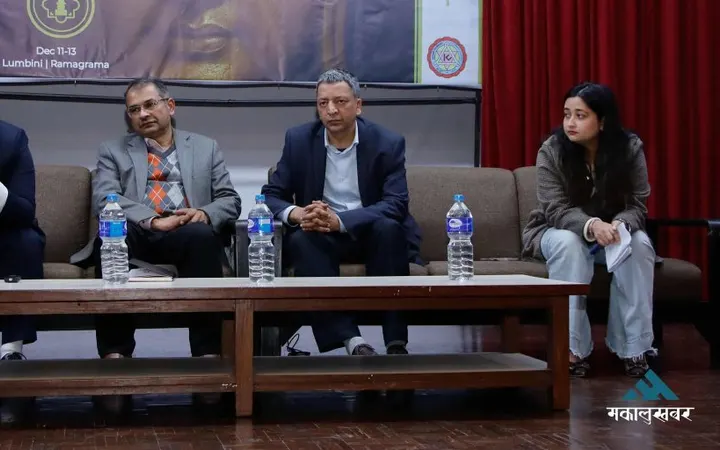
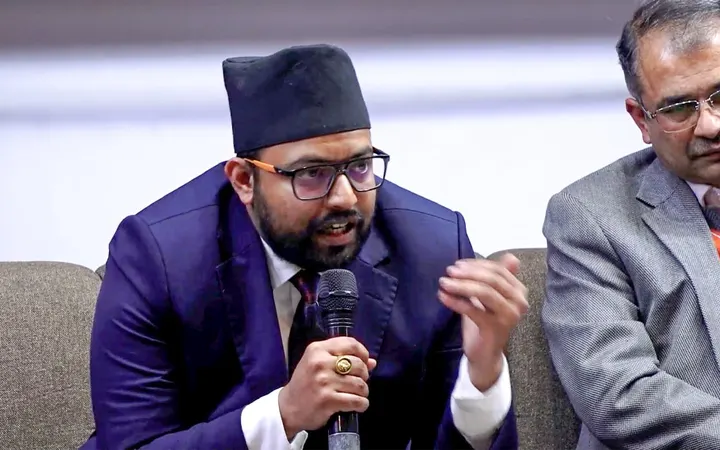
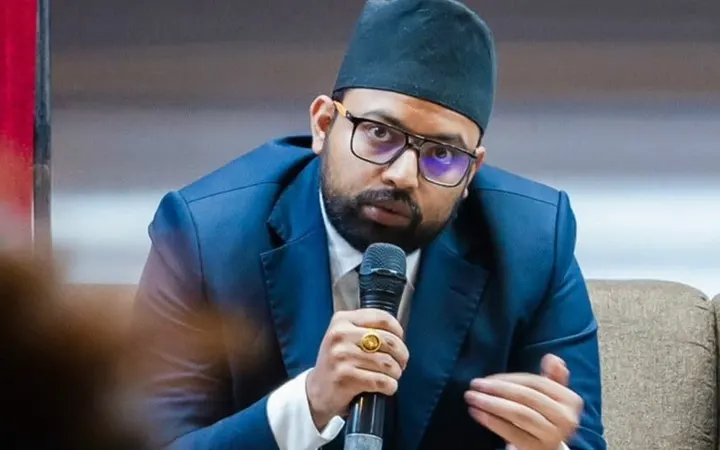
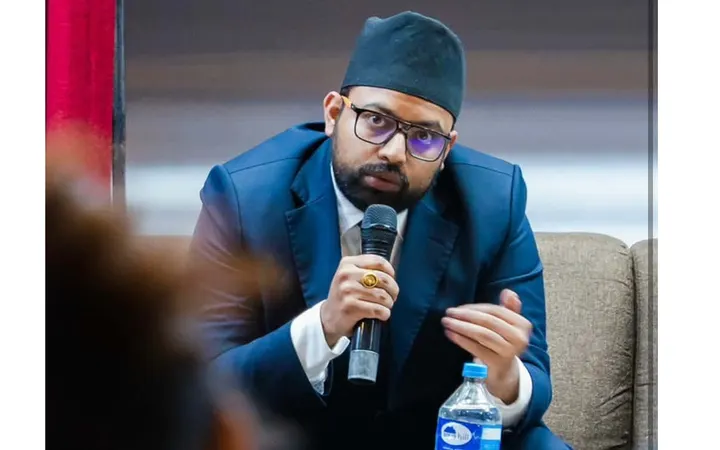
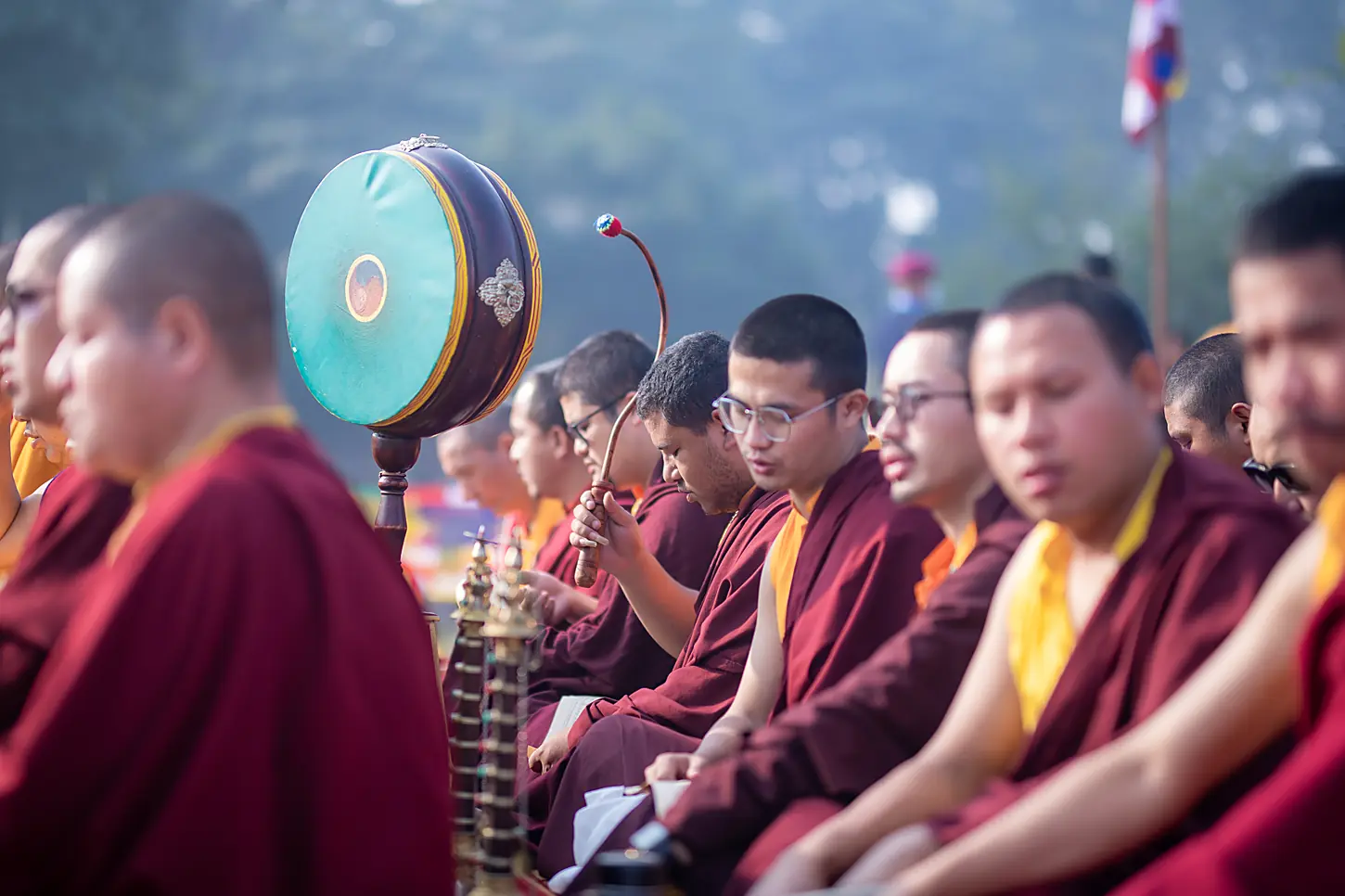
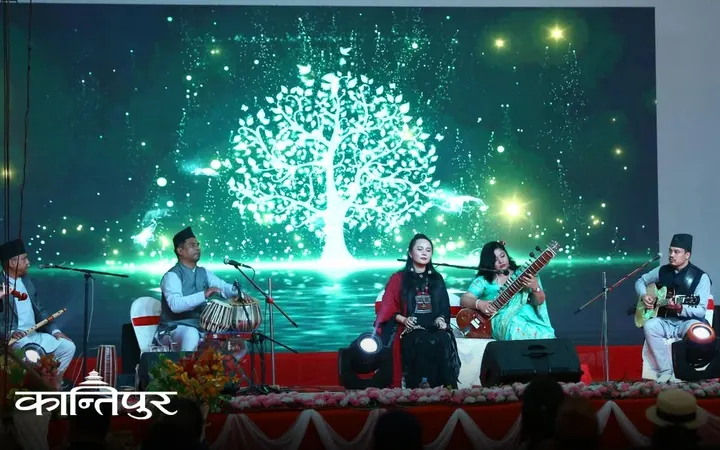
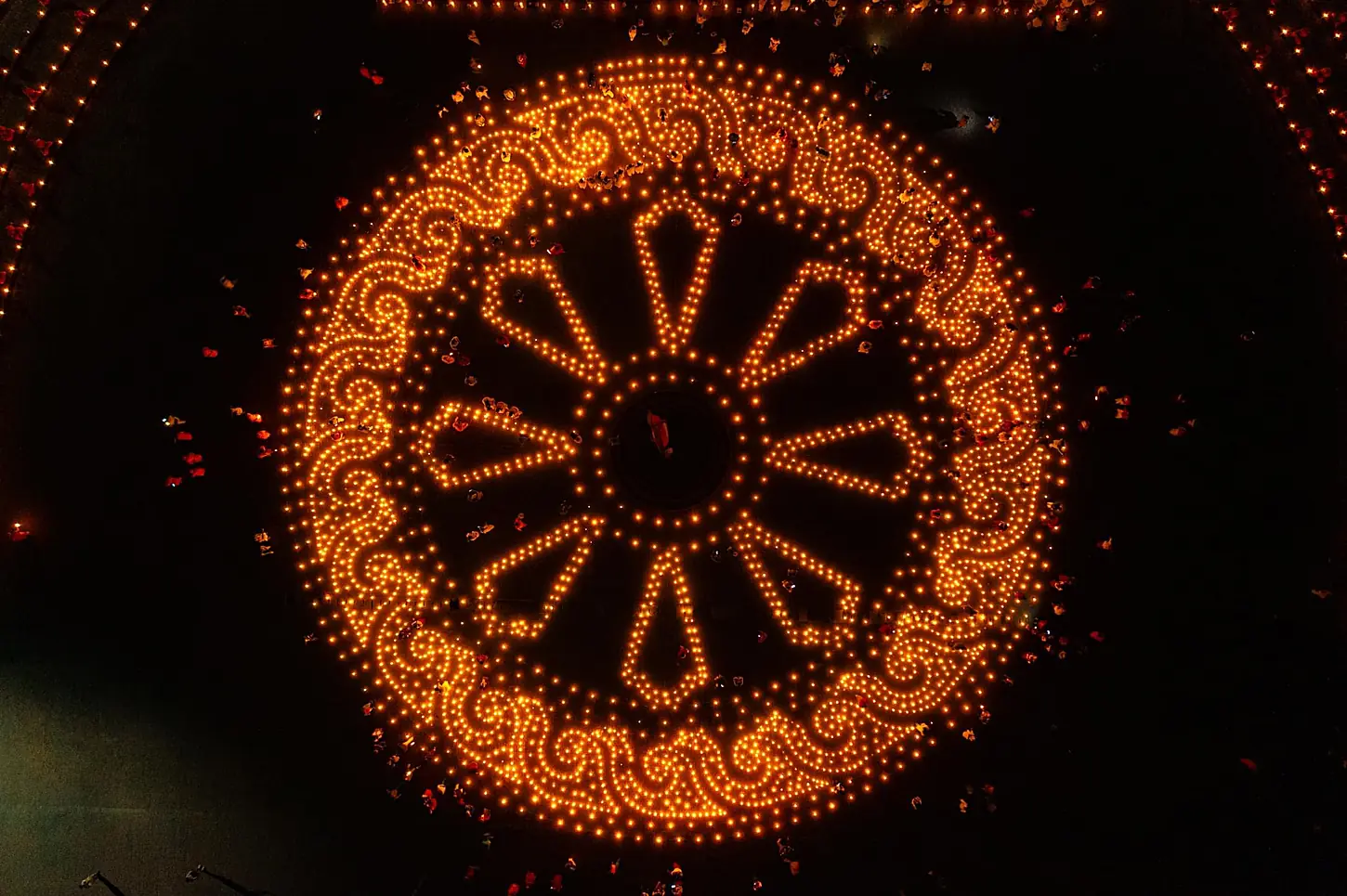
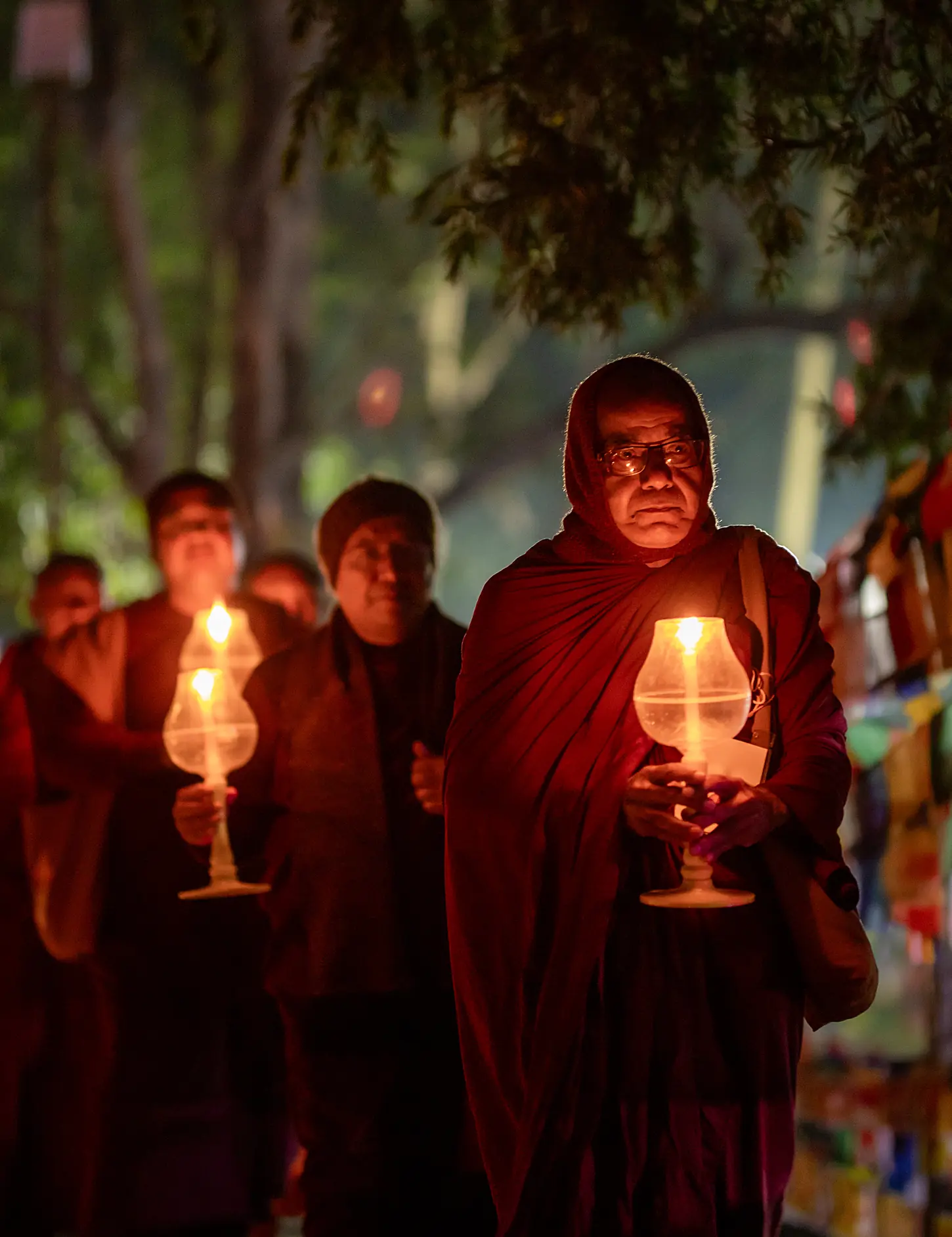
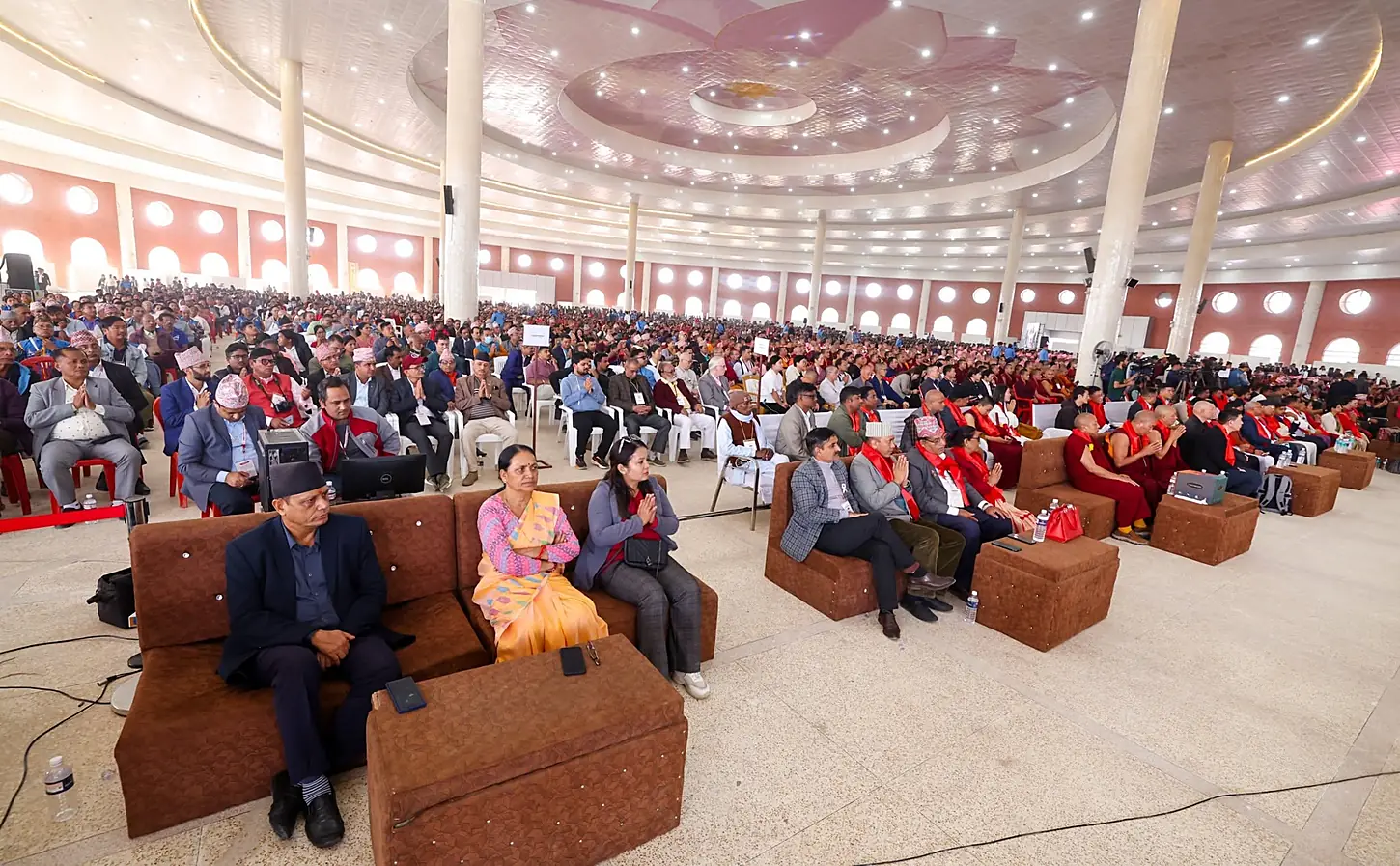
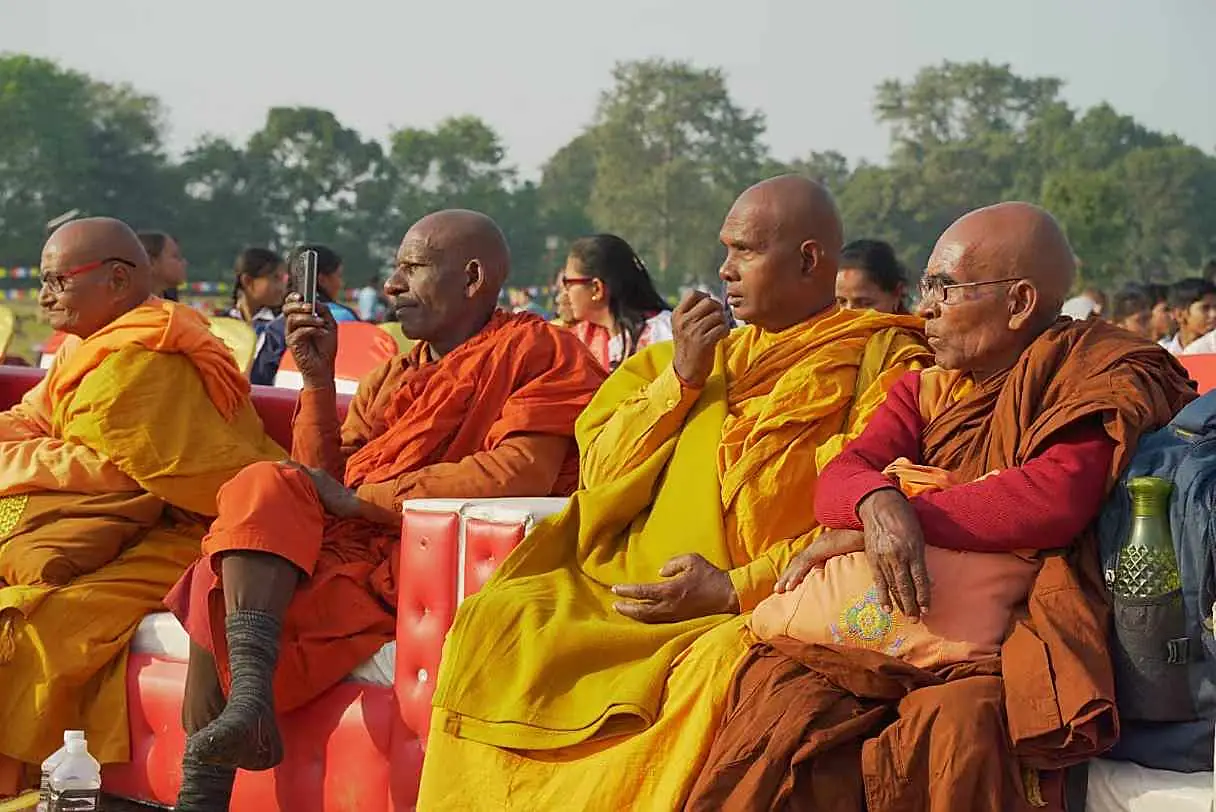
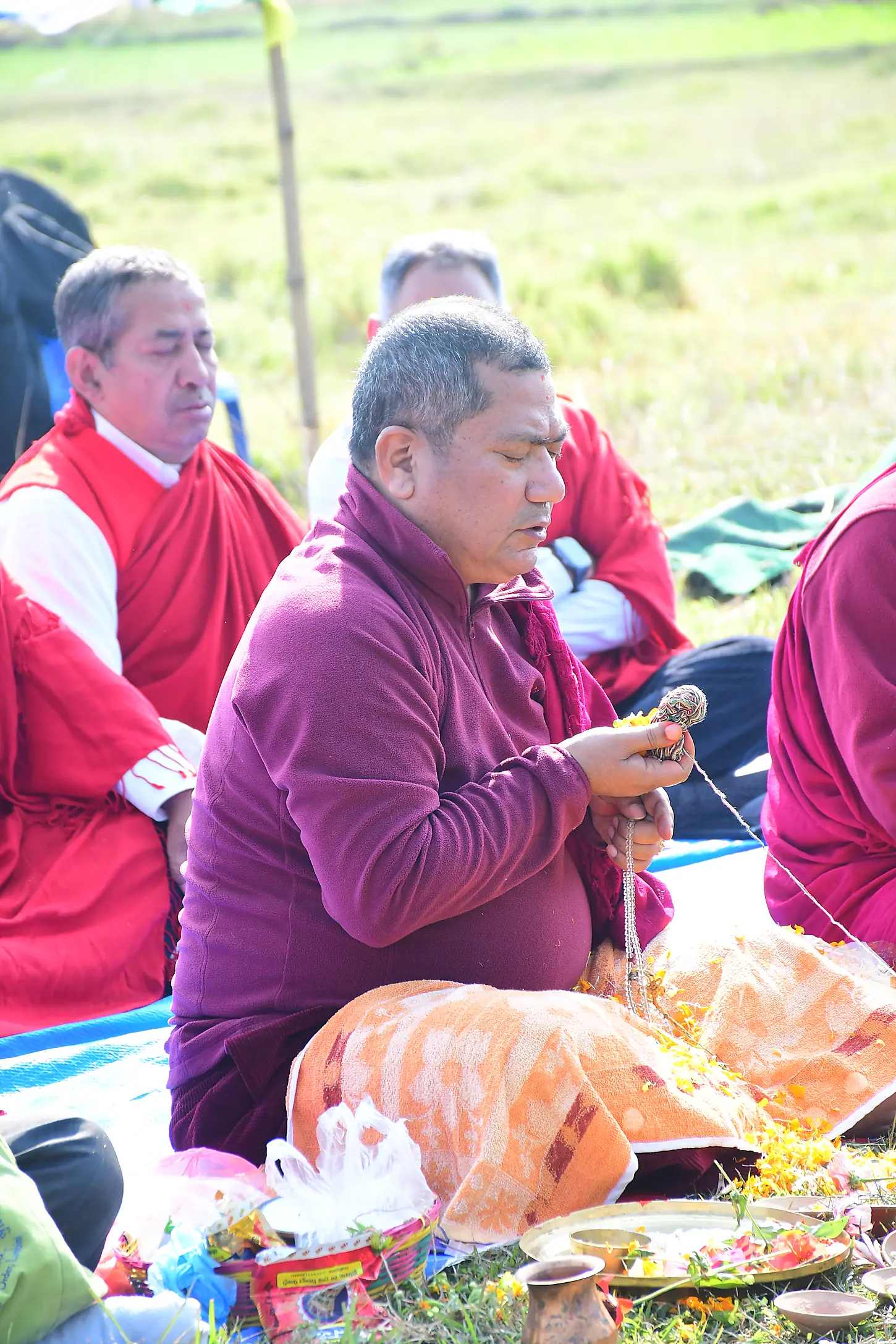
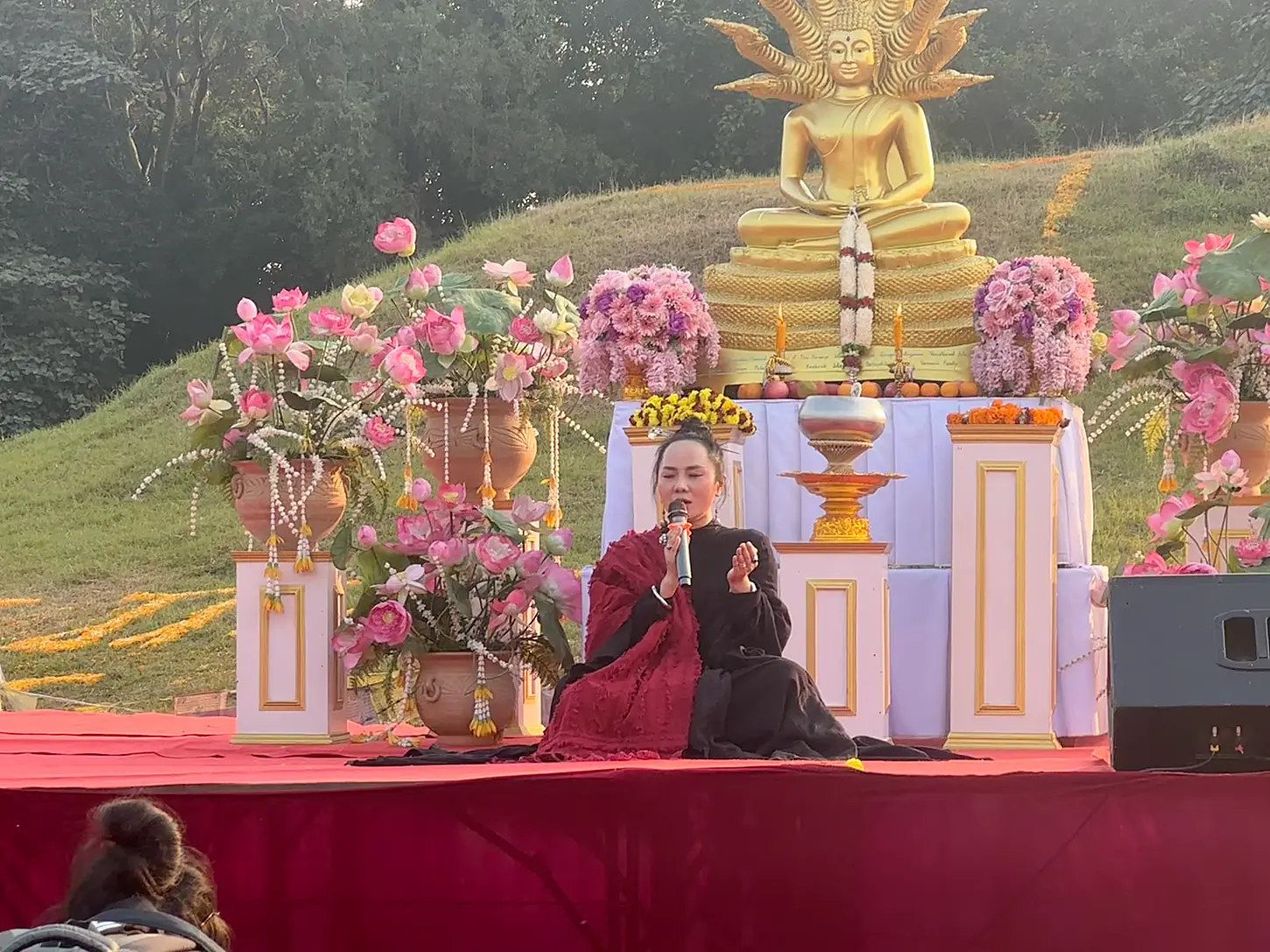
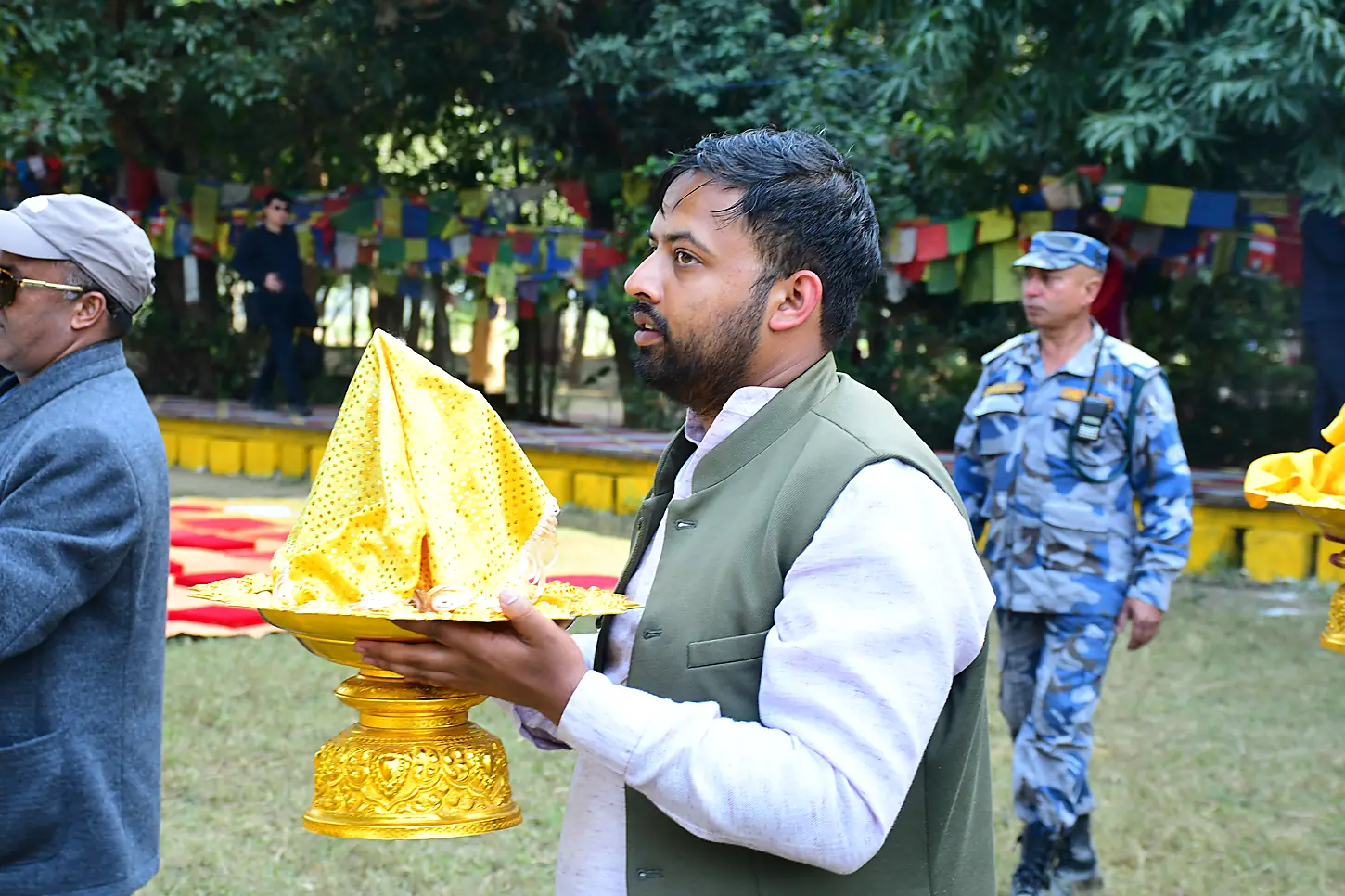
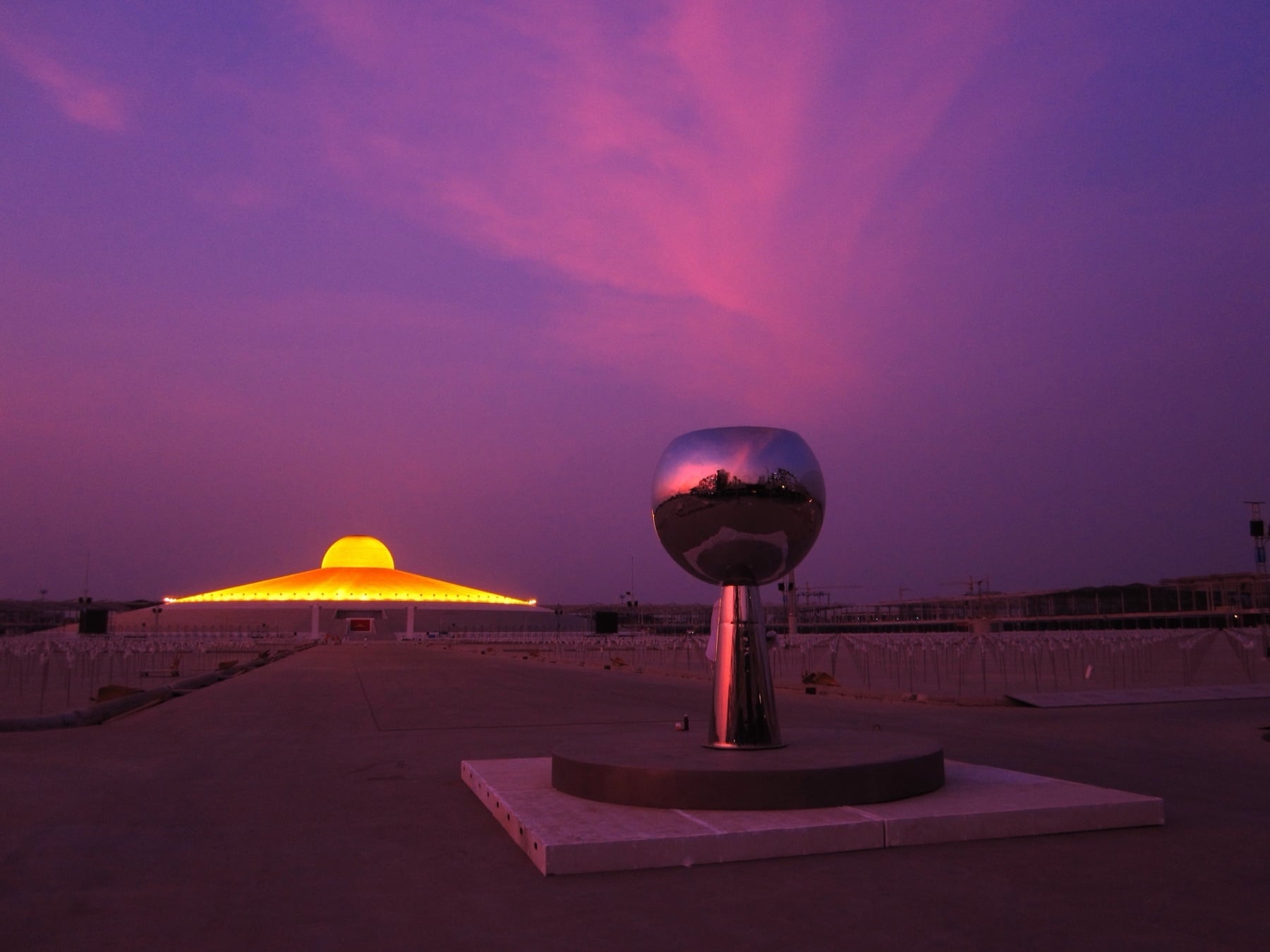
What actually happens is layered rather than singular. The eve opens with a candlelight procession, the flame carried monk to monk into the dark. Dawn brings a monastic assembly that draws several Buddhist traditions into one place at once, Theravada monks in saffron, Vajrayana monks in maroon with ritual drums, Mahayana chant alongside both. At 12:12 the Flame of Eternal Peace is lit, and after dark an oil-lamp mandala, laid out in the shape of the dharma wheel, closes the day. Since 2025 the same days also hold panel sessions, the ceremony’s newer, more practical half, sitting beside the older one rather than replacing it.