
Tilaurakot
Ancient Kapilavastu · Identified 1899 · Excavated 8th c. BCE layer
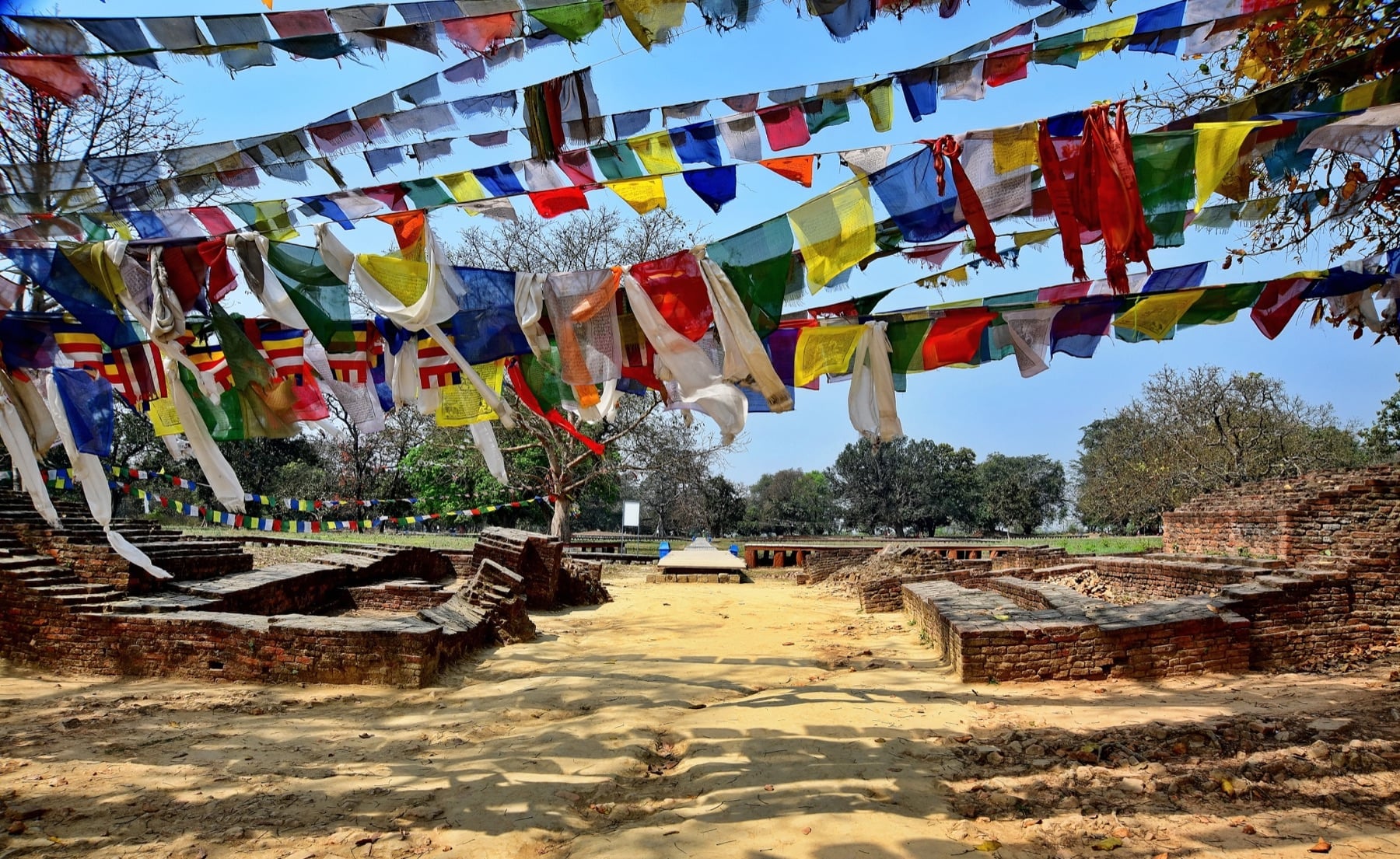
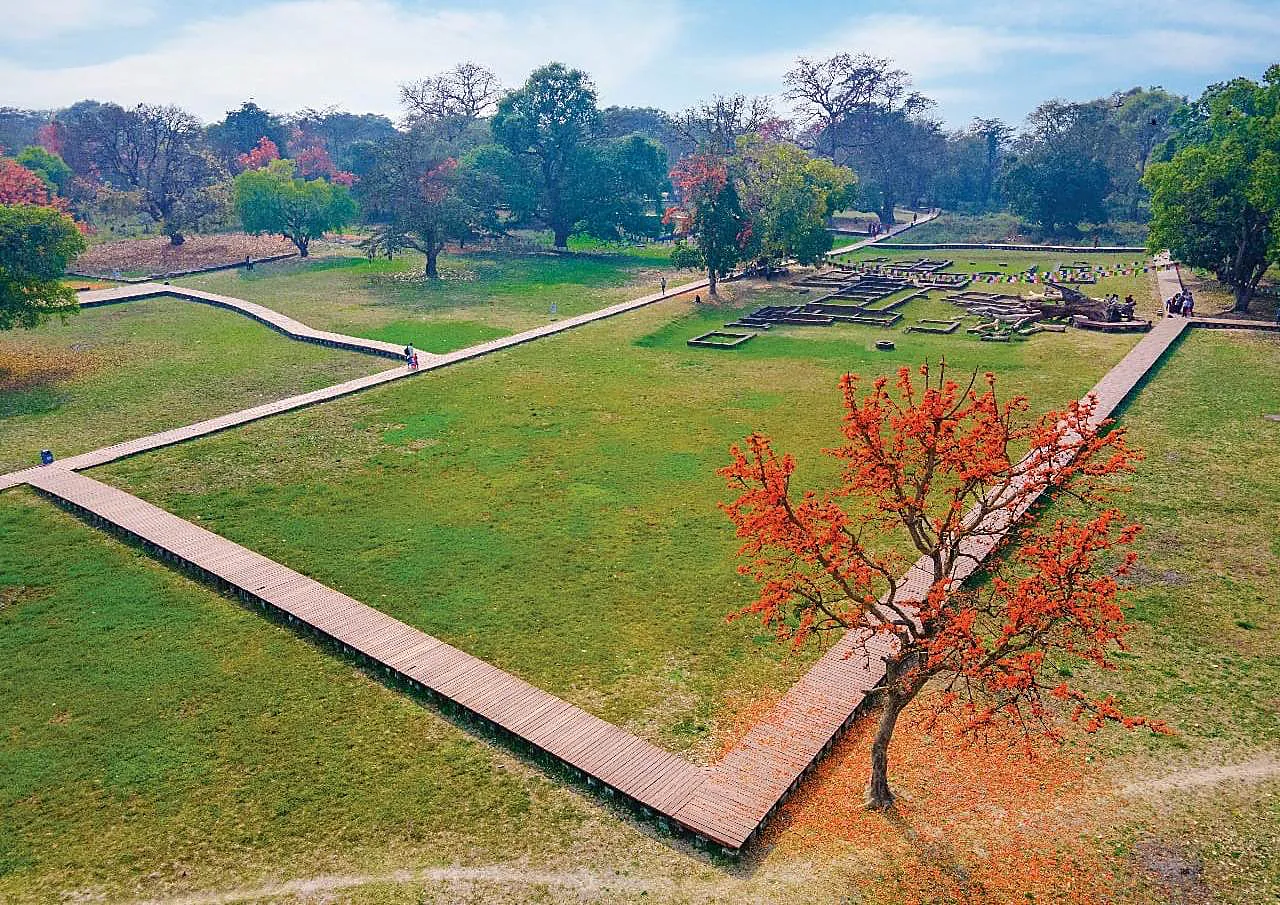
The capital where the infant Siddhartha was raised, and where he made the Great Renunciation at twenty-nine, riding out through the eastern gate by night. First noted as a site of interest in 1896 and identified as Kapilavastu in 1899 by P. C. Mukherji of the Archaeological Survey of India, it survives today as a fortified citadel some 500 by 400 metres on the eastern bank of the River Banganga, among the most complete early historic city plans yet recovered in South Asia. A Durham University programme, running in partnership with Nepal’s Department of Archaeology and the Lumbini Development Trust across seasons in 2014–16, 2019 and 2021, has dated occupation near the modern Samai Mai Temple to the eighth century BCE, with the settlement fortified and laid out on an urban plan by the sixth century BCE, evidence, the excavators concluded, of real centralised control. A palatial precinct 100 by 100 metres, walled in brick 1.5 metres thick, and a hoard of 497 silver punch-marked coins at the eastern stupa are among the finds; the core of the city was largely abandoned in the early first millennium CE, save for a Gupta-period brick temple later buried beneath the site’s modern shrine.
From tradition and the ground
The four sights
Confined within the palace, the young prince is said to have left through different gates on four successive journeys. Each outing revealed one of the truths his father had tried to hide: an old man bent by age, a sick man wracked with pain, a corpse being carried to the burning ground, and finally a wandering ascetic whose calm suggested there was a way beyond suffering.
The Great Renunciation
On the night his son Rahula was born, Siddhartha decided to leave. He rode Kanthaka, his great horse, through the eastern gate while Channa held the bridle. Tradition says the horse’s hoof-beats were silenced by the gods so the guards would not wake; once beyond the walls, Siddhartha cut his hair and exchanged his royal clothes for the coarse cloth of a seeker.
The eastern gate
Mukherji’s plan of Tilaurakot placed a gate on the east of the citadel, and local memory still points to it as the gate through which the prince rode. Archaeologists debate whether the present alignment matches the ancient one, but the pairing of a real eastern entrance with the textual account has fixed Tilaurakot in the pilgrimage imagination ever since.
More views of the site
The story behind the stones
Buddhist tradition holds that the young Siddhartha lived a sheltered princely life within these walls, married to Yasodhara, father to Rahula, until, in his twenty-ninth year, four sights outside the palace (an old man, a sick man, a corpse, and a wandering ascetic) convinced him to renounce the throne. The Great Renunciation itself, tradition says, happened here: riding out through Tilaurakot’s eastern gate by night on his horse Kanthaka, accompanied only by his charioteer Channa.
Unveiling Tilaurakot: The Ancient Home of Gautam Buddha
The stupa that was never opened
Ramagrama, the ninth site, and the one none of Ashoka’s successors ever disturbed.