
Devadaha
Koliya capital · Excavated since 2012
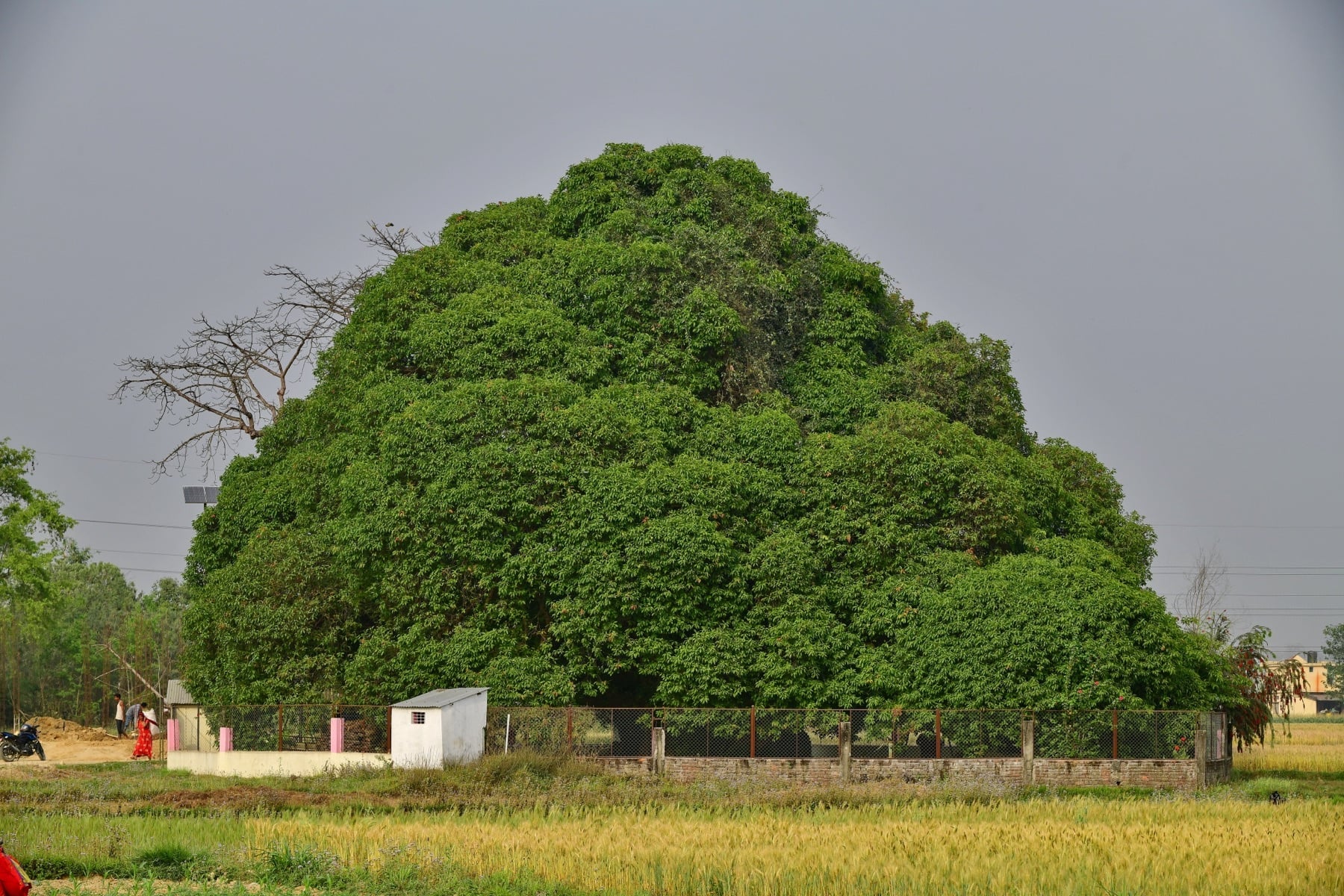
Capital of the ancient Koliya kingdom, thirty-eight kilometres east of Lumbini, and the maternal hometown of Queen Mayadevi, Prajapati Gautami and Yasodhara, three generations of the women who raised the Buddha. Khairdanda is the leading candidate for the ancient capital itself; nearby Bhawanipur has been under excavation by the Department of Archaeology since 2012, where decorated bricks matching those found at Kudan have come to light at the Bairimai Temple site, alongside two wells, at Petwaniya and Bangala, believed to date to the Koliya era, the kind of unglamorous domestic infrastructure that rarely survives from the period at all. A living link stands nearby at Pakari: a Ficus benjamina some ninety-six feet tall and eighty-two feet in circumference, its canopy spreading over roughly five hundred square feet and held sacred behind a protective wall, which local tradition holds is the very tree beneath which the Buddha once sat in penance.
From tradition and the ground
Maya’s journey home
Pregnant with Siddhartha, Queen Mayadevi left Kapilavastu to give birth at her parents’ home in Devadaha. She never arrived; the child was born at Lumbini while she rested in a grove on the way. The journey she began is still traced by pilgrims, and her intended destination gives Devadaha its place in the nativity story.
A childhood among the Koliyas
After Mayadevi died seven days after his birth, her sister Prajapati Gautami became Siddhartha’s foster mother. The boy is said to have visited Devadaha repeatedly as a child, growing up between the Shakya court of his father and the Koliya household of the women who raised him.
The Buddha returns
Seven years after his enlightenment, the Buddha came back to Devadaha and was received with honour. The Kanyamai Temple is said to commemorate Prajapati Gautami, and local memory holds that the great Pakari Tree shaded the Buddha during a period of penance on that same visit.
View of the site
The story behind the stones
Devadaha’s deeper significance is genealogical rather than architectural: it was the Koliya capital that gave the Shakyas their queens. Mayadevi and her sister Prajapati Gautami, who became the Buddha’s foster mother and, later, the first ordained Buddhist nun, were both Koliya princesses of this city, as was Yasodhara, Siddhartha’s wife. The marriage alliance between the Shakya and Koliya clans, sealed across generations at Devadaha, sits quietly behind almost every family relationship in the Buddha’s early life.
The stupa that was never opened
Ramagrama, the ninth site, and the one none of Ashoka’s successors ever disturbed.