
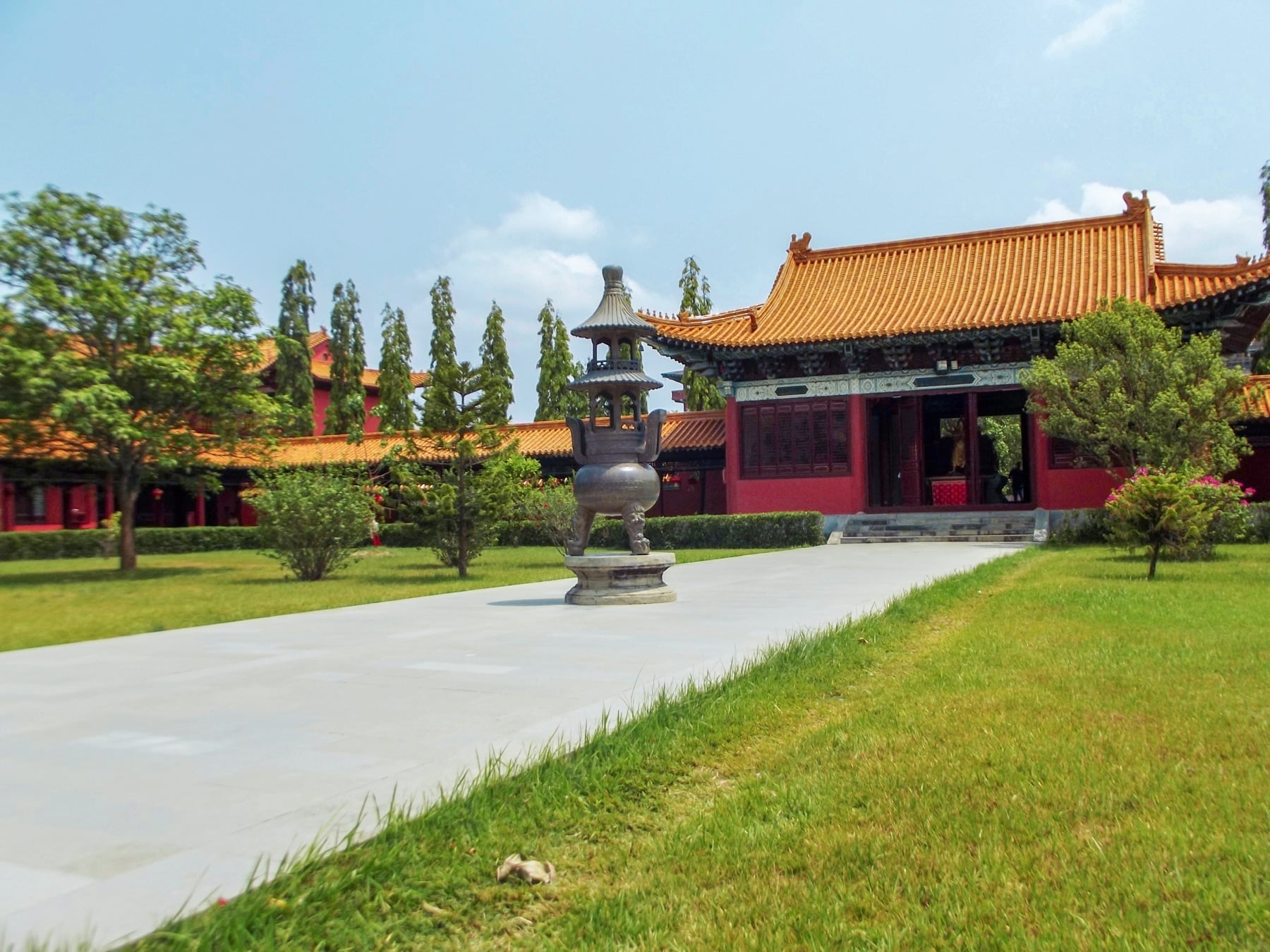
Zhong Hua Chinese Buddhist Monastery
Built 1998 by the Chinese Buddhist Association
- Country
- China
- Built
- 1998
- Zone · Mahayana
- West
- Halls on the central axis
- 6
Built in 1998 by the Chinese Buddhist Association, popularly known simply as the China Temple. Its plan echoes the Forbidden City in miniature: mountain gate, bell tower, drum tower, Hall of Heavenly Kings, Great Buddha Hall, and matching east and west side halls, arranged in the solemn, ordered axial sequence of classical Chinese Buddhist architecture. To suit Nepal’s hot, monsoonal climate, the design borrows from southern Chinese temple tradition, wide covered cloisters link the halls, offering shade and shelter while framing quiet courtyards planted for contemplation rather than display.
Chan and Pure Land, cultivated together
Chinese Buddhism is Mahayana, the “Great Vehicle” tradition built around the bodhisattva ideal, practice undertaken not only for one’s own liberation but on behalf of all beings. Within it, two schools have shaped Chinese practice more than any other: Chan, the meditation-centred lineage that later travelled to Japan as Zen, and Pure Land, devotional practice centred on Amitabha Buddha and rebirth in his western paradise, Sukhavati.
Rather than treating these as rival schools, most Chinese monasteries, this one included, under the state-recognised Chinese Buddhist Association, practise what is generally called “dual cultivation”: Chan’s silent meditation and Pure Land’s chanted devotion, held together rather than chosen between. The temple’s Forbidden City floor plan, halls arranged along a single formal axis, gives that combined practice the same solemn, ordered setting it would receive in China itself.
The rest of the Sacred Ground
Kenzo Tange’s master plan, and the story of the birthplace itself.