
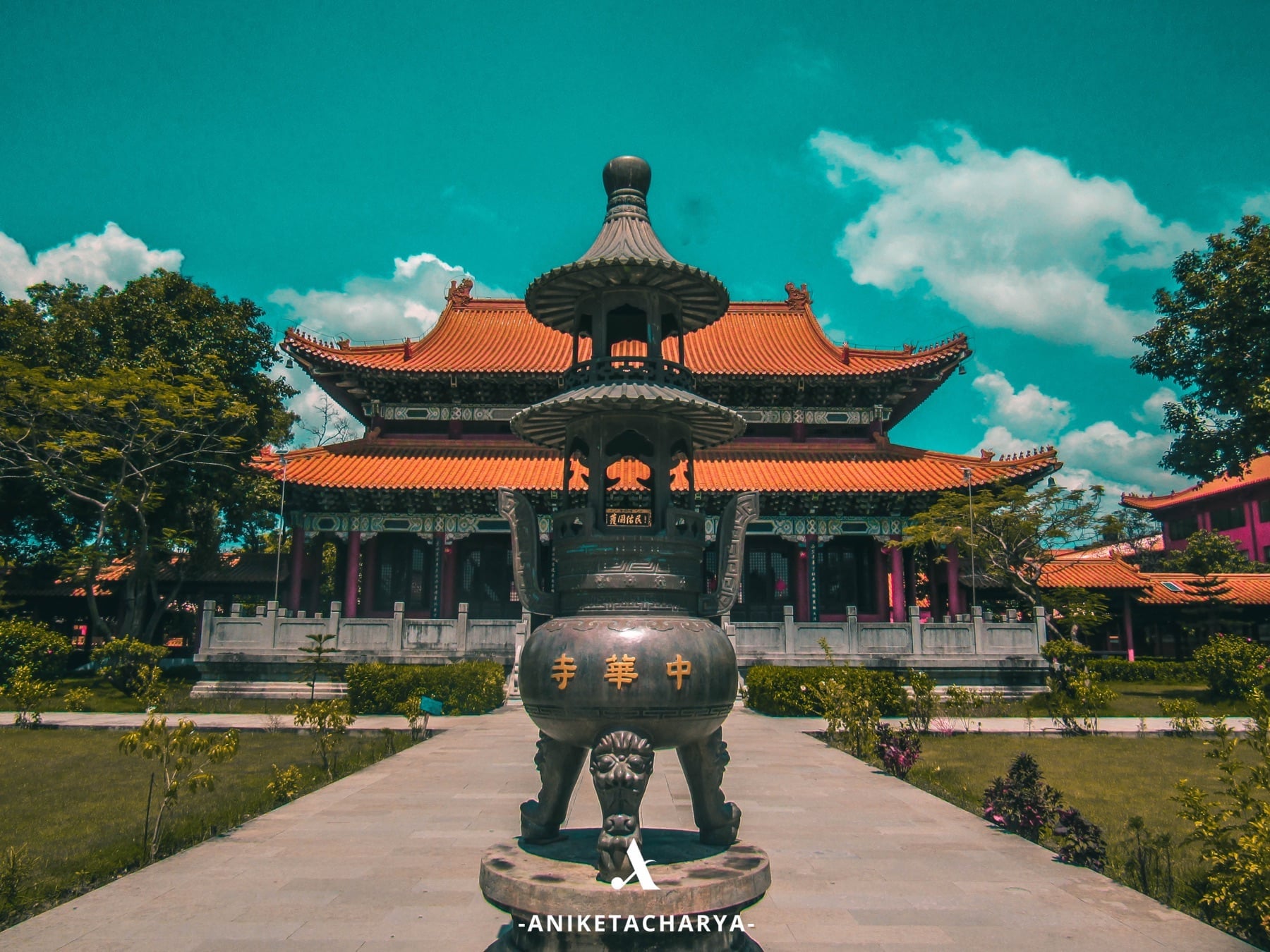
Dae Sung Shakya Temple
Known simply as the Korean Temple
- Country
- South Korea
- Storeys
- 3
- Zone · Mahayana
- West
- Reported daily guest rate
- NPR 500
Popularly known simply as the Korean Temple, Dae Sung Shakya Sa follows the general plan of Korean temple architecture, horizontally and vertically symmetrical, rising three storeys, each with the characteristic curved roofline and tube-tiled eaves of the Korean tradition. Colourful dancheong murals cover its ceilings inside. Among the tallest structures in the Monastic Zone, the temple has also offered simple guest lodging and three daily meals to travelling pilgrims for a modest fee, a practical form of hospitality alongside its role as a place of worship.
Korean Seon, and the will to unify
Korean Buddhism is Mahayana, and its dominant order, the Jogye Order, is built on Seon, Korea’s own meditation lineage, a close cousin of Chan and Zen, tracing to the same Chinese meditation schools that shaped Japanese Zen. What distinguishes Korean Buddhism historically is less any single doctrine than an impulse toward synthesis, given a name of its own: tongbulgyo, “interpenetrated Buddhism,” the deliberate effort, credited above all to the monk Wonhyo in the seventh century, to reconcile Korea’s many competing Buddhist schools into a single coherent teaching rather than let them remain divided.
That instinct for unity outlasted the schools it first reconciled: Korean temples today typically combine formal Seon meditation retreats with Pure Land chanting, scriptural study and lay devotional practice under one roof, rather than specialising in one to the exclusion of the rest, the same plural, layered practice this temple’s three storeys were built to house for pilgrims a very long way from Korea.
The rest of the Sacred Ground
Kenzo Tange’s master plan, and the story of the birthplace itself.