Thousand Buddha Temple
Pal Thubten Shedrub Ling
- Country
- Nepal
- Inaugurated (19–23 Nov)
- 2024
- Storeys
- 5
- Buddha statues, 18in each
- 1,000
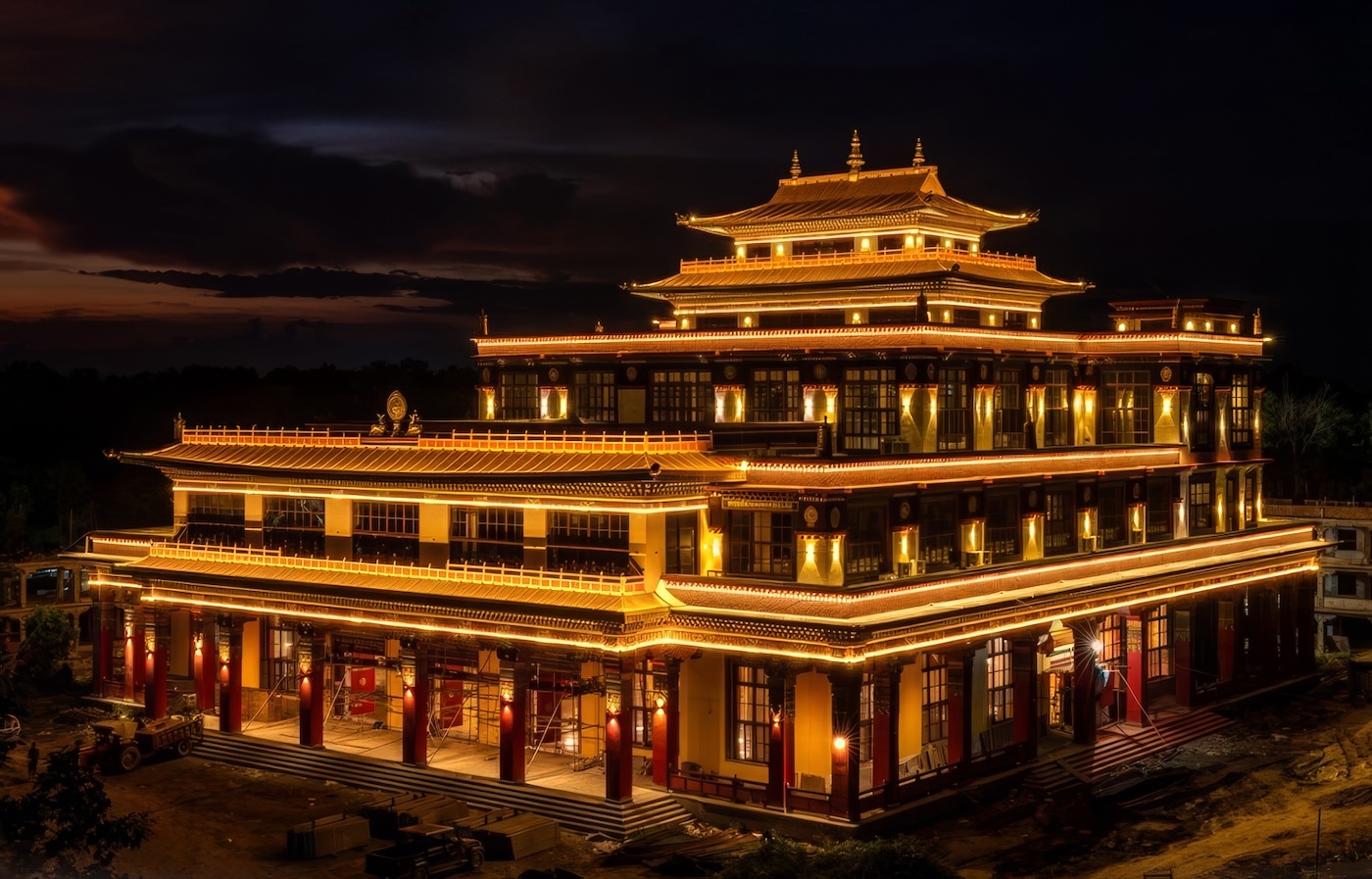
Formally named Pal Thubten Shedrub Ling, and known simply as the Thousand Buddha Temple, this Tibetan-style monastery stands about a kilometre from the Maya Devi Temple in the western Monastic Zone. The idea originated with Tulku Urgyen Rinpoche; his son, the teacher Chökyi Nyima Rinpoche, began construction in 2011 and led its formal five-day consecration from 19 to 23 November 2024. The five-storey structure holds three 28-foot statues representing the Buddhas of past, present and future, set before a wall of 1,000 smaller gilded Buddha images, each eighteen inches tall, a building conceived, in its founders’ own words, as a source of practice and peace for pilgrims of every Buddhist tradition, not one school alone.
Nyingma and Kagyu, combined under one abbot
The temple’s founding lineage runs through one of twentieth-century Tibetan Buddhism’s most widely documented teachers. Tulku Urgyen Rinpoche, who first conceived the project, held transmission in both the Kagyu school described elsewhere on this page and the Nyingma school, the oldest of Tibet’s four Buddhist lineages, tracing its origin to Padmasambhava, the eighth-century Indian master credited with first establishing Buddhism in Tibet at the invitation of King Trisong Detsen.
Nyingma is distinguished in particular by terma, teachings said to have been hidden by Padmasambhava himself for later masters to rediscover, and by Dzogchen, the “great perfection,” its highest meditative teaching on the nature of mind. Tulku Urgyen’s son, Chökyi Nyima Rinpoche, who completed and consecrated this temple, is abbot of Kathmandu’s Ka-Nying Shedrub Ling, a monastery whose very name, “Ka” for Kagyu and “Nying” for Nyingma, states the same dual inheritance this five-storey building in Lumbini now carries as well.
The rest of the Sacred Ground
Kenzo Tange’s master plan, and the story of the birthplace itself.