
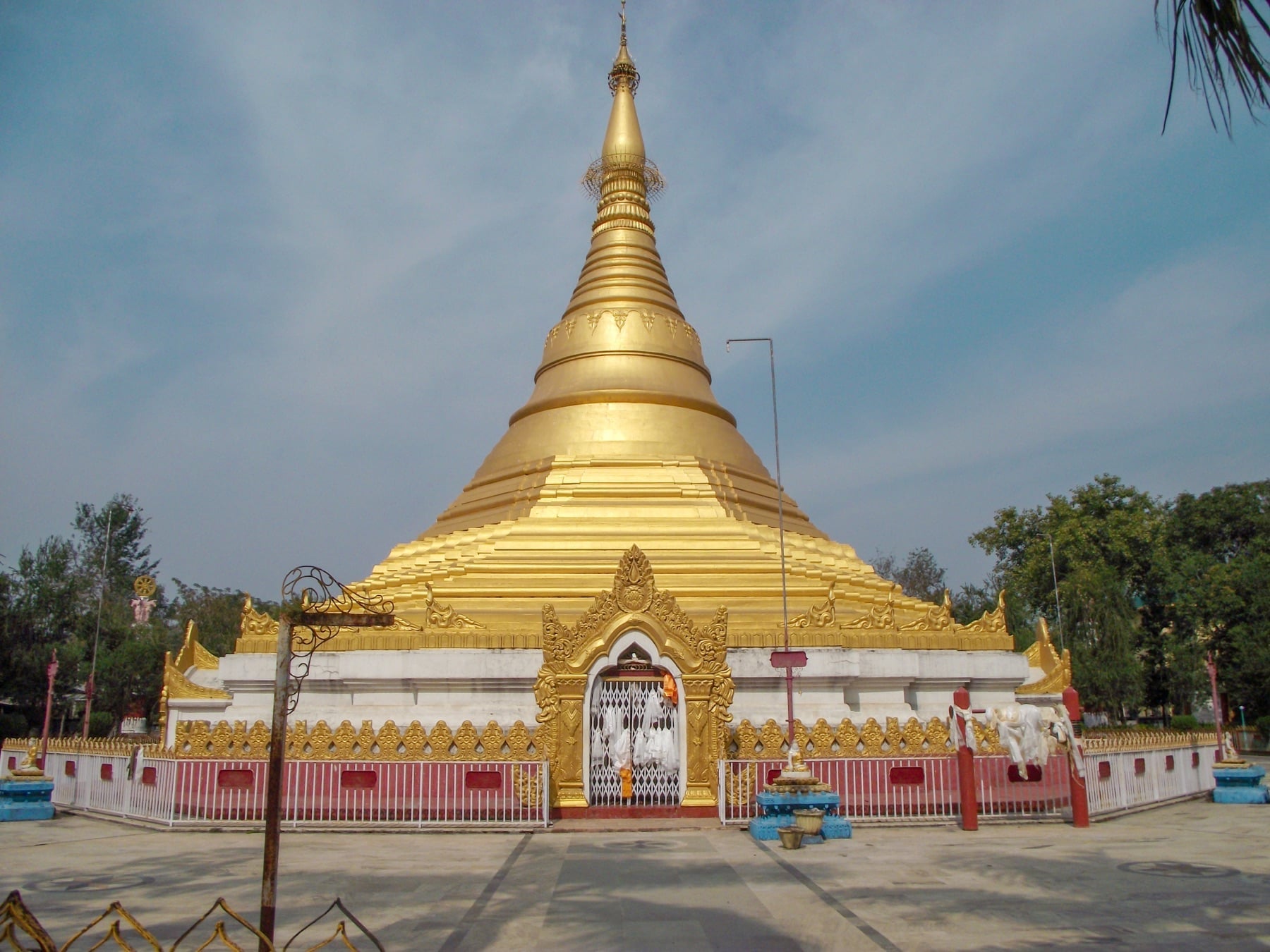
Myanmar Golden Temple
Lumbini’s oldest international monastery
- Country
- Myanmar
- International monastery built
- 1st
- Zone · Theravada
- East
- Lokamani Cula Pagoda height
- 72 ft
The oldest international structure in Lumbini’s Monastic Zone, built with support from the Myanmar government and Buddhist community in the distinctive corncob-shaped shikhara style of the temples of Bagan. Inside are three prayer halls and, at its heart, the Lokamani Cula Pagoda, a 72-foot replica of Yangon’s Shwedagon Pagoda, built in the Southern Burmese style and gilded to match its original. As Myanmar’s first religious structure raised on Nepali soil, it set the tone for the international zone that followed: a national architectural signature, transplanted whole, in service of a shared birthplace.
Burmese Theravada, and its reputation for rigor
Myanmar shares Thailand’s Theravada root but carries its own distinct emphasis: a centuries-old reputation, among Buddhist scholars, for rigorous study of the Abhidhamma, the third and most technical basket of the Pali Canon, a systematic analysis of mind and mental phenomena rather than narrative teaching. Burmese monasteries have long functioned as centres of formal Buddhist scholarship in a way distinct from, though not opposed to, the meditative and merit-based emphases found elsewhere in the Theravada world.
The same country produced, in the twentieth century, several of the meditation lineages now taught worldwide as “Vipassana” or insight meditation, techniques associated with Burmese teachers whose students carried them to lay audiences far beyond any monastery wall. This building, the first international structure raised in Lumbini’s Monastic Zone, predates that global spread by decades on this specific ground, but stands in the same lineage: Burmese Buddhism’s long-standing commitment to making its scholarship and its meditation practice, not only its architecture, exportable.
The rest of the Sacred Ground
Kenzo Tange’s master plan, and the story of the birthplace itself.